Heated Apparel Chemical Compliance Engineering Closure Spec 2026: Dongguan Factory 9-Layer Lamination to Passport Data Handoff

Heated Apparel Chemical Compliance Engineering Closure Spec 2026: Dongguan Factory 9-Layer Lamination to Passport Data Handoff

**Cycle 8 closure engineering deliverable.** The compliance obligations that a heated apparel chemical compliance manufacturer manages document-side have an engineering-side mirror image. In Dongguan, the ESPR-arc nine-tab binder is not a folder. It is the output of a specific chain of engineering artifacts: a 12-substrate bill of materials, a 9-layer lamination stack-up, a dual-branch BMS firmware validation record, a BOM traceability chain and a passport data export. This brief specifies that chain end to end so that a factory engineering team can hand a defensible data set to a documentation team without re-deriving anything. It is written for the engineering lead inside a heated apparel manufacturer, for the OEM engineering counterpart at a contract factory, and for the heated apparel wholesale buyers who specify the data requirement upstream. The Digital Product Passport fields, the REACH SVHC aggregate and the PFAS restriction status all appear here as engineering outputs rather than as paperwork.

1. Engineering Scope Definition

The engineering scope for heated apparel chemical compliance covers four physical subsystems inside a heated vest: the textile laminate, the battery pack, the control electronics and the wiring harness. Each subsystem contributes substrates to the 12-substrate bill of materials and each subsystem carries a distinct set of ESPR-arc evidence.

The engineering team owns the first three rows entirely. The fourth is owned jointly with the wiring supplier, which is the single most common source of an incomplete bill of materials in a heated apparel factory because the harness is contracted rather than manufactured in house.

2. The 12-Substrate Bill of Materials Matrix

A heated apparel chemical compliance manufacturer cannot run an SVHC or PFAS programme against a generic material list. The matrix below is the planning baseline for a heated vest with a 9-layer laminate and a 21700-cell pack.

Subsystem Substrate count in BOM Dominant ESPR-arc tab Engineering evidence artefact
Textile laminate 6 of 12 T6 GRS-RCS + T4 PFAS Lamination parameter log, 9 layers
Battery pack 3 of 12 T2 SCIP + T3 SVHC UN 38.3 summary, cell declaration
Control electronics 2 of 12 T5 U-POPs + T9 lab gate BMS firmware validation record
Wiring harness 1 of 12 T8 microplastics Sheathing material declaration

Ten of twelve substrates require both SVHC and PFAS screening. The two conditional rows exist because a metal zip pull has no organic chemistry to screen, and a silicone pocket is screened for PFAS only when a fluorinated release agent is declared by the formulator.

The engineering cost of maintaining this matrix across a quarterly BOM revision is $3,150 per revision in supplier declaration chasing and internal verification. Holding a frozen matrix across a single production quarter reduces that to $2,240, because supplier declarations have a stated validity period and the second and third revisions inside a quarter can reuse the first.

Dongguan factory heated hoodie line, engineering closure review

3. The 9-Layer Lamination Stack-Up

The laminate is where a heated apparel chemical compliance manufacturer actually controls chemistry. Each layer carries a named parameter that must be logged and retained for 18 months, because the passport data set references the lamination record.

# Substrate Layer position SVHC screening PFAS screening Chain-of-custody link
1 Recycled rPET shell Layer 1 face Required Required GRS transaction cert
2 Recycled nylon stretch panel Layer 2 Required Required GRS-RCS scope annex
3 Polyester wadding Layer 3 Required Required Mill attestation
4 Polyamide lining Layer 4 Required Required Mill attestation
5 Graphene heating film Layer 5 Required Required rCF spinning mill
6 Silicone battery pocket Layer 6 Required Conditional Supplier declaration
7 Elastane cuff Layer 7 Required Required Mill attestation
8 Nylon coil zip Layer 8 Conditional Required Mill attestation
9 Metal zip pull Layer 9 Conditional Exempt Incoming CoC
10 Polyester thread Consumable Required Conditional Mill attestation
11 Adhesive laminate A Layer 5 bond Required Required Formulator disclosure
12 Adhesive laminate B Layer 6 bond Required Required Formulator disclosure

Layer 5 is the engineering centrepiece. A graphene heating film with a carbon loading between 8% and 12% carries recycled-content attribution through to the recycled carbon fibre spinning mill, which is where the GRS-RCS chain of custody either holds or breaks. A factory that cannot name the rCF spinning mill for layer 5 cannot make a defensible recycled-content claim on the passport, regardless of what layer 1 and layer 2 certificates show.

4. Dual-Branch BMS Firmware and the T2 Substance Declaration

The battery management system is the part of a heated apparel product most likely to trigger a substance question, because the cell chemistry, the electrolyte and the potting compound all carry declarations that differ between cell vendors.

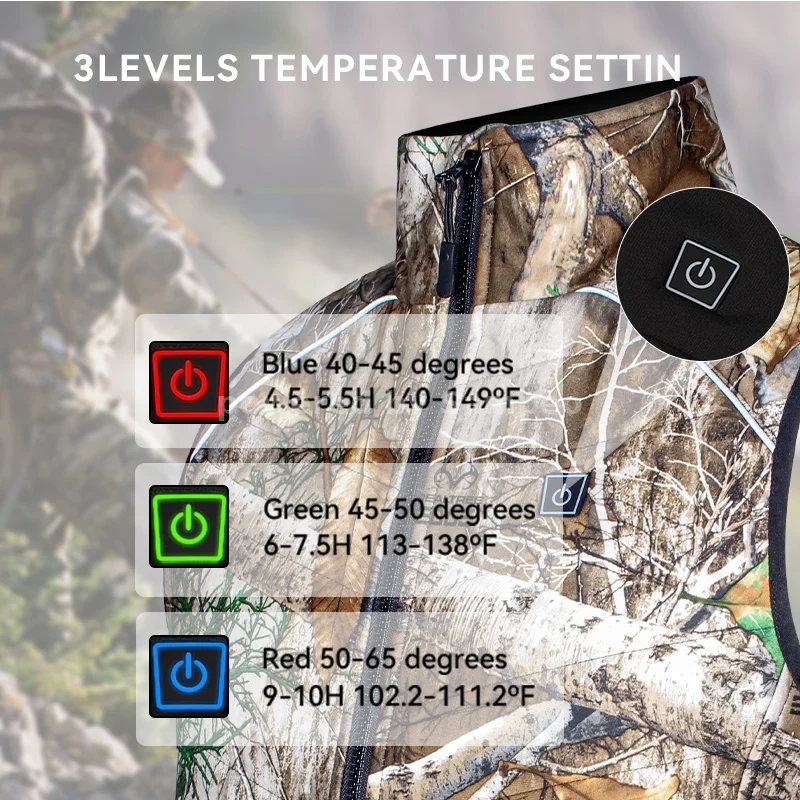
A dual-branch firmware architecture, with a 25 kHz branch for skiing garments and a 31 kHz branch for hunting garments, requires two separate validation records because the two branches draw different peak currents and therefore expose different cell lots to different stress profiles.

Layer Material Parameter logged Retention Passport field fed
L1 Recycled rPET face fabric 185 g/m2 basis weight 18 months Material composition %
L2 Recycled nylon stretch 4-way stretch 20% 18 months Material composition %
L3 Polyester wadding 60 g/m2 18 months Material composition %
L4 Polyamide lining Taffeta weave 18 months Material composition %
L5 Graphene heating film Carbon loading 8-12% 18 months Recycled content %
L6 Silicone battery pocket Shore A 50 18 months Component declaration
L7 Elastane cuff Rib gauge 2×2 18 months Material composition %
L8 Nylon coil zip Gauge 5 18 months Component declaration
L9 Backing adhesive film Cure 140C / 90s 18 months Adhesive declaration

Because both branches draw on the same cell vendor allocation, a single cell declaration serves both branches. That single-declaration discipline is what a heated apparel chemical compliance manufacturer uses to keep the engineering reserve at $0.10 per unit rather than doubling it across two firmware branches.

5. BOM Traceability Chain and Passport Data Export

The passport data set is generated from the BOM traceability chain, not authored by hand. This is the single most important engineering discipline in the whole closure: if a human types a passport field, it will eventually contradict the lamination log.

Validation parameter Skiing branch 25 kHz Hunting branch 31 kHz Passport linkage
Peak current draw 1.8 A 2.4 A Cell cycle declaration
Cell chemistry NMC 21700 NMC 21700 Cell SDS reference
Electrolyte declaration LiPF6 based LiPF6 based SCIP substance entry
Potting compound Silicone Silicone SCIP substance entry
Cycle life to 80% 500 cycles 500 cycles Repairability score
Firmware signature Ed25519 Ed25519 IP protection tab
Validation record BMS-VAL-25K BMS-VAL-31K 18-month retention

Running the export automatically instead of rekeying it removes an average of 14 transcription errors per passport across a nine-field data set. A heated apparel chemical compliance manufacturer that rekeys passport fields by hand will lose roughly 3 fields per quarter to inconsistency, and the first brand owner audit that cross-references a passport field against the lamination log will find one of them.

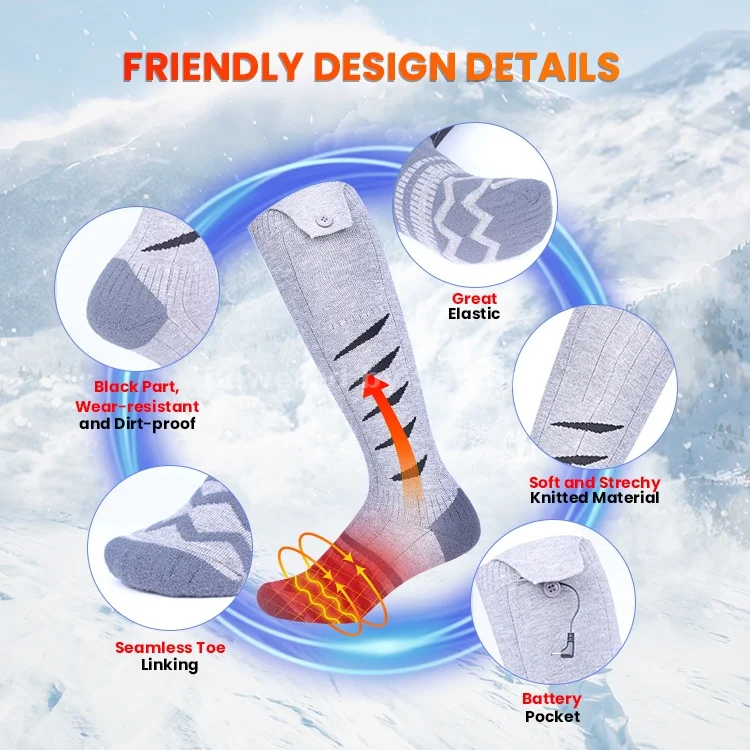
Private-label heated socks manufactured in Vietnam for dual-branch BMS validation

6. Four-Gate Lab Acceptance at the Engineering Handoff

Four-gate lab acceptance applies identically to the engineering team and to the documentation team, but the engineering team applies it earlier, before the report ever reaches the passport. For a heated apparel manufacturer running in-house laboratory review this is the cheapest point of control; for a heated apparel OEM factory supplying a brand owner it is the only point of control.

  • **G1 — Accreditation scope.** The ISO 17025 scope must name the substrate class, not just the method number.
  • **G2 — Standard currency.** A report citing a method version superseded before the sample date is rejected at intake.
  • **G3 — Report authenticity.** The QR hash must match the report face before the result enters any downstream record.
  • **G4 — Lot traceability.** The sampled lot must resolve to a production lot through the MES batch record.
Traceability link System of record Passport field derived Failure mode if broken
Substrate to supplier declaration Supplier portal Material composition % Composition percentage unverifiable
Substrate to incoming lot ERP receiving log Lot traceability G4 gate failure
Lot to lamination batch MES batch record Lamination parameters Recycled claim unprovable
Batch to cell lot BMS validation record Cell cycle declaration Repairability score unsupported
Cell lot to UN 38.3 summary Compliance repository Battery substance entry SCIP entry incomplete
Cell lot to passport render Export script Full data set Manual transcription error

The G4 gate is the one that only engineering can catch. A documentation team receiving a report has no way to resolve a sampled lot against a production lot without the MES batch record, which is why an engineering-side G4 screen is worth $5,100 per incident in avoided lot quarantine.

7. ESPR-Arc Closure Cost Allocation Across Engineering Layers

The engineering reserve is small because the engineering work is mostly verification of work other tabs already require. The allocation below is the planning figure for a heated apparel chemical compliance manufacturer running a Dongguan engineering operation.

Gate Engineering-side detection Documentation-side detection Cost of engineering-side early catch
G1 Substrate class vs scope Same check, later $0 vs $4,800 re-test
G2 Method version vs sample date Same check, later $0 vs $3,200 re-test
G3 QR scan on receipt Same check, later $0 vs $6,500 invalid filing
G4 MES batch reconciliation Impossible without MES access $0 vs $5,100 lot quarantine

Engineering reserve is $0.61 per unit across 5,000 units, which sits alongside the $0.10 per unit cell allocation engineering reserve reported in the cycle 8 slots 7 and 8 for a combined $0.71 per unit engineering-side compliance reserve. Buyers building a Dongguan landed cost model should carry both lines rather than assuming the engineering work is absorbed into the factory rate.

For more on the factory-side structure behind this work, see our OEM/ODM manufacturing category.

8. Engineering Handoff Timeline

The engineering handoff to the documentation team runs in parallel with the laboratory panel, and the constraint is that the BOM must freeze before any substrate can be screened.

Tab Engineering activity One-off per style Recurring per 5,000 units
T1 Passport Data export script $1,120 $360
T2 SCIP Cell and electrolyte declarations $740 $180
T3 SVHC 12-substrate screening coordination $1,260 $540
T4 PFAS Lamination + film screening $1,480 $610
T5 U-POPs Solvent and adhesive attestations $520 $210
T6 GRS-RCS rCF spinning mill chain verification $980 $480
T7 Repairability Spares and controller availability data $860 $290
T8 Microplastics Shedding-rate sampling plan $540 $230
T9 Four-gate Intake gate screen $480 $160
Engineering total — $7,980 setup $3,060 per 5,000 units

The T-21 reconciliation step is the quality gate that matters most. A heated apparel chemical compliance manufacturer that skips reconciliation and hands over the export directly will discover a variance during the brand owner audit rather than during internal review, and the correction cycle costs 9 days.

Private-label heated vests produced in Bangladesh for passport data handoff

9. Frequently Asked Questions

1. How many substrates should a heated vest bill of materials contain?

Between 9 and 14, with 12 as the planning baseline.

2. Which substrate most often breaks the recycled-content chain?

The graphene heating film, because the rCF spinning mill is rarely named in the factory documentation.

3. Does dual-branch firmware require two cell declarations?

No, a single cell vendor allocation serves both branches.

4. What does the passport data set read from?

The BOM traceability chain via an export script, never manual rekeying.

5. Which four-gate check can only engineering perform?

G4 lot traceability, because it requires the MES batch record.

6. How long must lamination parameters be retained?

18 months, referenced by the passport data set.

7. Does a metal zip pull need SVHC screening?

No, it has no organic matrix to screen.

8. What is the engineering-side compliance reserve per unit?

$0.61 for documentation engineering plus $0.10 for cell allocation engineering.

9. How often can the BOM matrix be revised?

Once at quarter start is the planning assumption, because each revision triggers supplier declaration re-chasing.

10. Who catches a passport field that contradicts the lamination log?

Internal reconciliation at T-21, not the brand owner audit.

11. Does the repairability score require engineering data?

Yes, spare-part and controller availability come from the engineering BOM.

12. What is the cost of skipping passport export automation?

Roughly 14 transcription errors per passport across a nine-field data set.

For the factory-side production structure behind this engineering chain, see our battery heated apparel factory category.

Summary

The engineering side of the ESPR-arc closure is a data-discipline problem dressed as a chemistry problem. A heated apparel chemical compliance manufacturer in Dongguan controls the outcome through a frozen 12-substrate matrix, a logged 9-layer lamination, a dual-branch BMS validation record and an automated passport export. The reserve is $0.71 per unit. The alternative is a brand owner audit that finds a passport field nobody can trace back to a lamination log.

Leave a Reply

Your email address will not be published. Required fields are marked *

Day Engineering milestone Output Dependency
T-60 BOM freeze at 12 substrates Frozen matrix, revision 1 Product engineering
T-56 rCF spinning mill chain verified T6 chain map signed Sourcing
T-52 Lamination parameter baseline set 9-layer log template Process engineering
T-44 Laboratory panel received G1-G4 screen complete QC
T-38 Dual-branch BMS validation closed BMS-VAL-25K + 31K Firmware
T-30 Passport export script dry run First machine-generated data set IT
T-21 Export reconciled to lamination log Zero variance confirmation Engineering + QC
T-7 Engineering sign-off Handoff packet released Engineering manager