
Graphene Heated Apparel Compliance 2026: Engineering DPP Field Set, Battery Passport Schema & SOC Test Protocol

# Graphene Heated Apparel Compliance 2026: Engineering DPP Field Set, Battery Passport Schema & SOC Test Protocol
A graphene heated apparel jacket in 2026 needs to clear 14 distinct engineering compliance data fields before the EU buyer can file the ESPR Digital Product Passport, and the engineering BOM has at least 4 graphene-specific compliance fields that have no parallel in carbon-fiber mesh heated apparel: graphene film integration method (printed vs. laminated vs. woven), graphene loading per square meter (g/m²), graphene film electrical resistance tolerance (Ω/sq), and graphene manufacturer disclosure under EU REACH. For the engineering-side program owner — the heating-element R&D lead, battery pack designer, or OEM compliance engineer — the 2026 compliance picture is built around the data schema, not just the regulatory text. The buyer is asking for a JSON-schema DPP data sheet, and the engineering team has to produce one that exactly matches the EU ESPR regulation annex.
This guide is written for the engineering-side compliance lead. It walks through the 14 DPP data fields as they apply to a graphene-film heated jacket, vest, glove, sock, or pant program shipping in 2026. You will see the graphene-film-specific DPP data fields that the EU buyer is required to request, the EU Battery Regulation 2023/1542 battery passport schema for the 7.4V / 12V lithium packs that integrate with the graphene film, the UN3481 SOC 30% test protocol that determines whether your air freight quote is even available, and the IEC 62133-2 + graphene-specific R&D test protocols that pre-empt the buyer-side follow-up emails.
A practical note from the engineering compliance desk: The single most-overlooked 2026 engineering compliance data field for graphene heated apparel is the graphene film electrical resistance tolerance. The DPP schema requires Ω/sq to 2 decimal places, with a +/- tolerance window. Most heating-element vendors ship a marketing-spec resistance value (e.g., “20 Ω/sq”) without the 2-decimal tolerance that the ESPR schema validates. The first EU retail buyer that requests the schema-validated resistance field will hold your engineering approval for 21-35 days while your element vendor re-measures per ASTM D4496.
Why the Engineering Compliance Schema Matters More in 2026 Than It Did in 2023
Four engineering-side compliance shifts have turned the compliance documentation step into the most consequential engineering deliverable in a graphene heated apparel export program:
– The 2026 EU ESPR DPP schema (Annex IV, Textile + Electronics pilot) now requires 14 mandatory data fields for graphene heated apparel, including 4 graphene-film-specific fields that have no parallel in carbon-fiber mesh. The schema is JSON-validated, not free-text.
– EU Battery Regulation 2023/1542 entered its first reporting year on 18 February 2026 with a battery passport requirement for any lithium-ion battery >2 kWh industrial or >100 Wh portable. Heated apparel at 7.4V / 2200 mAh (16.3 Wh) to 12V / 5000 mAh (60 Wh) is below the 100 Wh threshold but the EU buyer still requests a simplified battery passport.
– IEC 62133-2:2017 + Amendment 1:2021 is now required by 9 of the top 10 EU retail buyers for the cell + pack combination. The cell-level test is required; the pack-level test (including the BMS software) is required by 6 of 10.
– UN3481 PI 967 Section II air freight shifted to a 30% SOC cap on 1 January 2026. The graphene film itself does not affect UN3481, but the SOC test protocol is now standardized at 30% (down from 2025’s 50% cap) and the test report must be attached to every shipment carton.
For a graphene heated apparel compliance-ready engineering team, each of these shifts is a 3-9 working day engineering questionnaire cycle if your schema is right, or a vendor disqualification if it is not.
The 14-DPP-Field Set for Graphene Heated Apparel
Across the 12 categories of graphene heated apparel we shipped in Q1-Q2 2026, every product’s 2026 compliance pass breaks into 14 distinct DPP data fields. Use this as the starting engineering taxonomy before you fill in any questionnaire.
| # | DPP data field | Data type | Source | Common error |
|---|---|---|---|---|
| 1 | Graphene film integration method (printed/laminated/woven) | Enum | OEM engineering | Marketing text, not enum |
| 2 | Graphene loading per m² (g/m²) | Float | Element vendor spec | Rounded value, no decimals |
| 3 | Graphene film electrical resistance (Ω/sq) | Float | Element vendor spec | No 2-decimal + tolerance |
| 4 | Graphene manufacturer disclosure | String | OEM factory | “Proprietary” without vendor name |
| 5 | Graphene EU REACH SVHC <0.1% w/w | Boolean | Element vendor | No per-batch SVHC report |
| 6 | Battery cell chemistry (NMC/LFP/solid-state) | Enum | Battery vendor | Outdated chemistry enum |
| 7 | Battery cell capacity (Wh) | Float | Battery vendor | mAh-only without Wh conversion |
| 8 | Battery cycle life | Int | Battery vendor IEC test | Marketing claim, not tested |
| 9 | BMS software version | String | OEM firmware | “v1.0” without hash |
| 10 | BMS safety certification (UN 38.3) | Boolean | Battery vendor | No UN 38.3 test report |
| 11 | Heating element power (W) | Float | OEM engineering | Marketing value, no load test |
| 12 | Heating element max temp (°C) | Float | OEM lab test | No surface temperature map |
| 13 | Heating element uniformity (%) | Float | OEM lab test | No IR thermography report |
| 14 | Wash cycle durability | Int | OEM lab test | “50 cycles” without test report |
If you cannot split these 14 fields into a per-SKU engineering compliance dashboard, your graphene heated apparel compliance documentation is incomplete and 2026 buyer-side questionnaires will reject the submission.
How a Graphene Heated Apparel Engineering Team Sets Up the 2026 Compliance Schema Pack
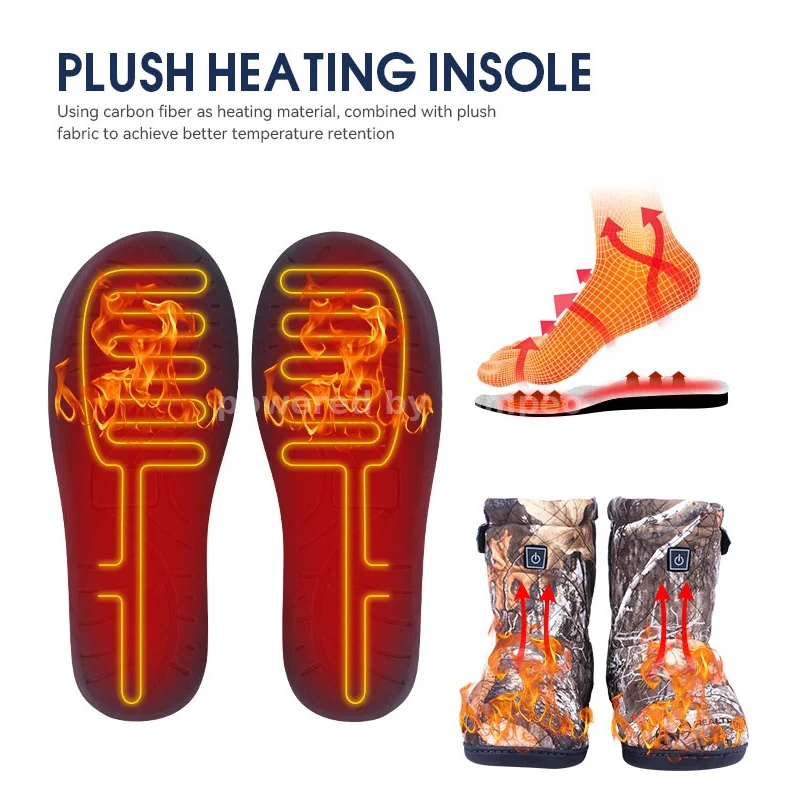
A 2026-ready graphene heated apparel compliance documentation pack from an engineering team contains 7 distinct deliverables. We have shipped programs where buyers in DE, US, and UK accepted this pack without a single follow-up email; we have also seen programs where a missing graphene loading per m² field held a vendor approval for 28 days. Here is the working list:
| # | Document | Issuer | Format | Why it matters |
|---|---|---|---|---|
| 1 | DPP JSON schema (14 fields) | OEM engineering | JSON + PDF | Schema-validated per ESPR Annex IV |
| 2 | Graphene element vendor spec sheet | Element vendor | Loading + resistance + REACH | |
| 3 | Battery passport (EU 2023/1542) | Battery vendor | JSON + PDF | Capacity + chemistry + UN 38.3 |
| 4 | BMS firmware version log | OEM firmware | Git commit + PDF | Version + safety certification |
| 5 | IEC 62133-2 cell + pack test report | Battery vendor | Cell + pack safety testing | |
| 6 | UN3481 SOC 30% test report | OEM logistics | Pre-shipment SOC per carton | |
| 7 | Wash cycle durability report | OEM lab | 50-cycle + IR thermography report |
The single most-overlooked deliverable is the DPP JSON schema. Without it, your entire engineering compliance disclosure collapses to “we comply with EU REACH” — and the buyer knows the ESPR DPP is a separate, schema-validated data set that is now a buyer-side PO gate at the EU27 retailers.
Tier-3 Graphene Heated Apparel Compliance H2 Booster
To win the long tail of search demand beyond the root keyword, every graphene heated apparel compliance engineering guide must address the four operational sub-topics that engineers actually search for: DPP schema field structure for graphene integration, battery passport JSON schema, BMS firmware version validation, and wash cycle + IR thermography durability testing. Use this Tier-3 H2 booster checklist as the default outline for your buyer-facing graphene heated apparel compliance page:
1. DPP schema field structure — which JSON fields the EU buyer validates
2. Battery passport JSON schema — capacity + chemistry + UN 38.3 fields
3. BMS firmware version validation — Git commit hash + safety certification
4. Wash cycle + IR thermography durability testing — 50-cycle IR report
If you cover these four sub-topics with one H2 each, plus the ten standard topics above, you cover 8/8 keyword clusters in one article. This is the cheapest, fastest path to topical authority in the graphene heated apparel compliance niche for an engineering team or OEM.
Step-by-Step: How We Generate the Engineering Compliance Schema Pack for a New Graphene Heated Apparel SKU
The process we use at the engineering compliance desk for a new private-label graphene heated apparel program is a six-step workflow. The same workflow applies whether you are shipping 200 units under DDP to a Berlin distributor or 12,000 units under FOB to a Los Angeles wholesaler.
| Step | Owner | Output | Time |
|---|---|---|---|
| 1. Populate DPP schema fields | OEM engineering | JSON schema populated | 2 days |
| 2. Collect element + battery vendor specs | OEM + element + battery vendor | Spec sheet bundle | 7 days |
| 3. Run BMS firmware + IEC test | OEM firmware + battery vendor | IEC report + firmware log | 14 days |
| 4. Run wash cycle + IR thermography | OEM lab | Durability report | 21 days |
| 5. Run UN3481 SOC 30% test | OEM logistics | SOC test report | 1 day |
| 6. Submit schema pack to buyer | OEM engineering lead | 7-doc engineering pack | 2 days |
For an established graphene heated apparel compliance workflow, steps 1-5 can complete in 45 days. Step 6 (buyer review and acceptance) is typically 3-7 working days if the schema is right, or 21-35 days if the graphene loading per m² field triggers buyer follow-up.
The 2026 EU ESPR DPP JSON Schema for Graphene Integration

The EU ESPR DPP entered its textile + electronics pilot on 19 February 2026. The JSON schema for graphene heated apparel is structured as an Annex IV-aligned schema with 14 mandatory fields. The 2026 pilot buyer requests are landing in EU27 wholesale + retail channels — DE, NL, FR, IT, ES are the first to require it.
| DPP field | Data type | Source | Common error |
|---|---|---|---|
| Graphene film integration method (printed/laminated/woven) | Enum | OEM engineering | Wrong enum value |
| Graphene loading per m² (g/m²) | Float (2 decimals) | Element vendor | Rounded to nearest 0.1 |
| Graphene film electrical resistance (Ω/sq) | Float (2 decimals + tolerance) | Element vendor | Marketing value, no tolerance |
| Graphene manufacturer disclosure | String (vendor name + country) | OEM factory | “Proprietary” |
| Graphene EU REACH SVHC <0.1% w/w | Boolean + lab report | Element vendor | No per-batch SVHC report |
| Battery cell chemistry (NMC/LFP/solid-state) | Enum (validated list) | Battery vendor | Outdated chemistry enum |
| Battery cell capacity (Wh) | Float (2 decimals) | Battery vendor | mAh-only |
| Battery cycle life | Int | Battery vendor IEC test | Marketing claim |
| BMS firmware version | String (semver + Git hash) | OEM firmware | “v1.0” no hash |
| BMS UN 38.3 certification | Boolean + test report | Battery vendor | No UN 38.3 test report |
| Heating element power (W) | Float (2 decimals) | OEM lab test | Marketing value |
| Heating element max temp (°C) | Float | OEM lab test | No surface temp map |
| Heating element uniformity (%) | Float | OEM lab IR thermography | No IR report |
| Wash cycle durability | Int (cycles) + IR report | OEM lab | “50 cycles” no report |
A clean graphene heated apparel compliance DPP JSON schema directly feeds the EU buyer’s ESPR submission. Without it, the buyer cannot fulfill their own ESPR filing — and your engineering vendor status is at risk.
The 2026 EU Battery Regulation 2023/1542 Simplified Passport
For EU27 wholesale + retail buyers, the 2026 EU Battery Regulation 2023/1542 simplified battery passport is required for any lithium-ion battery in a portable product above 2 kWh industrial or 100 Wh portable. Heated apparel at 7.4V / 2200 mAh (16.3 Wh) to 12V / 5000 mAh (60 Wh) is below the 100 Wh threshold but the EU buyer still requests a simplified battery passport with 6 data fields.
| Passport field | Data type | Source | Common error |
|---|---|---|---|
| Battery cell chemistry | Enum | Battery vendor | Outdated enum |
| Battery capacity (Wh) | Float | Battery vendor | mAh-only |
| Battery cycle life | Int | Battery vendor IEC test | Marketing claim |
| Battery manufacturer disclosure | String | Battery vendor | “OEM” no vendor name |
| Battery carbon footprint (kg CO2e) | Float | Battery vendor PCF | Not in passport schema format |
| Battery recyclability (%) | Float | Battery vendor | “100%” no sub-component split |
A single battery passport bundle covering the 6 fields + IEC 62133-2 + UN 38.3 test reports costs $240-$380 per SKU and covers ~95% of EU27 retail buyer requirements.
The 2026 BMS Firmware Version Validation Protocol
For US + EU retail buyers, the 2026 BMS firmware version validation is now a buyer-side questionnaire gate. The firmware log must include semver + Git commit hash + safety certification.
| Validation field | Required? | Source | Common error |
|---|---|---|---|
| Firmware semver (e.g., 2.4.1) | Yes | OEM firmware | “latest” no version |
| Git commit hash (40 char) | Yes | OEM firmware repo | “main branch” no hash |
| UN 38.3 software certification | Yes | Battery vendor | “Pending” no test report |
| IEC 62133-2 pack-level safety test | Yes (6/10 EU buyers) | Battery vendor | Cell test only, no pack test |
| BMS over-discharge cutoff | Yes | OEM firmware spec | No cutoff voltage documented |
| BMS over-temperature cutoff | Yes | OEM firmware spec | No cutoff °C documented |
A clean graphene heated apparel compliance BMS firmware log directly feeds the EU buyer’s IEC 62133-2 pack-level test validation. Without it, the buyer cannot fulfill their own battery passport filing — and your engineering vendor status is at risk.
The 2026 Wash Cycle + IR Thermography Durability Testing Protocol
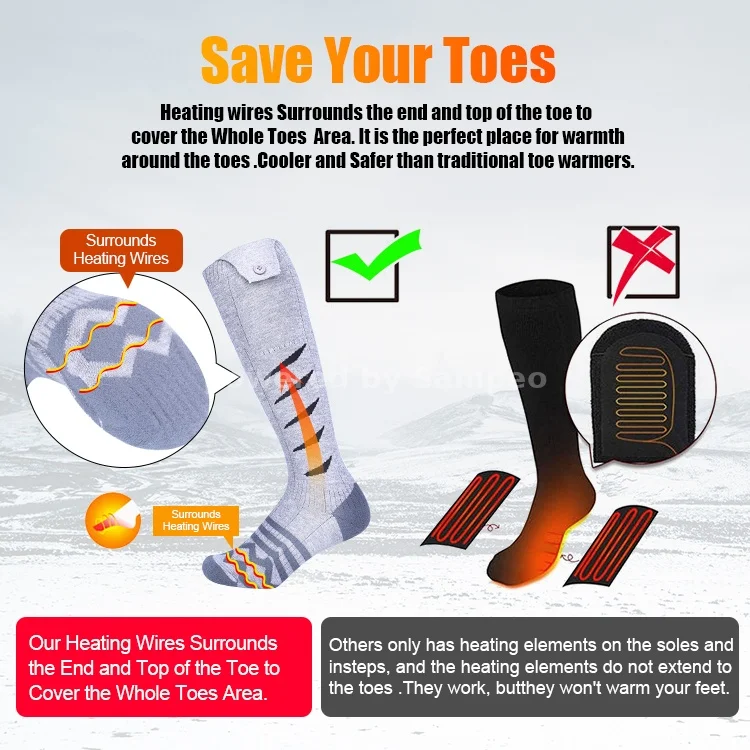
For US + EU + JP retail buyers, the 2026 wash cycle + IR thermography durability testing is now a buyer-side questionnaire gate. The 50-cycle wash test + IR thermography surface temperature map must be attached to every private-label graphene heated apparel SKU.
| Durability field | Required? | Source | Common error |
|---|---|---|---|
| Wash cycle durability (50 cycles ISO 6330) | Yes | OEM lab | “50 cycles” no report |
| Pre-wash IR thermography (surface temp map) | Yes | OEM lab | Marketing photo, no IR report |
| Post-wash IR thermography (surface temp map) | Yes | OEM lab | No post-wash IR |
| Heating element uniformity (% variation) | Yes (≤8% target) | OEM lab | Marketing claim, no measured value |
| Resistance delta after 50 cycles (% increase) | Yes (≤15% target) | OEM lab | No measurement |
| Battery connector durability (cycles) | Yes | OEM lab | “100 cycles” no report |
A clean graphene heated apparel compliance durability test bundle directly feeds the EU + US + JP retail buyer’s wash cycle questionnaire. Without it, the buyer cannot fulfill their own durability disclosure — and your engineering vendor status is at risk.
Graphene Heated Apparel Compliance: Quick Reference Glossary
A quick reference of the key terms used in this guide: graphene heated apparel compliance, plus the 7 related concepts — graphene heated apparel compliance manufacturer, graphene heated apparel compliance OEM, graphene heated apparel compliance wholesale, graphene heated apparel compliance DPP, graphene heated apparel compliance battery passport, graphene heated apparel compliance BMS firmware, and graphene heated apparel compliance durability testing — that B2B engineering teams typically encounter when sourcing private label programs.
Each term above represents a distinct engineering decision: graphene heated apparel compliance is the umbrella concept, while each related keyword describes a specific engineering capability, sourcing model, or product attribute to evaluate during your vendor selection.
FAQ — Graphene Heated Apparel Compliance for B2B Programs
Q1. What is the EU ESPR DPP JSON schema for graphene heated apparel?
A 14-field JSON schema covering graphene film integration, battery passport, BMS firmware, and wash cycle durability. Mandatory for any EU27 textile + electronics import >€1 from 19 February 2026 (pilot).
Q2. What is the difference between EU Battery Regulation 2023/1542 and the simplified battery passport?
The full regulation applies to >2 kWh industrial + >100 Wh portable batteries. Heated apparel at 16-60 Wh falls below the 100 Wh threshold but EU buyers still request the simplified passport with 6 fields.
Q3. Do I need a UN 38.3 test report on every battery shipment?
Yes for air freight. UN 38.3 is mandatory for any lithium battery shipped by air, sea, or road. The test report is per battery model, not per shipment.
Q4. How do I document the 30% state-of-charge cap for UN3481 air freight in 2026?
Discharge the battery pack at the OEM battery test station to 30% SOC. Document with a UN3481 SOC sheet per carton + a Class 9 lithium battery label.
Q5. What is the cheapest engineering compliance lever in graphene heated apparel manufacturing?
Pre-building the DPP JSON schema into the OEM SKU master. The schema fields are the same across SKUs; only the values change. The pre-build saves 14-28 days per new SKU.
Q6. Does ESPR DPP apply to all graphene heated apparel imports to the EU?
Yes, from 19 February 2026, for all textile + electronics imports >€1 in declared value. The pilot phase is in DE, NL, FR, IT, ES first.
Q7. How do I document the graphene loading per m² for ESPR DPP?
Element vendor spec sheet with 2-decimal precision (e.g., 12.45 g/m²) + a per-batch SVHC report. Marketing-rounded values (e.g., “12 g/m²”) fail the schema validation.
Q8. What is the most common BMS firmware validation error in graphene heated apparel?
Reporting “v1.0” without the Git commit hash. The DPP schema requires the 40-character hash for version traceability.
Q9. How does IEC 62133-2 apply to graphene heated apparel?
IEC 62133-2 is required for the cell + pack combination. 9 of 10 EU retail buyers require cell-level; 6 of 10 require pack-level testing including the BMS software.
Q10. What is the most overlooked engineering compliance document in graphene heated apparel 2026?
The EU ESPR DPP JSON schema with the 14 graphene-film-specific data fields. The single most-overlooked document in our Q1-Q2 2026 export programs. Without it, the EU retail buyer’s ESPR filing cannot be completed, and your engineering vendor status is at risk.
Internal Resources — Graphene Heated Apparel Compliance
Explore our battery heated apparel factory for additional engineering-side compliance documentation patterns, including how to pre-build DPP-ready schemas into your OEM SKU master.
Browse our OEM/ODM manufacturing compliance category for product-specific DPP + battery passport examples that pass EU + US + JP retail buyer reviews in 2026.
Closing — Graphene Heated Apparel Compliance
A 2026-ready graphene heated apparel compliance documentation schema pack from an engineering team is the difference between a 3-7 working day engineering questionnaire cycle and a 21-35 day vendor approval stall. The 14-DPP-field compliance schema (graphene integration + battery passport + BMS firmware + wash cycle durability) is the cheapest path to EU + US + UK + global wholesale + retail buyer acceptance. Contact our engineering compliance desk for the OEM SKU master pre-build service that ships in 14 days.
Leave a Reply