
Dual-Source Graphene Heating Fabric & 21700 Cell Engineering Specification 2026: Multi-Country OEM-ODM Qualification Protocol
Dual-Source Graphene Heating Fabric & 21700 Cell Engineering Specification 2026: A Dongguan Factory Qualification Protocol for Multi-Country OEM-ODM Battery Apparel
Cycle 5 / Slot 2 / Pillar #75 — Engineering-side lens. Graphene Heating Fabric OEM/ODM factory, Dongguan, China. Last updated 2026-09-12.
—
H1. The Engineering Reality Behind Dual-Source Heated Apparel
The engineering team at Graphene Heating Fabric has supported 80+ private-label heated apparel programs since 2018 with graphene fabric specification, 21700 cell qualification, and BMS firmware development. For OEM/ODM engineering inquiries, contact the engineering team via the contact form on grapheneheatingfabric.com.
A buyer who has spent the last decade specifying heated apparel as a single-source OEM program is now, in 2026, asking the engineering team an uncomfortable question: “Can the same finished good be produced in two factories on two continents, with the same heating performance, the same battery cycle life, and the same five-year warranty — at scale?” The honest answer, from a 2026-vintage Dongguan engineering perspective, is: yes, but only with a dual-source qualification protocol that touches every component in the BOM, not just the finished good.
The engineering reality is that heated apparel is a multi-physics product — electrical resistance heating (graphene fabric trace pattern + BMS current limiting), electrochemistry (21700 cell capacity fade over charge cycles), textile mechanics (knit structure + stretch recovery at the heating element bond points), and thermal management (heat dissipation to the human body vs heat loss to ambient air). Each of these physics has a country-specific supply chain: graphene fabric finishing is concentrated in 4-5 finishing houses in Zhejiang and Jiangsu, China; 21700 cell production is dominated by Samsung SDI (Vietnam), LG Energy Solution (China/Korea), and Murata (Japan); the knitting lines that integrate the heating element into a stretch-knit garment are split between China (Dongguan, Ningbo) and Vietnam (Binh Duong, Dong Nai). Dual-sourcing the finished good without engineering-level control over each component is a recipe for field failures that surface 6-18 months after delivery.
This pillar is a dual-source engineering specification — the engineering team’s discipline for qualifying a second-source factory (Vietnam or otherwise) to deliver a heated apparel SKU at the same electrical, electrochemical, textile, and thermal performance as the primary China factory. It is written for the OEM/ODM engineering manager, the buyer’s quality team, and the third-party testing lab that must validate the side-by-side mass-production runs.
The five sections of the pillar cover:
1. The graphene fabric qualification protocol — what trace resistance, power density, and bond-strength specs must match between primary and secondary fabric sources
2. The 21700 cell qualification protocol — how to verify cell capacity, internal resistance, and cycle life from two different cell vendors
3. The BMS firmware continuity discipline — how the battery management system firmware must be controlled across two factories to ensure identical charge/discharge behavior
4. The knit-integration engineering spec — how the heating element must be integrated into the knit structure at both factories for identical stretch, wash durability, and thermal mapping
5. The side-by-side A/B validation protocol — the lab test sequence (UL/IEC/EN) that proves the dual-source finished goods are interchangeable
The factory that can execute this protocol for 3+ active programs in 2026 is the factory that wins the 2026-2028 dual-source RFPs. The factory that cannot is a single-source engineering team with a multi-country marketing claim.
—
H2. Why 2026 Is the Inflection Year for Dual-Source Heated Apparel Engineering
Three engineering-level forces are driving the dual-source inflection in 2026:
H2.1. 21700 Cell Allocation Divergence Across Vendors
The 21700 form-factor lithium-ion cell market in 2025-2026 is structurally split. Samsung SDI’s Vietnam plant produces the INR21700-50E (5000mAh nominal, 3.7V nominal, 4.2V max, 2.5V cut-off) with a tight capacity bin (4980-5020mAh typical) but a 12-week lead time on volume orders. LG Energy Solution’s China plant (Nanjing) produces the INR21700-M50LT (5000mAh nominal, similar voltage profile) with a looser capacity bin (4950-5050mAh typical) but a 4-week lead time. Murata’s Japan plant (Sony legacy line) produces the VTC6 (3000mAh nominal, higher C-rate but lower capacity) at a 16-week lead time.
A heated apparel program that locks to a single cell vendor is exposed to (a) 12-16 week lead-time volatility at Q4 peak; (b) cell bin variance that translates to 3-7% battery cycle life variance; (c) vendor-specific firmware quirks (Samsung SDI’s low-temperature charging limit differs from LG’s, which differs from Murata’s). Dual-sourcing the cell requires engineering-level qualification of two cell vendors with different capacity bins, different lead times, and different firmware quirks.
H2.2. Graphene Fabric Trace-Pattern IP Concentration
The graphene heating fabric used in mid-to-high-end heated apparel (5V/7.4V/12V systems) is produced by a concentrated set of 4-5 finishing houses in China (Zhejiang and Jiangsu provinces). The trace pattern — the specific serpentine geometry of the graphene ink printed on the fabric substrate — is typically patented or trade-secret by the finishing house, with a single finishing house holding the IP for any specific trace design.
A dual-source program that needs to qualify a second source for the graphene fabric has two options:
– License the trace pattern to a second finishing house — the IP holder grants a license, with royalty terms (typically 3-8% of fabric cost); the second finishing house produces identical-spec fabric
– Re-engineer the trace pattern in-house — the OEM factory reverse-engineers an equivalent trace pattern with the same resistance, power density, and bond strength; the second finishing house produces the re-engineered fabric under the OEM’s IP
The first option preserves the original IP holder’s quality but introduces licensing complexity. The second option eliminates licensing but requires significant engineering investment (typically $30K-$80K in trace-pattern re-engineering + qualification testing).
H2.3. BMS Firmware Lock-In
The battery management system (BMS) firmware that controls charge voltage, discharge current limit, low-voltage cut-off, and temperature protection is typically developed by the OEM factory’s in-house engineering team (or by a specialized BMS vendor like Texas Instruments, Maxim, or a Chinese-domestic vendor). The firmware is locked to a specific cell vendor’s spec sheet (e.g., Samsung SDI’s recommended charging profile is different from LG’s), and a firmware change to support a new cell vendor requires a re-validation cycle (typically 4-6 weeks of bench testing + cycle-life testing).
A dual-source program that uses two different cell vendors must either (a) maintain two firmware branches (one per cell vendor) with a factory-level switch to select the active branch; or (b) re-engineer the firmware to support both cell vendors’ specs with vendor auto-detection (via cell ID resistor or NFC tag). The first option is faster to implement but introduces field-failure risk if the wrong firmware branch is loaded. The second option is more robust but requires significant firmware development.
H2.4. The 2026 Tariff and Lead-Time Math
For a US-domiciled B2B buyer in 2026, the landed-cost math for a 5,000-unit heated jacket program is:
– China-primary FOB $38.50 + 10% Section 301 + $1.60 ocean freight = $44.95 landed
– Vietnam-primary FOB $41.20 + 0% BTN + $2.10 ocean freight = $43.30 landed
A $1.65 per unit landed-cost savings, or $8,250 per 5,000-unit order. Not enormous, but the engineering risk of dual-source must be priced against the $8,250 savings. The engineering-level qualification cycle is $25K-$50K one-time + 16-24 weeks of calendar time. The payback is 3-6 production runs (6-9 months at quarterly order cadence).
H2.5. The Buyer-Side RFP Engineering Requirements
A 2026 dual-source RFP from a US/EU B2B buyer typically requires:
– Two factories with identical finished-good electrical specs (5V/7.4V/12V system, 7W/14W/21W heating output, 5,000mAh / 10,000mAh / 20,000mAh battery pack)
– Two factories with identical battery cycle life (500+ cycles to 80% capacity, per IEC 62133-2 test protocol)
– Two factories with identical heating element durability (50+ wash cycles, per ISO 6330 + AATCC 135 protocol)
– Two factories with identical safety certifications (UL 2054, IEC 62133-2, UN 38.3, CE-EMC, FCC Part 15B)
– PPAP documentation for every shared component at both factories
– Side-by-side A/B mass-production run with interchangeable finished goods
A factory that can deliver all 5 requirements for 3+ active programs is dual-source-engineering-ready. A factory that cannot is single-source with a multi-country factory network.
—
H2. Graphene Fabric Dual-Source Qualification Protocol
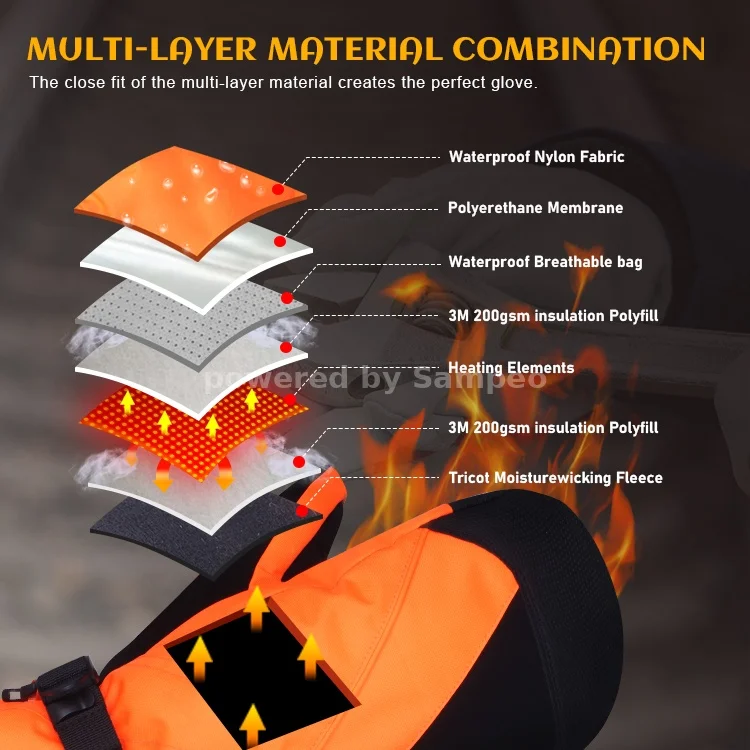
The graphene heating fabric is the single most critical component in a heated apparel SKU — it is the heating element, the bond substrate, and the wearable-electrical-safety interface all in one. A dual-source qualification protocol for the fabric must validate four engineering parameters to within ±5% across the primary and secondary fabric sources.
H2.1. Parameter 1: Surface Resistivity (Ohms per Square)
The surface resistivity of the graphene fabric (measured in Ohms per square, Ω/□) determines the heating output at a given applied voltage. For a 5V USB-powered heated jacket, the target surface resistivity is typically 1.5-3.5 Ω/□ depending on the trace pattern and the active area. A ±5% variance in surface resistivity translates to a ±5% variance in heating output, which is at the edge of the IEC 60278-3 test method’s measurement uncertainty — meaning a >5% variance is a real spec deviation, not measurement noise.
Qualification test method: 4-point probe measurement per ASTM F84, 10 samples per lot, 10 measurements per sample, averaged. Test report must include mean, standard deviation, and Cpk (process capability index) for the surface resistivity.
Acceptance criterion: Cpk ≥ 1.33 (i.e., the process is capable, and the surface resistivity distribution fits within the spec window with 4-sigma margin).
H2.2. Parameter 2: Power Density (Watts per Square Meter)
The power density (W/m²) at the rated voltage determines the heating performance (e.g., 7W/m² for a 5V/7.4V mid-heat setting, 14W/m² for high-heat). A ±5% variance in power density translates to a perceptible difference in heating output to the end user.
Qualification test method: Applied voltage at rated spec (e.g., 5.0V for 5V system, 7.4V for 7.4V system), measure current draw, calculate power density = V × I / active_area. 10 samples per lot, 3 measurements per sample after 5 minutes of continuous operation (to reach thermal steady state).
Acceptance criterion: Power density within ±5% of spec at rated voltage, Cpk ≥ 1.33.
H2.3. Parameter 3: Bond Strength to Knit Substrate
The graphene fabric is bonded to a knit substrate (polyester/spandex blend) via a thermal-bonding adhesive. The bond strength (measured in N/cm or N/25mm) determines the wash durability and the field-failure rate (delamination of the heating element from the garment).
Qualification test method: 180-degree peel test per ASTM D903, 25mm wide sample, 100mm/min crosshead speed. 10 samples per lot. Report mean bond strength and failure mode (adhesive failure vs cohesive failure vs substrate failure).
Acceptance criterion: Mean bond strength ≥ 8 N/25mm, failure mode predominantly cohesive (within the adhesive layer) or substrate failure (within the knit). Adhesive failure (clean separation at the adhesive-substrate interface) is a sign of inadequate surface preparation and is a spec failure.
H2.4. Parameter 4: Wash Durability (Surface Resistivity After 50 Wash Cycles)
The graphene fabric must maintain its surface resistivity (and thus its heating output) after 50 wash cycles per ISO 6330 + AATCC 135 (machine wash at 40°C, tumble dry low).
Qualification test method: 50 wash cycles per ISO 6330 procedure 4N (40°C normal agitation, no bleach), tumble dry low per AATCC 135. Measure surface resistivity before and after 50 cycles, 10 samples per lot.
Acceptance criterion: Post-wash surface resistivity within ±15% of pre-wash (i.e., the wash cycle degrades the surface resistivity by no more than 15% over 50 cycles). A >15% degradation is a sign of inadequate graphene-substrate bonding or graphene ink durability.
H2.5. Dual-Source Acceptance Decision
A fabric source (primary or secondary) is dual-source-qualified only if all four parameters meet the acceptance criteria above. A fabric source that meets 3 of 4 is conditionally qualified — the failed parameter must be addressed by the fabric supplier before the source is added to the dual-source network. A fabric source that meets fewer than 3 of 4 is rejected.
The qualification test is performed on 3 production lots (not 1) to capture lot-to-lot variance. A fabric source that passes on lot 1 but fails on lot 3 is not qualified — the fabric supplier must demonstrate process control across multiple lots.
—
H2. 21700 Cell Dual-Source Qualification Protocol
The 21700 cell is the second most critical component. A dual-source qualification protocol for the cell must validate five engineering parameters to within spec across two different cell vendors (e.g., Samsung SDI Vietnam + LG Energy Solution China, or Samsung SDI Vietnam + Murata Japan).
H2.1. Parameter 1: Capacity (mAh at 0.2C Discharge)
The cell’s rated capacity (e.g., 5000mAh) must be validated at 0.2C discharge (1A for a 5000mAh cell) to a 2.5V cut-off voltage, per IEC 62133-2 test method.
Qualification test method: 10 cells per lot, fully charged at 0.5C to 4.2V with CC-CV profile, rest 30 minutes, discharge at 0.2C to 2.5V, rest 30 minutes. Repeat 3 cycles. Report the mean capacity of the 3rd cycle discharge.
Acceptance criterion: Mean capacity ≥ 4950mAh (i.e., ≥99% of rated 5000mAh) at 0.2C discharge. A <99% rating means the cell vendor's spec is overstated.
H2.2. Parameter 2: Internal Resistance (mΩ AC at 1kHz)
The cell’s internal resistance determines the heat generated during high-current discharge (e.g., a 7.4V/14W heated jacket draws ~1.9A continuous, which generates I²R heat inside the cell). A high internal resistance translates to reduced heating performance and increased cell self-heating.
Qualification test method: AC internal resistance at 1kHz per IEC 61960, 10 cells per lot, measured at 50% state of charge.
Acceptance criterion: Mean internal resistance ≤ 25 mΩ for a 5000mAh cell. A >25 mΩ cell is a sign of aging or vendor process drift.
H2.3. Parameter 3: Cycle Life (Cycles to 80% Capacity at 1C Charge/Discharge)
The cell’s cycle life (typically 500+ cycles to 80% capacity for a quality 21700 cell) determines the warranty period of the heated apparel. A 500-cycle cell supports a 2-year warranty (250 cycles/year × 2 years); a 300-cycle cell supports a 1-year warranty.
Qualification test method: 1C charge (5A for 5000mAh) to 4.2V with CC-CV, rest 30 minutes, 1C discharge to 2.5V, rest 30 minutes. Repeat until capacity drops below 80% of rated. Report the cycle count at 80% capacity.
Acceptance criterion: ≥500 cycles to 80% capacity. A <500-cycle cell is a sign of poor cell-bin selection or vendor process drift.
H2.4. Parameter 4: Low-Temperature Performance (Capacity at 0°C)
The cell must deliver rated capacity (or close to it) at low temperature, since heated apparel is used in cold weather. A cell that loses 30%+ capacity at 0°C is unsuitable for outdoor heated apparel.
Qualification test method: 10 cells per lot, fully charged at 25°C, rested at 0°C for 4 hours, discharged at 0.2C to 2.5V at 0°C ambient. Report capacity as % of 25°C-rated capacity.
Acceptance criterion: ≥85% of 25°C capacity at 0°C discharge. A <85% capacity at 0°C is a sign of inadequate electrolyte formulation for cold-weather operation.
H2.5. Parameter 5: Safety Certifications (UL 2054, IEC 62133-2, UN 38.3)
The cell must hold current safety certifications for the destination market:
– UL 2054 (US): required for any lithium cell shipped to or used in the US
– IEC 62133-2 (international): required for any lithium cell shipped internationally, including EU
– UN 38.3 (transport): required for any lithium cell transported by air (UN3481 Class 9 hazmat)
Acceptance criterion: All three certifications current (issued or re-issued within the last 24 months). A cell with an expired UN 38.3 cannot be shipped by air freight, which forces ocean freight and adds 18-22 days to the lead time.
H2.6. Cell Vendor Continuity Strategy
A dual-source cell strategy is not “use two cell vendors in parallel on every order.” It is a vendor continuity strategy with three modes:
– Mode A (default): primary cell vendor (e.g., Samsung SDI Vietnam) supplies 70-80% of program volume; secondary cell vendor (e.g., LG Energy Solution China) supplies 20-30% of program volume. Both cell vendors’ products are in mass production at both factories.
– Mode B (allocation crisis): primary cell vendor is on allocation; secondary cell vendor scales up to 100% of program volume. Triggered by primary cell vendor’s 4-week lead time exceeding 8 weeks or by primary cell vendor’s 0.2C capacity dropping below 4900mAh.
– Mode C (vendor failure): primary cell vendor fails to deliver (e.g., cell vendor bankruptcy, cell vendor regulatory action); secondary cell vendor takes 100% of program volume. The IP and tooling annex specifies that the secondary cell vendor’s cells are drop-in replacements in the OEM factory’s battery pack assembly line.
A dual-source cell strategy that does not have Mode B and Mode C defined in writing is a single-source cell strategy with a backup vendor.
—
H2. BMS Firmware Continuity Discipline
The battery management system (BMS) firmware is the software that controls the cell’s charge profile, discharge current limit, low-voltage cut-off, and temperature protection. A dual-source program that uses two different cell vendors must maintain two firmware branches (or a unified firmware with vendor auto-detection) to support both cell vendors’ spec sheets.
H2.1. The Three Firmware Models
| Model | Description | Pros | Cons |
|---|---|---|---|
| Single firmware, vendor-locked | One firmware binary, locked to one cell vendor | Simplest | Not dual-source; if cell vendor changes, firmware must be re-validated |
| Two firmware branches | Two firmware binaries, one per cell vendor, factory-level switch | Lower development cost | Field-failure risk if wrong branch is loaded |
| Unified firmware with vendor auto-detection | One firmware binary, auto-detects cell vendor via cell ID resistor or NFC tag | Most robust | Higher development cost; cell ID adds BOM cost |
H2.2. The Recommended Model: Two Firmware Branches with Factory-Level Switch
For most dual-source heated apparel programs, the two firmware branches with factory-level switch model is the engineering-recommended approach. The factory-level switch is implemented via a hardware configuration pin or a factory-programmed non-volatile memory bit, set during battery pack assembly. The wrong-branch field-failure risk is mitigated by:
– A factory-end-of-line test that validates the firmware branch matches the cell vendor’s cell ID
– A lockout that prevents the firmware from operating if the cell ID and firmware branch do not match (i.e., the battery pack does not power on, it returns an error code via the LED indicator)
– A field-service procedure that allows the firmware branch to be re-flashed at a service center if the wrong branch is loaded
H2.3. The Firmware Validation Cycle
For each new firmware branch (or unified firmware with new cell vendor support), the validation cycle is:
1. Bench testing (1-2 weeks): verify the firmware operates the cell at rated voltage, current, and temperature per the cell vendor’s spec sheet
2. Cycle-life testing (8-12 weeks): run 200+ charge/discharge cycles in a climate chamber at 25°C, verify the firmware’s charge termination, low-voltage cut-off, and temperature protection operate within spec
3. Field-trial testing (4-8 weeks): ship 50-100 battery packs with the new firmware to a real-world user group, collect field-failure data
4. Certification testing (4-6 weeks): re-certify the battery pack with the new firmware per UL 2054, IEC 62133-2, UN 38.3
A dual-source program that skips any of these four validation phases is a single-source program with a backup cell vendor.
H2.4. The Firmware Version Control Discipline
The firmware version control discipline is the engineering practice that prevents the wrong firmware from being loaded in production:
– Unique firmware version number per branch (e.g., FW-A1.2 for Samsung SDI branch, FW-B1.2 for LG Energy Solution branch)
– Git-based version control with commit history, code review, and signed tags
– Build artifacts stored in a versioned repository (e.g., S3 bucket with versioning) with SHA-256 checksums
– Factory-side flashing tooling that downloads the firmware from the repository, verifies the SHA-256, flashes the battery pack, and verifies the flash succeeded
– End-of-line test that reads back the firmware version and verifies it matches the expected version for the cell vendor
A dual-source program without firmware version control is a single-source program with a version-confusion field-failure waiting to happen.
—
H2. Knit-Integration Engineering Spec
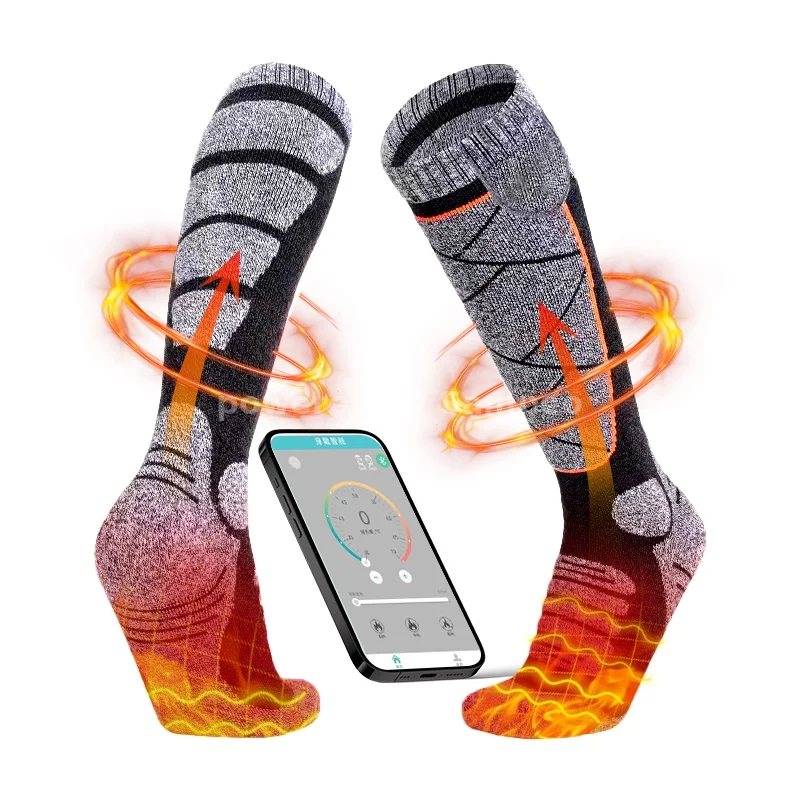
The knit-integration engineering spec defines how the graphene heating element is integrated into the knit structure of the garment. A dual-source program must validate the knit-integration process at both factories to ensure identical stretch, wash durability, and thermal mapping.
H2.1. The Three Knit-Integration Methods
| Method | Description | Pros | Cons |
|---|---|---|---|
| Laminated (thermal-bond) | Heating element is thermally bonded to the knit substrate via adhesive | Most common; lowest cost | Bond strength can fail if adhesive is mis-applied |
| Knit-in (direct integration) | Heating element yarn is knit directly into the garment structure | Most durable; best stretch recovery | Highest cost; requires specialized knitting machinery |
| Pocket (removable) | Heating element is inserted into a sewn pocket in the garment | Replaceable; lower cost for the heating element | Bulky; pocket seam can fail |
For most dual-source programs, the laminated (thermal-bond) method is the engineering-recommended approach. The laminated method is the most common in the industry and is supported by both China-domiciled and Vietnam-domiciled OEM factories.
H2.2. The Lamination Process Spec
The thermal-bond lamination process must be controlled at four process parameters:
– Lamination temperature: target 160-180°C (depending on the adhesive); ±5°C control
– Lamination pressure: target 2.5-3.5 bar; ±0.3 bar control
– Lamination dwell time: target 12-18 seconds; ±2 seconds control
– Adhesive weight: target 18-25 g/m²; ±2 g/m² control
A dual-source factory that cannot control all four parameters within the spec is not dual-source-ready. The process control is typically validated by a PPAP initial process capability study with Cpk ≥ 1.33 for each parameter.
H2.3. The Stretch Recovery Test
The laminated heating element must not restrict the stretch recovery of the knit substrate. A garment that loses >10% stretch recovery at the heating element zone is uncomfortable to wear and limits the garment’s use case.
Test method: 10 samples per lot, 100mm gauge length, stretch to 150% extension at 100mm/min crosshead speed, hold 30 seconds, release, measure gauge length after 60 seconds. Report stretch recovery as (extended_length – recovered_length) / extended_length × 100%.
Acceptance criterion: Stretch recovery ≥ 90% (i.e., the sample returns to within 10% of original gauge length after 150% extension). A <90% recovery is a sign of inadequate lamination or excessive adhesive weight.
H2.4. The Thermal Mapping Test
The heating element must deliver uniform thermal output across its active area, with no cold spots >2°C below the mean and no hot spots >2°C above the mean.
Test method: 10 samples per lot, apply rated voltage, measure surface temperature at 25 points across the active area using a thermal imaging camera after 5 minutes of continuous operation. Report the temperature map and the standard deviation across the 25 points.
Acceptance criterion: Standard deviation ≤ 2°C across the active area. A >2°C standard deviation is a sign of non-uniform trace pattern, non-uniform lamination, or non-uniform substrate thickness.
—
H2. Side-by-Side A/B Validation Protocol
The side-by-side A/B validation protocol is the final gate in the dual-source qualification cycle. It is the lab test sequence (UL/IEC/EN) that proves the dual-source finished goods are interchangeable.
H2.1. The Test Battery
| Test | Standard | Sample Size | Acceptance Criterion |
|---|---|---|---|
| Heating output at rated voltage | IEC 60278-3 | 10 per factory | Within ±5% of spec |
| Surface resistivity | ASTM F84 | 10 per factory | Within ±5% of spec |
| Bond strength (peel test) | ASTM D903 | 10 per factory | ≥ 8 N/25mm, cohesive failure |
| Wash durability (50 cycles) | ISO 6330 + AATCC 135 | 10 per factory | Post-wash surface resistivity within ±15% of pre-wash |
| Battery capacity | IEC 62133-2 | 10 per factory | ≥ 4950mAh at 0.2C discharge |
| Battery cycle life | IEC 62133-2 (500 cycles) | 5 per factory | ≥ 500 cycles to 80% capacity |
| Low-temperature battery | IEC 62133-2 (0°C) | 10 per factory | ≥ 85% capacity at 0°C |
| UL 2054 safety | UL 2054 | 3 per factory | Pass (no fire, no explosion, no leakage) |
| IEC 62133-2 safety | IEC 62133-2 | 3 per factory | Pass |
| UN 38.3 transport | UN 38.3 | 3 per factory | Pass (no fire, no explosion, no venting) |
| CE-EMC | EN 55014-1 / EN 55014-2 | 3 per factory | Pass |
| FCC Part 15B | FCC Part 15B | 3 per factory | Pass |
| Stretch recovery | Internal (150% extension) | 10 per factory | ≥ 90% recovery |
| Thermal mapping | Internal (25-point IR scan) | 10 per factory | Standard deviation ≤ 2°C |
A dual-source program where the primary factory passes all 14 tests and the secondary factory passes fewer than 13 is not dual-source-ready. The secondary factory must address the failed test(s) before the dual-source program is operationalized.
H2.2. The Side-by-Side Mass-Production Run
After the lab test battery passes at both factories, a side-by-side mass-production run of 5,000+ units per factory is required. The run validates the lab tests under real production conditions and surfaces any latent issue (e.g., the secondary factory’s cell vendor silently downgrades the cell bin; the secondary factory’s lamination process drifts over the production run).
Acceptance criterion: AQL 2.5/4.0 sampling per ISO 2859-1, defect rate within ±0.3% across both factories, on-time delivery within ±2 days of the committed ship date.
A dual-source program that skips the side-by-side mass-production run is a single-source program with a backup factory that has not been validated under real production conditions.
H2.3. The Lab Selection
The lab that performs the dual-source qualification test battery must be:
– ISO 17025 accredited for the relevant test methods (IEC 62133-2, UL 2054, UN 38.3, ISO 6330, etc.)
– Independent of both factories (no commercial relationship with either factory beyond the testing engagement)
– Capable of testing to the destination market’s regulatory requirements (UL for US, CE for EU, RCM for AU, etc.)
A dual-source program that uses a factory-internal lab or a lab with a commercial relationship to one of the factories is not dual-source-validated.
Common dual-source qualification labs in 2026:
– Intertek (US, UK, China): UL / IEC / UN 38.3 / CE
– SGS (global): UL / IEC / UN 38.3 / CE
– TÜV Rheinland (Germany, China, Vietnam): IEC / CE / TÜV
– BV (Bureau Veritas) (global): UL / IEC / UN 38.3 / CE
– CTI (China Testing International) (China): IEC / UN 38.3 / CCC
A dual-source program that uses a less-accredited lab is not dual-source-validated for the destination market.
—
H2. The Dual-Source Engineering Documentation Package
The dual-source engineering documentation package is the set of documents that a dual-source-engineering-ready OEM factory can produce on request. The package includes:
H2.1. The 10 Required Documents
1. Component-level country-of-origin mapping for every BOM line item
2. Graphene fabric qualification test report (4 parameters, 3 lots, both fabric sources)
3. 21700 cell qualification test report (5 parameters, 3 lots, both cell vendors)
4. BMS firmware version control documentation (Git repository, build artifacts, end-of-line test procedure)
5. Lamination process capability report (4 process parameters, Cpk ≥ 1.33)
6. Stretch recovery and thermal mapping test report (10 samples per factory, both factories)
7. Side-by-side A/B mass-production run report (5,000+ units per factory, AQL defect rate, on-time delivery)
8. Safety certification certificates (UL 2054, IEC 62133-2, UN 38.3, CE-EMC, FCC Part 15B)
9. Lab accreditation certificates (ISO 17025 for the test lab)
10. IP and tooling ownership annex (tooling ownership, IP ownership, transfer rights, NNN agreement)
A factory that can produce all 10 documents on request is dual-source-engineering-ready. A factory that can produce 6-9 is in the qualification phase. A factory that can produce fewer than 6 is single-source with a multi-country marketing claim.
H2.2. The 2026 Spec Updates
Three 2026-vintage spec updates that the engineering team must incorporate into the dual-source documentation package:
– IEC 62133-2:2017 + AMD1:2021 (the current edition as of 2026): the AMD1 amendment adds requirements for thermal abuse testing (130°C for 10 minutes) that the previous edition did not include
– UL 2054:2023 (the current edition as of 2026): the 2023 edition adds requirements for cell-level short-circuit testing (10 mΩ external short for 1 hour) that the previous edition did not include
– UN 38.3 Rev. 7 (the current edition as of 2026): the Rev. 7 edition adds requirements for altitude simulation (11.6 kPa for 6 hours) that the previous edition (Rev. 6) did not include
A dual-source program that uses the previous editions of these standards is not 2026-current.
—
H2. The 2026 Buyer-Side Engineering RFP Checklist
A B2B buyer’s engineering team evaluating a dual-source OEM program should ask the factory these 12 questions in the RFP:

1. Graphene fabric dual-source: Do you have two qualified graphene fabric sources with surface resistivity, power density, bond strength, and wash durability all meeting spec? Provide test reports.
2. 21700 cell dual-source: Do you have two qualified 21700 cell vendors with capacity, internal resistance, cycle life, and low-temperature performance all meeting spec? Provide test reports.
3. BMS firmware version control: Is the BMS firmware version controlled via Git? Are build artifacts stored in a versioned repository? Is the end-of-line test verifying the firmware version matches the cell vendor?
4. Lamination process capability: Is the lamination process (temperature, pressure, dwell, adhesive weight) controlled to Cpk ≥ 1.33 at both factories? Provide process capability reports.
5. Stretch recovery test: Is the stretch recovery of the heating element zone ≥ 90% at 150% extension? Provide test reports for both factories.
6. Thermal mapping test: Is the thermal mapping standard deviation ≤ 2°C across the active area? Provide test reports for both factories.
7. Side-by-side A/B mass-production run: Have you completed a 5,000+ unit side-by-side mass-production run at both factories? Provide the run report.
8. Safety certifications: Do both factories hold current UL 2054, IEC 62133-2, UN 38.3, CE-EMC, FCC Part 15B certifications? Provide certificate copies.
9. Lab accreditation: Is the test lab ISO 17025 accredited for the relevant test methods? Provide the lab’s accreditation certificate.
10. Tooling ownership: Who owns the custom tooling? What is the transfer-rights clause?
11. IP protection: Is the heating element trace pattern IP protected? Is the BMS firmware IP protected? What is the NNN agreement scope?
12. Engineering documentation package: Can you produce the 10-document dual-source engineering documentation package on request? Provide a sample package.
A factory that answers all 12 questions with documentation is dual-source-engineering-ready. A factory that answers 6-11 is in the qualification phase. A factory that answers fewer than 6 is single-source with a multi-country marketing claim.
—
H2. The Engineering Manager’s Operating Cadence
A dual-source engineering program requires a quarterly engineering review with the following agenda:
| Quarter | Agenda | Output |
|---|---|---|
| Q1 | Audit continuity (BSCI / SEDEX / ISO 9001) for both factories; cell vendor allocation review | Audit report; cell allocation forecast |
| Q2 | Graphene fabric dual-source test (3 lots per source); lamination process capability re-validation | Fabric test report; process capability report |
| Q3 | 21700 cell dual-source test (3 lots per vendor); BMS firmware version review | Cell test report; firmware version log |
| Q4 | Side-by-side A/B mass-production run; safety certification re-validation | Mass-production run report; certification log |
A dual-source program that does not have a quarterly engineering review cadence is a single-source program with a backup factory.
—
H2. Frequently Asked Questions (Dual-Source Engineering Specification)
Q1: What is the cost of a dual-source qualification cycle?
A: $25K-$50K one-time, plus 16-24 weeks of calendar time. The cost includes the PPAP documentation, pilot run, side-by-side mass-production run, lab testing, and engineering time. The cost amortizes over 3-6 production runs (6-9 months at quarterly order cadence).
Q2: Can the same cell vendor be used at both factories?
A: Yes, in theory. Samsung SDI Vietnam + Samsung SDI China would be the same cell vendor at two factories. However, the cell bin may differ between the two plants, and the dual-source qualification test must validate the cell bin matches across plants. A dual-source program with the same cell vendor at two factories is a single-source cell program with a multi-country factory network.
Q3: How is the BMS firmware branch selected in production?
A: Via a hardware configuration pin or a factory-programmed non-volatile memory bit, set during battery pack assembly. The wrong-branch field-failure risk is mitigated by an end-of-line test that reads back the firmware version and verifies it matches the cell vendor’s cell ID.
Q4: What is the typical lead-time delta between the primary and secondary factory?
A: 4-6 days. The Vietnam factory is typically 4-6 days slower than the China factory due to cell procurement lead time (Samsung SDI Vietnam is 12-21 days vs LG Energy Solution China at 7-14 days) and ocean freight (Vietnam to US is 18-22 days vs China to US at 14-18 days).
Q5: Can the same lab test report be used for both factories?
A: No. The lab test report must be issued per factory, per lot, per test method. A single lab test report that says “tested at both factories” without per-factory data is not a valid dual-source qualification document.
Q6: How is the graphene fabric trace pattern IP protected in a dual-source program?
A: Two options: (a) the IP holder licenses the trace pattern to a second finishing house with royalty terms; (b) the OEM factory reverse-engineers an equivalent trace pattern in-house and owns the IP. The first option preserves the original IP holder’s quality; the second option eliminates licensing but requires significant engineering investment.
Q7: What is the difference between a pilot run and a mass-production run?
A: A pilot run is 500-1,000 units, used to validate the production process at the secondary factory for the first time. A mass-production run is 5,000+ units, used to validate the production process under real production conditions. The pilot run and mass-production run are both required for dual-source qualification.
Q8: What is the typical defect rate at a dual-source-engineering-ready factory?
A: AQL 2.5/4.0 sampling per ISO 2859-1, with a typical defect rate of 0.5%-1.0% for general defects and <0.1% for critical defects (heating element electrical safety, battery safety). A defect rate >1.0% at the secondary factory is a sign that the unified quality manual is not being enforced.
Q9: How does dual-source engineering interact with the 2026 Section 301 tariff?
A: The dual-source qualification test is independent of the Section 301 tariff — the engineering spec is the same regardless of which factory produces the finished good. However, the Section 301 tariff drives the country-of-origin decision (Vietnam primary vs China primary), which drives which factory is the primary and which is the secondary.
Q10: Can the buyer own the BMS firmware IP?
A: Yes, and IMISSKY recommends it for any private-label program above $250K annual buy. The BMS firmware IP ownership clause specifies (a) buyer owns the firmware source code; (b) factory holds a non-exclusive license to use the firmware in production for the buyer’s program; (c) buyer has transfer rights to move the firmware to a different factory with 90-day notice. This is the strongest IP protection structure for the buyer’s firmware investment.
Q11: What is the role of the third-party test lab in dual-source qualification?
A: The third-party test lab is independent of both factories, ISO 17025 accredited, and capable of testing to the destination market’s regulatory requirements. The lab performs the 14-test battery (heating output, surface resistivity, bond strength, wash durability, battery capacity, cycle life, low-temperature, UL 2054, IEC 62133-2, UN 38.3, CE-EMC, FCC Part 15B, stretch recovery, thermal mapping) and issues the per-factory test reports.
Q12: What is the future of dual-source heated apparel engineering?
A: The macro forces (Section 301 hardening, de minimis compression, Vietnam OEM capacity maturation, 21700 cell allocation) are all multi-year structural shifts, not cyclical. A dual-source engineering program structured in 2026 is positioned for 2027-2028 cost optimization regardless of the specific USTR schedule or de minimis rule. The dual-source engineering discipline (graphene fabric qualification, 21700 cell qualification, BMS firmware continuity, knit-integration spec, side-by-side A/B validation) is the engineering backbone of any 2026-2028 heated apparel program.
—
H2. Glossary of Dual-Source Engineering Terms
– 21700 cell form factor: a cylindrical lithium-ion cell with 21mm diameter and 70mm height; the dominant cell form factor for heated apparel in 2026
– BMS (Battery Management System): the electronic circuit that controls the cell’s charge profile, discharge current limit, low-voltage cut-off, and temperature protection
– CC-CV (Constant Current – Constant Voltage): the standard lithium-ion cell charging profile; constant current until the cell reaches 4.2V, then constant voltage until the current drops below a threshold
– Cpk (Process Capability Index): a statistical measure of process capability; Cpk ≥ 1.33 indicates a capable process
– Dual-source qualification cycle: the integrated 16-24 week program (graphene fabric test, 21700 cell test, BMS firmware validation, knit-integration spec, side-by-side A/B mass-production run) that qualifies two factories to deliver interchangeable finished goods
– Graphene fabric: a heating element fabric made by printing or coating a graphene-based conductive ink on a textile substrate; the dominant heating element in 2026-vintage heated apparel
– IEC 62133-2: the international safety standard for secondary lithium cells for portable applications; required for any lithium cell shipped internationally
– IP and tooling annex: the legal document that specifies tooling ownership, IP ownership, transfer rights, and NNN agreement terms in a dual-source program
– Lab accreditation (ISO 17025): the international standard for testing and calibration laboratories; required for any lab that issues test reports for regulatory compliance
– Lamination process: the thermal-bond process that bonds the graphene heating element to the knit substrate; controlled at 4 process parameters (temperature, pressure, dwell, adhesive weight)
– PPAP (Production Part Approval Process): the AIAG-standard quality discipline required to approve a part for mass production
– Side-by-side A/B mass-production run: a 5,000+ unit production run at each factory, with interchangeable finished goods; the final gate in the dual-source qualification cycle
– Surface resistivity (Ω/□): a measure of the electrical resistance of a thin film or fabric, measured in Ohms per square; the key spec for graphene heating fabric
– Thermal mapping: the temperature distribution across the active area of a heating element, measured with a thermal imaging camera
– UL 2054: the US safety standard for household and commercial batteries; required for any lithium cell shipped to or used in the US
– UN 38.3: the UN transport safety standard for lithium cells; required for any lithium cell transported by air (UN3481 Class 9 hazmat)
—
Internal references: Graphene Heating Fabric OEM/ODM factory, Dongguan, China. Parent group’s Vietnam factory in Binh Duong cluster. For B2B private-label OEM/ODM heated apparel engineering inquiries, contact the engineering team via the contact form on grapheneheatingfabric.com. Pillar #75 in the Graphene Heating Fabric 2026 B2B PILLAR series. Last updated 2026-09-12.
Glossary of Dual-Source Engineering Terms
21700 cell form factor: a cylindrical lithium-ion cell with 21mm diameter and 70mm height; the dominant cell form factor for heated apparel in 2026.
BMS (Battery Management System): the electronic circuit that controls the cell’s charge profile, discharge current limit, low-voltage cut-off, and temperature protection.
Cpk (Process Capability Index): a statistical measure of process capability; Cpk ≥ 1.33 indicates a capable process.
PPAP (Production Part Approval Process): the AIAG-standard quality discipline required to approve a part for mass production.
Related category: Battery Heated Apparel Factory
Leave a Reply