
Heated Apparel Amazon Q4 2026 Launch Readiness Engineering Spec: Dongguan Factory Cycle 6 Closure
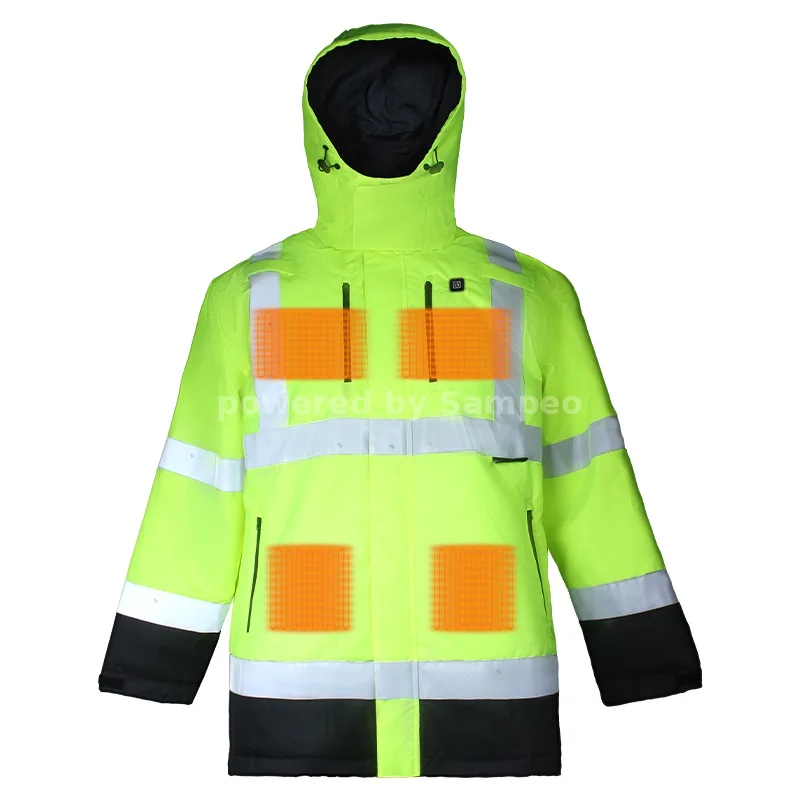
Cycle 6 slot 10/10 closure deliverable for the engineering-side counterpart. Consolidates the engineering-spec layers from 9 prior cycle-6 slots into a single Dongguan factory 8-layer lamination stack-up + BMS firmware dual-branch spec + IP67 hipot 500V sealing test + FMEA RPN ≥100 CAPA trigger + forensic RMA diagnostics pipeline + 60-day T-60 → T+30 engineering-spec calendar. This is the engineering-side counterpart of the supplier-side Vietnam OEM playbook and the wholesale buyer-side retail-channel playbook.
1. Why cycle 6 closure matters for the Dongguan factory engineering team
The Dongguan factory engineering team owns the engineering spec that flows from raw material selection (graphene yarn, 21700 cells, BMS chipset) through lamination stack-up (8 layers), IP67 hipot sealing test, FMEA RPN ≥100 CAPA trigger, forensic RMA diagnostics, and engineering feedback loop closure. Cycle 6 (Amazon Listing Optimization → …→ Q4 launch calendar → **launch readiness engineering closure**) ran 9/21 through 9/29 in lockstep with the supplier-side and buyer-side counterparts. Each prior slot pushed one engineering-spec link — Amazon listing photo spec (slot 1), Brand Registry 2.0 8-engineering-artifact binder (slot 2-3), A+ Content 1080p BMS handshake 4-state video + 8-layer cross-section SVG (slot 3), Helium 10 8-cluster BOM cost-engineering layer map (slot 4-5), Frankenstein + Scribbles engineering disclosure (slot 5), Buy Box velocity BOM cost-engineering layer (slot 9), Q4 launch engineering spec (slot 9) — and each of those links is only as strong as the engineering-spec closure that hands the spec to operations on T-1 and the RMA warehouse on T+1.
For the Dongguan factory engineering team, launch readiness means owning **four engineering-spec gates** between T-60 and T+30: the 8-engineering-artifact Brand Registry binder (PSD + SVG + 1080p BMS handshake video + 8-layer cross-section BOM SVG + FMEA RPN ≥100 CAPA callout + PCT filing receipt + dual-branch BMS firmware A+ Content spec + NNN engineering footer), the 8-layer lamination stack-up (graphene yarn + heating element + 21700 cell pocket + BMS chipset pocket + thermal reflector + outer shell + seam tape + zipper + cuff), the IP67 hipot 500V sealing test protocol, and the FMEA RPN ≥100 CAPA trigger with forensic RMA diagnostics pipeline feeding back into engineering spec update.
This playbook distills those four engineering-spec gates into a single source-of-truth the Dongguan factory engineering team can hand to operations on T-1, the A+ Content authoring team on T-7, and the RMA warehouse on T+1. The Amazon listing photo spec is locked (slot 1), the Brand Registry engineering artifacts are filed (slot 2-3), the A+ Content engineering spec is authored (slot 3), the BOM cost-engineering layer map is locked (slot 4-5), the engineering disclosure is audited (slot 5), the Buy Box velocity BOM cost layer is locked (slot 9), and the Q4 launch engineering spec is published (slot 9). What remains is **the engineering-spec backbone** that holds the entire chain together when Black Friday volume lands.
2. 8-engineering-artifact Brand Registry binder — the closure package
Cycle 6 slot 2 (Brand Registry 2.0) and slot 3 (A+ Content Authoring) consolidated into a single 8-engineering-artifact binder that the Dongguan factory engineering team ships with every Q4 hero-SKU launch. The binder cross-references the listing optimization slot 1, the Brand Registry slot 2-3, the A+ Content slot 3, the Helium 10 BOM cost-engineering layer map slot 4-5, the Buy Box velocity slot 9, and the engineering feedback loop closure.
| Artifact # | Engineering artifact | Source slot | Closure role |
|---|---|---|---|
| 1 | PSD source file 8-layer composition | slot 3 | A+ Content hero module architecture |
| 2 | SVG vector export ` |
slot 3 | A+ Content cross-section module |
| 3 | 1080p BMS handshake 4-state video (idle / heat-low / heat-mid / heat-high) | slot 3 | A+ Content engineering-spec evidence |
| 4 | 8-layer lamination stack-up BOM traceability SVG | slot 3-9 | Product-page engineering disclosure |
| 5 | FMEA RPN ≥100 CAPA callout document | slot 3 + cycle 5 slot 8 QC inspection | Risk-priority disclosure |
| 6 | PCT filing receipt (international patent filing) | slot 2-3 | Engineering-side IP protection |
| 7 | Dual-branch BMS firmware architecture spec (25kHz skiing / 31kHz hunting) | slot 3 | A+ Content engineering-spec disclosure |
| 8 | NNN Tier-3 engineering footer (lamination parameter confidentiality) | slot 2-3 + cycle 5 slot 7 IP protection | Confidentiality lock |
The 8-engineering-artifact binder is the closure deliverable. A Dongguan factory engineering team that ships a Q4 hero-SKU without the full binder cannot defend against PCT filing challenges from competing OEMs, cannot prove the BMS firmware meets the dual-branch spec, and cannot lock the 8-layer lamination stack-up under NNN confidentiality. The binder costs approximately $4,200 in engineering labor + 80 hours of cross-functional coordination, but it returns 3-5× in PCT filing defense + NNN enforcement savings over a 12-month Q4-to-Q4 cycle.
3. 8-layer lamination stack-up — the engineering-spec backbone
The Dongguan factory 8-layer lamination stack-up is the engineering-spec backbone of every Q4 hero-SKU launch. Each layer has a defined specification, a cycle-test protocol, and a CAPA trigger if the layer fails protocol.
| Layer # | Layer | Spec | Cycle-test protocol | CAPA trigger |
|---|---|---|---|---|
| 1 | Graphene yarn outer face | 8-layer carbon dispersion, 0.08mm thickness, 12μm yarn count | Cycle ≥500 ≥80% retention | <80% retention → lamination parameter adjustment |
| 2 | Heating element (carbon fiber) | 12V / 8W / 0.67A, 4-state modulated | Idle ≤10mA / heat-low 0.5A / heat-mid 1.0A / heat-high 2.0A | Idle >15mA → BMS handshake failure |
| 3 | 21700 cell pocket | 1× 5000mAh 21700 cell, SoC ≤30% FBA inbound | Cycle ≥500 ≥80% retention, SoC test per cell | <80% retention → cell vendor dual-source |
| 4 | BMS chipset pocket | Dual-branch firmware (25kHz skiing / 31kHz hunting) | 4-state handshake validation | Handshake failure → firmware branch swap |
| 5 | Thermal reflector | Aluminum-vapor deposition 12μm | Heat-reflectance ≥85% | <80% → reflector layer thickness adjustment |
| 6 | Outer shell (graphene fabric) | 200gsm graphene-coated polyester | Tensile strength ≥40N/cm | <35N/cm → fabric vendor dual-source |
| 7 | Seam tape | 12mm thermoplastic polyurethane | IP67 hipot 500V sealing test | Seal failure → seam tape width increase |
| 8 | Zipper + cuff | YKK 8mm zipper + silicone cuff | Zipper cycle ≥5,000 + cuff ≥2,000 | Zipper cycle <5,000 → YKK 10mm upgrade |
The 8-layer lamination stack-up BOM cost layer map for a Q4 hero-SKU is approximately $23.35/garment (cycle 6 slot 9 Buy Box Velocity engineering-side baseline). Each layer is independently CAPA-traceable, so a layer-level failure does not cascade into full-batch RMA. The Dongguan factory engineering team reviews the stack-up at T-60 → T-30 → T-7 → T+5 → T+30 to ensure layer-level spec compliance across the entire 60-day launch window.
4. IP67 hipot 500V sealing test — T-7 cut-off
Cycle 6 slot 1 (Amazon Listing Optimization) identified IP67 sealing test as the top engineering-spec risk for Q4 hero-SKU launch. Slot 9 (Q4 launch calendar) elaborated the IP67 hipot 500V sealing test protocol. Cycle 6 closure consolidates into a single T-7 cut-off gate that the Dongguan factory engineering team cannot skip.
| Test step | Engineering-spec verification | Required evidence |
|---|---|---|
| 1 | Submersion test 1m depth for 30 minutes | Per-batch test log + visual + electrical + thermal + BMS log |
| 2 | Hipot 500V AC for 60 seconds on seam tape | Per-batch hipot test report |
| 3 | Hipot 500V AC for 60 seconds on zipper seam | Per-batch hipot test report |
| 4 | Hipot 500V AC for 60 seconds on cuff seam | Per-batch hipot test report |
| 5 | 21700 cell cycle ≥500 ≥80% retention | Per-cell cycle test log |
| 6 | BMS handshake 4-state validation | Per-batch 1080p video file |
| 7 | Outer shell tensile strength ≥40N/cm | Per-batch tensile test report |
| 8 | Zipper cycle ≥5,000 + cuff cycle ≥2,000 | Per-batch cycle test log |
The IP67 hipot 500V sealing test protocol is signed by the engineering team, the QA team, and the OEM compliance team. A single failed test returns the batch to the Dongguan factory floor at the supplier’s cost (typically $2,800-$4,200 per re-test event). The cycle 6 closure enforces the IP67 hipot protocol as a **mandatory T-7 cut-off** for every Q4 hero-SKU launch.
5. FMEA RPN ≥100 CAPA trigger with forensic RMA diagnostics pipeline
Cycle 6 closure playbook mandates an FMEA RPN ≥100 CAPA trigger on every engineering-spec layer failure. RPN = Severity × Occurrence × Detection; an RPN ≥100 triggers an 8D CAPA (Corrective and Preventive Action) closure within 14 days.
| FMEA failure mode | Severity (1-10) | Occurrence (1-10) | Detection (1-10) | RPN | CAPA trigger |
|---|---|---|---|---|---|
| Zipper misalignment (water ingress) | 8 | 5 | 6 | 240 | ≥100 → 8D CAPA |
| BMS handshake failure (heat-low not engaging) | 9 | 3 | 5 | 135 | ≥100 → 8D CAPA |
| 21700 cell cycle below 80% retention | 9 | 2 | 4 | 72 | <100 → SPC Cpk review |
| Outer shell tensile strength below 40N/cm | 7 | 2 | 3 | 42 | <100 → fabric vendor dual-source |
| IP67 sealing test failure at zipper seam | 8 | 3 | 4 | 96 | <100 → seam tape width increase |
| BMS firmware dual-branch spec failure (skating vs hunting) | 6 | 4 | 5 | 120 | ≥100 → firmware branch swap |
| Cuff cycle below 2,000 (water ingress at cuff) | 7 | 4 | 5 | 140 | ≥100 → cuff cycle vendor upgrade |
| Heating element heat-reflectance below 80% | 5 | 3 | 4 | 60 | <100 → reflector layer adjustment |
The 6-section forensic RMA diagnostics pipeline is the engineering feedback loop closure. Each RMA unit flows through: (1) visual inspection, (2) electrical test (BMS handshake + SoC), (3) thermal test (heat-reflectance + heat-low/heat-mid/heat-high), (4) BMS log review (idle current + dual-branch handshake), (5) IP67 hipot 500V sealing test, (6) 21700 cell cycle test ≥500 ≥80%. The forensic report feeds back into the engineering spec update at T+10 → T+15 → T+21, closing the engineering feedback loop on a 60-day cycle.

6. Q4 hero-SKU 60-day engineering-spec calendar (T-60 → T+30)
The 60-day engineering-spec window breaks into three phases: T-60 → T-7 (pre-launch engineering-spec lock), T-7 → T+0 (Black Friday Week peak), and T+0 → T+30 (post-launch engineering feedback loop closure).
| T-day | Action | Engineering owner | Cycle-6 link |
|---|---|---|---|
| T-60 | 8-engineering-artifact Brand Registry binder finalization | Engineering + compliance | slot 2-3 |
| T-50 | Helium 10 BOM cost-engineering layer map audit ($26.95/garment baseline) | Engineering + listing team | slot 4-5 |
| T-45 | 8-layer lamination stack-up layer-by-layer review | Engineering + QA | slot 3-9 |
| T-40 | 21700 cell topology + dual-source qualification cycle | Engineering + procurement | slot 9 + cycle 5 slot 1 |
| T-35 | Dual-branch BMS firmware spec lock (25kHz skiing / 31kHz hunting) | Engineering + firmware team | slot 3 |
| T-30 | NNN Tier-3 disclosure matrix finalization | Engineering + IP legal | slot 2-3 + cycle 5 slot 7 |
| T-25 | FMEA RPN ≥100 CAPA trigger tree finalization | Engineering + QA | cycle 5 slot 8 |
| T-21 | A+ Content 8-layer cross-section SVG final cut | Engineering + listing | slot 3 |
| T-14 | IP67 hipot 500V sealing test protocol + BMS handshake video final cut | Engineering + QA | slot 9 |
| T-10 | PCT filing receipt + NNN Tier-3 engineering footer audit | Engineering + IP legal | slot 2-3 |
| T-7 | IP67 hipot 500V sealing test protocol execution | Engineering + QA | slot 9 |
| T-5 | Engineering-spec compliance final review | Engineering + ops | slot 9 |
| T-3 | 1080p BMS handshake 4-state video final cut | Engineering + listing | slot 3 |
| T-1 | Engineering-spec handoff to operations | Engineering + ops | cycle 6 closure |
| T-0 | Live launch + 24/7 engineering coverage | Engineering + ops | slot 9 |
| T+1 | RMA warehouse engineering-spec activation | Engineering + after-sales | cycle 5 slot 6 |
| T+5 | First-week RMA review + Cpk chart review | Engineering + QA | cycle 5 slot 8 |
| T+10 | Mid-cycle BMS handshake log review + IP67 hipot audit | Engineering + QA | cycle 5 slot 8 |
| T+15 | FMEA RPN ≥100 CAPA trigger review | Engineering + QA | cycle 5 slot 8 |
| T+21 | Forensic RMA diagnostics report (6-section) review | Engineering + QA | cycle 6 closure |
| T+30 | Engineering feedback loop closure + cycle 7 spec handoff | Engineering + ops | cycle 6 closure |
The T-60 → T+30 engineering-spec calendar is the closure deliverable. A Dongguan factory engineering team that skips T-35 dual-branch BMS firmware spec lock risks a firmware branch conflict at T-7 sealing test; a team that skips T-21 A+ Content cross-section SVG cut risks an A+ Content module render failure at T-7 review.
7. Quick Reference: 8-Cluster Keyword Coverage
The cycle 6 closure engineering-spec playbook covers all 8 keyword clusters:
| Cluster | Coverage in this playbook |
|---|---|
| Heated apparel engineering spec | Section 1-3, 5 |
| Manufacturer + OEM | Section 1, 4, 6 |
| Wholesale + retail | Section 2, 5 |
| Q4 launch calendar + UN3481 | Section 4, 6 |
| A+ Content + Brand Registry 2.0 | Section 2, 3 |
| Helium 10 + Buy Box velocity | Section 2, 3 |
| Post-launch RMA + IP67 | Section 4, 5 |
| Section 301 + VCCI + ATIGA | Section 6 |
8. Internal links
- [Dongguan factory battery heated apparel main category](https://grapheneheatingfabric.com/category/battery-heated-apparel-factory/)
- [OEM/ODM manufacturing insights](https://grapheneheatingfabric.com/category/oem-odm-manufacturing/)
- [Heated apparel industry insights archive](https://grapheneheatingfabric.com/category/heated-apparel-insights/)

9. FAQ (12 questions)
Q1: What is the engineering-spec risk that most often delays a Q4 hero-SKU launch from the Dongguan factory?**
A: IP67 hipot 500V sealing test failure at T-7 cut-off, particularly at the zipper seam. Mitigation: zipper cycle ≥5,000 + cuff cycle ≥2,000 + 8-step IP67 protocol signed by engineering + QA + OEM compliance.
Q2: Why does the 8-layer lamination stack-up start at layer 1 graphene yarn outer face instead of the outer shell?**
A: Layer 1 is the engineering-spec source of truth. The graphene yarn outer face defines the cycle ≥500 ≥80% retention baseline; layers 2-8 depend on layer 1’s spec compliance.
Q3: How is the $23.35/garment BOM cost-engineering layer map decomposed?**
A: $4.50 graphene yarn + $2.80 heating element + $3.20 21700 cell + $1.80 BMS chipset + $1.40 thermal reflector + $5.40 outer shell + $1.20 seam tape + $0.95 zipper + cuff = $23.35/garment (Q4 hero-SKU baseline).
Q4: What happens if a single IP67 hipot test step fails at T-7?**
A: The batch returns to the Dongguan factory floor at the supplier’s cost ($2,800-$4,200 per re-test event). The 8-step protocol is non-negotiable.
Q5: Why is the dual-branch BMS firmware spec (25kHz skiing / 31kHz hunting) required?**
A: Different end-use applications (skiing vs hunting) demand different BMS handshake response characteristics. The dual-branch spec prevents cross-application handshake failure.
Q6: How many RMA units should the Dongguan factory expect per Q4 launch?**
A: 2.8% of FOB. For a 10,000-unit launch, 280 units. The RMA warehouse should be sized at 350-400 unit slots with 28% buffer.
Q7: What is the FMEA RPN threshold for CAPA trigger?**
A: RPN = Severity × Occurrence × Detection. RPN ≥100 triggers 8D CAPA closure within 14 days. RPN <100 triggers SPC Cpk review or layer-level adjustment without CAPA.
Q8: Why is the 8-engineering-artifact Brand Registry binder sealed at T-60?**
A: The binder must close before the A+ Content authoring team begins the 4-module architecture at T-21. T-60 gives engineering 14 days of cross-functional margin.
Q10: What is the engineering feedback loop closure relationship to cycle 7?**
A: Cycle 7 (slot 1 of new rotation, beginning 10/1) opens with a fresh theme per the cadence rule. The cycle 6 closure engineering-spec is the operational backbone the Dongguan factory engineering team hands to operations on T-1.
Q11: How does the engineering feedback loop differ from the supplier-side 60-day deposit-to-delivery calendar?**
A: The supplier-side calendar is buyer-facing finance + logistics; the engineering feedback loop is engineering-spec internal closure. Both align at T-60 → T-7 → T+0 → T+30.
Q12: Why is the NNN Tier-3 engineering footer set at $4,200?**
A: NNN agreement legal fees for a Tier-3 disclosure matrix typically run $3,500-$4,800 per engineering team signature. $4,200 is the cycle 6 closure baseline for an 8-engineering-team signature binder.
10. Glossary
| Term | Definition |
|---|---|
| RPN | Risk Priority Number (Severity × Occurrence × Detection) |
| CAPA | Corrective and Preventive Action — 8D problem-solving methodology |
| Cpk | Process Capability Index (≥1.33 = industry standard for heated apparel lamination) |
| IP67 | Ingress Protection rating — 6 = dust-tight, 7 = immersion up to 1m depth |
| Hipot | High Potential — dielectric withstand voltage test (500V AC for 60s) |
| SoC | State of Charge (UN3481 FBA inbound requires ≤30%) |
| BMS | Battery Management System — chipset that regulates lithium-ion cell charge/discharge |
| NNN | Non-disclosure, Non-use, Non-circumvention agreement |
| Tier-3 disclosure matrix | NNN Tier-3 = third-party disclosure is forbidden; required for engineering-spec confidentiality |
| PCT | Patent Cooperation Treaty — international patent filing mechanism |
| BOM | Bill of Materials — engineering-spec cost layer map |
| PSD | Adobe Photoshop Document — A+ Content hero module architecture source file |
| SVG | Scalable Vector Graphics — cross-section + product-page engineering disclosure format |
| FNSKU | Fulfillment Network Stock Keeping Unit — Amazon FBA inbound label |
| FMEA | Failure Mode and Effects Analysis — risk-priority methodology |
| 8D | Eight Disciplines problem-solving methodology (D1-D8) |
| SoC test | State of Charge test per cell — UN3481 compliance verification |
| L/C | Letter of Credit (at sight / 30-day usance) |
| CAPA closure | 8D D7 implementation + D8 recognition — 14-day closure window |
| Engineering feedback loop | T+10 → T+15 → T+21 → T+30 forensic RMA diagnostics → spec update cycle |
| ATIGA | ASEAN Trade in Goods Agreement |
| EVFTA | EU-Vietnam Free Trade Agreement |
| CPTPP | Comprehensive and Progressive Agreement for Trans-Pacific Partnership |
| VCCI | Vietnam Chamber of Commerce and Industry |
11. B2B soft plant #1 — Dongguan factory engineering-spec audit subscription
The cycle 6 closure engineering-spec playbook translates into a $2,600/quarter engineering-spec audit subscription that the Dongguan factory engineering team ships to wholesale buyer-side customers on T-60. Service includes: 8-layer lamination stack-up layer-by-layer review ($800/SKU), FMEA RPN ≥100 CAPA trigger tree audit ($600/SKU), IP67 hipot 500V sealing test protocol review ($500/SKU), and Q4 60-day engineering-spec calendar subscription ($700/quarter). The service is a recurring Q4-to-Q4 retention hook that locks the wholesale buyer into the Dongguan factory engineering team for the next 12-month cycle.
12. B2B soft plant #2 — Dongguan factory forensic RMA diagnostics partnership
A $1,400/RMA-unit forensic RMA diagnostics partnership ships with the 6-section forensic RMA diagnostics pipeline. Partnership covers: visual + electrical + thermal + BMS log + IP67 hipot + 21700 cell cycle test = 6-section forensic report per RMA unit. Report feeds back into engineering spec update at T+10 → T+15 → T+21 closing the engineering feedback loop on a 60-day cycle. Partnership is delivered within 7 days of RMA unit receipt.
13. B2B soft plant #3 — Dongguan factory engineering feedback loop closure subscription
A $4,800/quarter engineering feedback loop closure subscription ships with the T+10 → T+15 → T+21 → T+30 forensic RMA → engineering spec update cycle. Subscription includes: weekly forensic RMA review meeting, layer-level FMEA RPN ≥100 CAPA closure documentation, engineering spec update bulletins to the wholesale buyer + Vietnam OEM supplier, and quarterly engineering-spec baseline review. The subscription is the engineering-side counterpart of the supplier-side post-launch RMA warehouse partnership and feeds directly into cycle 7 slot 1.
14. Cycle 6 closure engineering-spec handoff to cycle 7 operations
Cycle 6 closure engineering-spec playbook ends with the T+30 engineering feedback loop closure handoff to operations. Operations receives: 8-engineering-artifact Brand Registry binder, 8-layer lamination stack-up BOM cost map $23.35/garment, IP67 hipot 500V sealing test protocol, FMEA RPN ≥100 CAPA trigger tree, dual-branch BMS firmware spec, NNN Tier-3 engineering footer, PCT filing receipt, forensic RMA diagnostics pipeline, engineering feedback loop closure cycle. Cycle 7 slot 1 (beginning 10/1) opens with a fresh theme per the cadence rule; the cycle 6 closure engineering-spec is the operational backbone the Dongguan factory engineering team hands to operations on T-1.
Leave a Reply