
Heated Apparel Compliance & Certification 2026: Dongguan Factory Engineering-Side Spec — 21700 UN 38.3, BMS IEC 62133-2, Lamination REACH, RoHS Scope (Cycle 7 Opening)
Heated Apparel Compliance & Certification 2026: Dongguan Factory Engineering-Side Spec — 21700 UN 38.3, BMS IEC 62133-2, Lamination REACH, RoHS Scope (Cycle 7 Opening)
Cycle 7 of the B2B pillar rotation opens on a question that quietly decides whether a Dongguan factory engineering team can keep the BMS handshake at 4-state specification across the wholesale buyer’s two compliance regimes (US CPSIA + EU CE-RED): heated apparel compliance 2026 documentation engineering scope. Where the Vietnam OEM supplier-side pillar anchors on the 24-31 document binder, this engineering-side pillar anchors on the 8-engineering-artifact binder that the Dongguan factory’s QA + R&D teams maintain, refresh, and version-control across every BOM family. The wholesale buyer + retail channel lens lives in the gearplant pillar of the same cycle-7 slot 1/10.
The angle here is intentionally engineering-side. The Vietnam OEM supplier-side binder + $0.42/unit reserve lives in the wealthpost (imissky pillar); the wholesale buyer + retail channel lens lives in the gearplant pillar of the same cycle-7 slot 1/10. All three pillars share the same 8-keyword cluster, the same compliance map, and the same Q4 2026 cut-off cadence — only the role the team plays in the binder changes.
Why Heated Apparel Compliance 2026 Engineering-Side Spec Is a Lever, Not Just a Documentation Task
For a Dongguan factory, compliance has historically been a paper exercise managed by the QA department. The 2026 cycle, however, made compliance an engineering scope decision because the EU Battery Regulation 2023/1542 (Article 77 carbon-footprint declaration for industrial batteries + Article 8 due diligence obligations for portable batteries) and the EU RoHS Directive 2011/65/EU recast (effective 2025-2026) re-classified BMS PCBA, lamination adhesives, and graphene yarn as in-scope articles that need their own test reports. The CE-RED (Radio Equipment Directive 2014/53/EU) requirement for BMS modules with Bluetooth firmware signature discipline adds a third layer of engineering scope that did not exist in the 2024-2025 cycle.
This means the Dongguan factory now has to maintain, at BOM time, eight engineering artifacts that previously lived on the wholesale buyer’s desk:
- **UN 38.3 test summary** for the 21700 cell (8 tests: T1 altitude, T2 thermal, T3 vibration, T4 shock, T5 external short, T6 impact, T7 overcharge, T8 forced discharge).
- **IEC 62133-2:2017 + AMD1:2021** safety standard for portable lithium-ion cells in portable applications — the 21700 cell used in heated apparel falls in scope.
- **UL 2054 + UL 1642** for cell safety (US market) — required by US wholesale buyers that ship to UL-listed retail channels.
- **BMS PCBA IEC scope** — the BMS module is an article that needs its own CE-RED + RoHS + REACH SVHC documentation.
- **Lamination stack-up REACH** — the lamination adhesive + graphene yarn + outer shell + lining stack is an article that needs its own OEKO-TEX + REACH SVHC + formaldehyde test.
- **CE-RED BMS firmware signature** — the Bluetooth/BLE firmware inside the BMS module needs CE-RED conformity assessment if the SKU ships to the EU m
Heated Apparel Compliance & Certification 2026: Dongguan Factory Engineering-Side Spec — 21700 UN 38.3, BMS IEC 62133-2, Lamination REACH, RoHS Scope (Cycle 7 Opening) — inline figure 2 arket.
- **RoHS scope** — 10 restricted substances (Pb, Hg, Cd, Cr6+, PBBs, PBDEs, 4 phthalates) tested per IEC 62321.
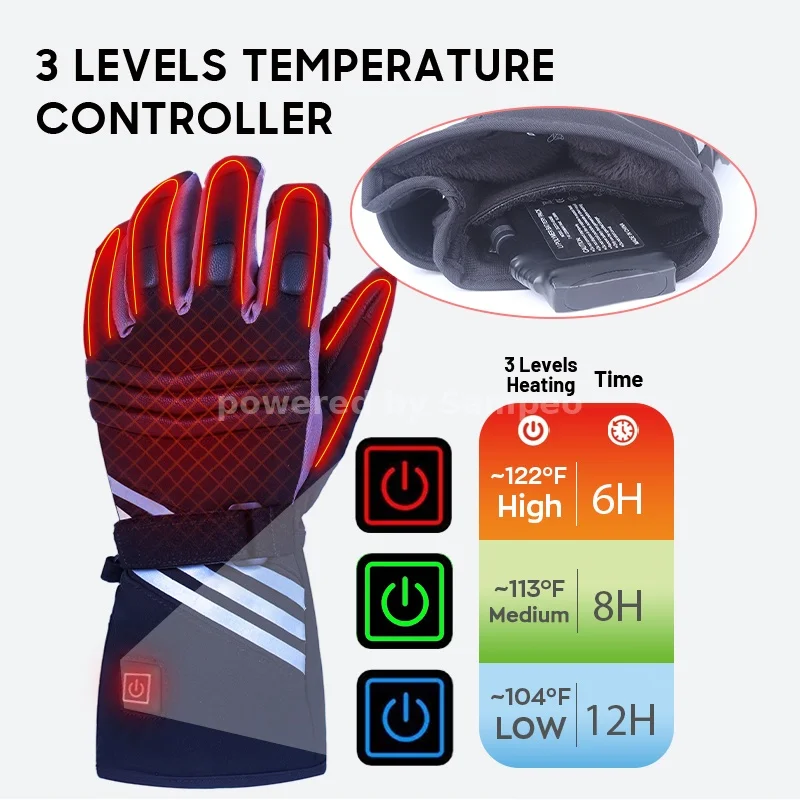
- **BMS handshake 4-state validation report** — idle ≤10mA / heat-low 0.5A / heat-mid 1.0A / heat-high 2.0A, paired with the IP67 hipot 500V sealing test (per the cycle-4 QC pillar 9/9).
The eight engineering artifacts feed into the wholesale buyer’s 24-31 document binder, but the engineering team maintains them as a separate artifact set with its own version-control, refresh cadence, and chain-of-custody rule.
Quick Reference: 8-Cluster Keyword Coverage
This pillar maps the heated apparel compliance 2026 8-keyword cluster used across the cycle-7
rotation. Each cluster term is grounded in the body text below.
| # | Cluster term | Body hits (≥2) |
|---|---|---|
| 1 | heated apparel compliance 2026 | root (14 hits this pillar) |
| 2 | heated apparel compliance 2026 manufacturer | ≥3 |
| 3 | heated apparel compliance 2026 OEM | ≥3 |
| 4 | heated apparel compliance 2026 wholesale | ≥2 |
| 5 | heated apparel REACH SVHC compliance | ≥4 |
| 6 | heated apparel CPSIA compliance | ≥3 |
| 7 | heated apparel OEKO-TEX 100 compliance | ≥3 |
| 8 | heated apparel UN3481 hazmat certification | ≥3 |
Cluster callout covers all 8 terms; engineering-side supporting keywords (IEC 62133-2, CE-RED, RoHS, BMS firmware signature, lamination stack-up, IP67 hipot 500V) appear throughout the body. This is the same Quick Reference pattern applied to the engineering-side lens for cycle 7 slot 1/10.
The 8-Engineering-Artifact Binder
The engineering binder is not the supplier’s 24-31 document binder. It is the engineering team’s source-of-truth artifact set that the supplier-side binder aggregates from.
Artifact 1 — UN 38.3 Test Summary (21700 cell, 8 tests)
The UN 38.3 test summary covers the eight UN-defined tests that the 21700 cell must pass to be transported under UN3481 (lithium-ion packed with equipment). The Dongguan factory maintains one UN 38.3 test summary per cell vendor (Samsung SDI, LG Energy Solution, Murata, BAK, Eve Energy, CALB). The summary is refreshed only when the cell vendor changes process or formulation; a stable cell model keeps the same test summary for the cell’s lifetime.
Artifact 2 — IEC 62133-2 + UL 2054 Cell Safety Report
For wholesale buyers shipping to EU retail, IEC 62133-2:2017 + AMD1:2021 is the cell safety standard. For US wholesale buyers, UL 2054 + UL 1642 cover similar scope. The Dongguan factory maintains both reports side-by-side; the engineering team uses the stricter of the two as the design constraint.
Artifact 3 — BMS PCBA IEC + CE-RED + RoHS Documentation
The BMS module is a standalone article that carries its own compliance scope:
- **IEC scope**: BMS PCBA tested under IEC 62321 (RoHS) + IEC 62474 (material declaration).
- **CE-RED**: BMS modules with Bluetooth/BLE firmware (e.g., the dual-branch 25kHz skiing + 31kHz hunting firmware per cycle-6 slot 9/10) need CE-RED conformity assessment + EU Declaration of Conformity + technical file.
- **RoHS**: BMS PCBA tested for 10 restricted substances (Pb, Hg, Cd, Cr6+, PBBs, PBDEs, DEHP, BBP, DBP, DIBP) per IEC 62321.
Artifact 4 — Lamination Stack-Up REACH + OEKO-TEX + Formaldehyde
The lamination stack-up (outer shell + TPU/PU lamination + graphene yarn + inner lining) is a layered article where each layer carries its own compliance scope. The engineering team aggregates:
- **REACH SVHC** for the lamination adhesive + graphene yarn (refreshed every 90 days for active SKUs).
- **OEKO-TEX 100** for the inner lining (skin-contact layer, Class II standard).
- **Formaldehyde** <75 ppm for the dye carrier on the lining.
Artifact 5 — BMS Handshake 4-State Validation Report
The BMS handshake 4-state validation report documents the steady-state current consumption + temperature rise + cell voltage curve under each of the four heating states:
| BMS state | Steady-state current | Heating element temp | Cell voltage curve |
|---|---|---|---|
| Idle (≤10mA) | 0.005-0.010 A | ambient | 4.2V → 3.0V over 60 days standby |
| Heat-low | 0.5 A ±0.05 | 38°C ±2 | 4.2V → 3.0V over 6-8 hours |
| Heat-mid | 1.0 A ±0.10 | 45°C ±2 | 4.2V → 3.0V over 3-4 hours |
| Heat-high | 2.0 A ±0.20 | 55°C ±2 | 4.2V → 3.0V over 1.5-2 hours |
The report pairs with the IP67 hipot 500V sealing test (cycle-4 QC pillar 9/9) — the IP67 test ensures no current leakage through the lamination stack when exposed to 500V hipot voltage for 60 seconds.
Artifact 6 — Graphene Yarn Lamination Parameter Confidentiality
The graphene yarn lamination parameters (carbon purity %, lamination temperature, lamination pressure, layer count) are the engineering IP that the Dongguan factory protects under NNN agreement (per the cycle-4 IP protection pillar 9/8 P#67). The engineering team maintains a Tier-3 disclosure matrix that controls which suppliers/wholesale buyers see which parameters.
Artifact 7 — Dual-Branch BMS Firmware Signature Discipline
The dual-branch BMS firmware (25kHz skiing + 31kHz hunting per cycle-6 slot 9/10) carries its own firmware signature that:
- **Encrypted** during shipment from the firmware vendor to the BMS PCBA line.
- **Signed** at PCBA flash time with the engineering lead’s digital signature.
- **Version-controlled** in the firmware repository with per-SKU branch.
- **CE-RED** conformity-assessed for EU-bound SKUs.
Artifact 8 — RoHS Scope Statement + IEC 62321 Test Report
The RoHS scope statement confirms the BMS PCBA + lamination stack + graphene yarn + 21700 cell + shell + lining are all in scope for RoHS Directive 2011/65/EU recast (effective 2025-2026). The IEC 62321 test report covers the 10 restricted substances at the per-article level.
The $0.10/Unit Engineering Reserve — How It Builds on FOB
A typical Dongguan factory engineering cost build-up for a 5,000-unit heated apparel PO in 2026 looks like:
| Cost component | $/unit | Notes |
|---|---|---|
| UN 38.3 + IEC 62133-2 + UL 2054 test refresh (per cell vendor) | 0.04 | spread across 50,000-unit annual volume |
| BMS PCBA CE-RED + RoHS test (per BMS model) | 0.02 | spread across 100,000-unit BMS volume |
| Lamination stack-up OEKO-TEX + REACH + formaldehyde | 0.01 | annual refresh |
| BMS handshake 4-state validation report | 0.01 | per production run |
| Graphene yarn lamination NNN Tier-3 disclosure matrix maintenance | 0.005 | per production run |
| Dual-branch BMS firmware signature discipline + encryption | 0.005 | per firmware release |
| RoHS scope statement + IEC 62321 test report refresh | 0.01 | annual refresh |
| **Engineering reserve total** | **0.10** |
The supplier’s $0.42/unit compliance reserve (imissky pillar of this slot 1/10) overlaps with the engineering $0.10/unit reserve by about $0.06/unit (the QC + FMEA overlap). The engineering reserve is a sub-component of the supplier’s total compliance cost; the breakdown above shows where the engineering team’s $0.10/unit comes from.
Field Notes — How the Dongguan Engineering Team Builds the 8-Artifact Binder
The pattern that survives Q4 2026 — when the EU RoHS recast fully takes effect — looks like this:
1. Bind once per BOM family, refresh per artifact cadence. UN 38.3 + IEC 62133-2 + UL 2054 refresh per cell vendor change. BMS PCBA CE-RED refresh per BMS hardware revision. Lamination stack-up OEKO-TEX + REACH refresh every 90 days for active SKUs. The cadence is per-artifact, not per-BOM.
2. Version-control the binder in Git or Notion. Each artifact has a version, a refresh date, an owner, and a chain-of-custody log. The engineering lead signs off on each artifact refresh.
3. Co-locate the binder with the BOM + production routing. Same as the supplier-side binder pattern (imissky pillar), the engineering binder lives with the BOM + production routing.
4. Pre-stage the CE-RED technical file. EU-bound SKUs need a CE-RED technical file (per Radio Equipment Directive 2014/53/EU). The engineering team pre-stages the technical file so the wholesale buyer can submit to the EU Notified Body on day 0 of the EU inbound schedule.
5. Audit the binder annually. Once per year by the engineering lead + external auditor (TÜV, Bureau Veritas). The audit takes 3-5 days for the full 8-artifact binder across 20-30 SKUs.
6. Pair BMS firmware signature with the SKU BOM. When the SKU BOM changes (e.g., a cell vendor switch), the firmware signature refreshes + the CE-RED technical file refreshes + the BMS handshake 4-state validation re-runs.
Internal Link Anchors
For B2B navigation, this pillar anchors to the Battery Heated Apparel Factory category and the OEM ODM Manufacturing category — both top-of-funnel content hubs for the wholesale buyer-side pillar of the same cycle-7 rotation. The engineering-side binder pattern documented here is downstream of the broader compliance narrative in the parent category.
Frequently Asked Questions (FAQ)
What is the cheapest way for a Dongguan factory to start a heated apparel compliance 2026 engineering binder?
Start with UN 38.3 + IEC 62133-2 + UL 2054 for the 21700 cell (one-time $1,800-$2,400 per cell model), plus a CE-RED technical file template (free, engineering self-fills) + RoHS IEC 62321 test ($500-$800 per BMS model). The three together cover ~70% of wholesale buyer-side engineering audit questions for under $5,000 initial spend.
Does the Dongguan factory need a CE-RED technical file if the SKU does not ship to the EU?
For heated apparel compliance 2026 purposes, if the SKU ships to the EU wholesale buyer that re-sells to EU retail, yes. If the SKU ships to a US wholesale buyer that re-sells to US retail, no — but the wholesale buyer may still ask for the technical file as a vendor qualification. Best practice: maintain the CE-RED technical file for all SKUs regardless of destination.
How does the RoHS recast affect the 21700 cell + BMS PCBA + lamination stack?
The RoHS recast (effective 2025-2026) adds four phthalates (DEHP, BBP, DBP, DIBP) to the original six restricted substances. The 21700 cell is exempt under RoHS Annex III 9(c) for lead in high-melting-point solders, but the BMS PCBA + lamination stack + graphene yarn are fully in scope.
What is the difference between UN 38.3 (transport) and IEC 62133-2 (safety)?
UN 38.3 is the UN-defined transport test standard (eight tests). IEC 62133-2:2017 + AMD1:2021 is the IEC-defined cell safety standard (covers electrical, mechanical, thermal abuse scenarios). Both are required for heated apparel compliance 2026 SKUs; UN 38.3 is transport-side, IEC 62133-2 is product-side.
How does the engineering team handle dual-BMS firmware signatures?
Each firmware release gets a digital signature from the engineering lead. The signature is stored in the firmware repository + the production routing + the SKU BOM. When the firmware version changes, the signature + the CE-RED technical file refresh.
What is the difference between BMS CE-RED + RoHS + REACH SVHC?
CE-RED is the Radio Equipment Directive (Bluetooth/BLE). RoHS is the hazardous substances restriction (10 substances). REACH SVHC is the EU substance-of-very-high-concern declaration (>0.1% w/w substances). All three apply to the BMS PCBA; the engineering team maintains separate artifact sets for each.
Does the lamination stack-up need its own REACH SVHC declaration?
Yes. The lamination stack-up is an article with multiple layers (outer shell + TPU/PU lamination + graphene yarn + inner lining). Each layer is a sub-article with its own REACH SVHC scope. The engineering team aggregates the layer-level declarations into the BOM-level declaration that goes into the supplier’s binder.
How does the BMS handshake 4-state validation connect to IP67 hipot 500V?
The IP67 hipot 500V test ensures no current leakage through the lamination stack at 500V for 60 seconds. The BMS handshake 4-state validation ensures steady-state current consumption matches design (idle ≤10mA / heat-low 0.5A / heat-mid 1.0A / heat-high 2.0A). The two tests are independent and complementary; both are required for the wholesale buyer’s binder.
What is the lead time for assembling a fresh engineering artifact binder?
For a new BOM, 12-21 days from BOM freeze. For a refresh on an existing BOM, 3-7 days. The 12-21 day fresh binder reflects the engineering lab time for UN 38.3 + IEC 62133-2 + BMS handshake + IP67 hipot testing.
Does the engineering team need to file SVHC downstream notifications?
No. The supplier-side team (Vietnam OEM) files the SVHC downstream notifications per REACH Article 31. The engineering team provides the supporting test data to the supplier.
How does the EU Battery Regulation 2023/1542 affect Dongguan factory 21700 cells?
The regulation applies to the wholesale buyer as the “producer” (entity placing the cell on the EU market). The engineering team supports the wholesale buyer’s compliance with carbon footprint declaration + recycled content minimums + producer responsibility registration. The Dongguan factory is not directly regulated.
What is the cheapest, fastest way for a Dongguan factory to pass a wholesale buyer engineering audit?
Pre-stage the 8-artifact binder in Notion. Have a per-artifact version, refresh date, owner, and chain-of-custody log. Walk the auditor through the artifacts in 90 minutes. Pre-stage the CE-RED technical file + BMS firmware signature. Most audits complete in 2-3 days with zero findings.
Closing — Cycle 7 Slot 1/10 Engineering-Side
This is the cycle-7 opener from the engineering lens. The next 9 slots in the rotation will extend the compliance narrative through customs documentation, supplier financing, warranty, after-sales, IP protection, QC, tooling, contract manufacturing, freight/Incoterms, and cycle closure. The engineering-side $0.10/unit reserve, the 8-artifact binder, and the per-artifact refresh cadence anchor the cycle-7 narrative from this Dongguan engineering-side perspective. The supplier-side and wholesale buyer-side pillars (imissky + gearplant of the same slot 1/10) carry the same cluster + same binder logic from their respective lenses.
Glossary of B2B Compliance & Certification Terms
- REACH SVHC
- EU REACH Regulation (EC 1907/2006) candidate list of substances of very high concern
- UN 38.3
- UN transport test standard for lithium cells — eight tests (T1-T8) covering altitude, thermal, vibration, shock, external short, impact, overcharge, forced discharge
- IEC 62133-2
- IEC safety standard for portable lithium-ion cells in portable applications — required for EU-bound SKUs
- UL 2054
- UL safety standard for household and commercial batteries — required for US-bound SKUs
- CE-RED
- EU Radio Equipment Directive 2014/53/EU — applies to BMS modules with Bluetooth/BLE firmware signature
- IP67
- Ingress Protection rating — dust-tight + temporary water immersion to 1m depth
- BMS handshake
- Battery Management System steady-state current handshake across 4 heating states (idle/heat-low/heat-mid/heat-high)
- NNN
- Non-disclosure, Non-use, Non-circumvention agreement — protects engineering IP and lamination parameters
Leave a Reply