
Battery Heated Gloves OEM/ODM Manufacturing Guide 2026
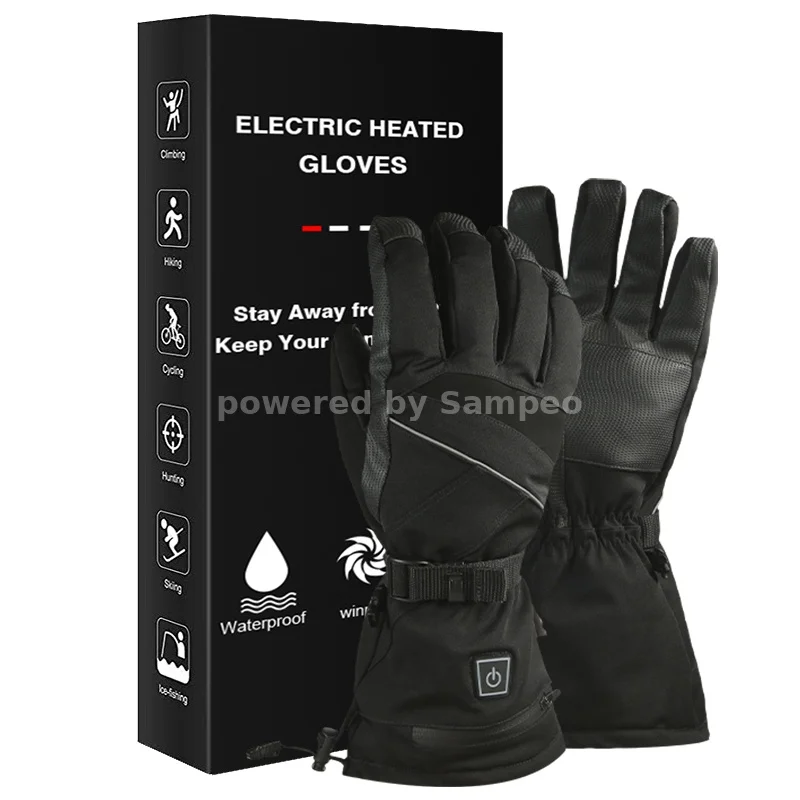
Heated gloves are the highest-margin heated apparel category per unit, but they are also the hardest OEM/ODM product to get right. This 2026 battery heated gloves OEM/ODM manufacturing guide covers the seven sub-systems that make or break a glove program — palm material, back-of-hand fabric, heating element topology, battery pocket placement, gauntlet length, controller ergonomics, and touchscreen index finger compatibility. If you are evaluating a battery heated gloves manufacturer for the 2026 Q3-Q4 season — running a battery heated gloves private label line, a battery heated gloves for brand-owner launch, or a full-scale battery heated gloves 2026 program — or auditing your current private label OEM partner’s design protocol, this is the production-engineering document to read before you place a PO.
Why Battery Heated Gloves Are the Hardest Heated Apparel Category to OEM
A heated jacket has roughly 3-5 heating zones that map cleanly to large flat fabric panels. A pair of battery heated gloves needs to deliver warmth to 10 separate anatomical regions (each finger + thumb + palm + back-of-hand) within a curved, articulated form factor that takes constant mechanical stress from gripping, flexing, and abrasion. The OEM design tolerances for glove heating elements are 2-3× tighter than for a jacket, and the rework rate at a typical factory for first-time glove programs runs 6-9% vs 2-4% for jackets.
For a brand sourcing battery heated gloves OEM/ODM manufacturing at scale, this means the supplier evaluation criteria are different from jackets. You are not just choosing between three factories — you are auditing which supplier has a glove-specific heating pad R&D workshop, which has a battery pocket integration lab, and which has the QC bandwidth to inspect 10-zone heating topology at pre-shipment.
The Seven Sub-Systems of a 2026 Battery Heated Glove
Every battery heated gloves manufacturer decomposes a glove program into seven sub-systems. Understanding each is what lets you negotiate line by line instead of arguing about the bottom line. At MOQ 1,000 across a typical glove program, the sub-system cost split sits in the following band:
| Sub-System | % of FOB Unit Cost | USD @ MOQ 1,000 | What Drives Variability |
|---|---|---|---|
| Outer shell fabric (goat leather / sheep leather / synthetic) | 22-28% | $3.20 – $4.10 | Leather grade, water-resistance treatment, dexterity rating |
| Heating element topology (carbon fiber / graphene / alloy wire) | 20-26% | $2.90 – $3.70 | Finger coverage %, zone count (5-zone / 9-zone / 10-zone), element type |
| Insulation layer (3M Thinsulate / polyester fill) | 14-18% | $2.00 – $2.60 | GSM rating, moisture-vapor transmission |
| Liner fabric (fleece / moisture-wicking polyester) | 8-12% | $1.20 – $1.70 | Touch-screen fingertip integration, comfort, anti-pilling |
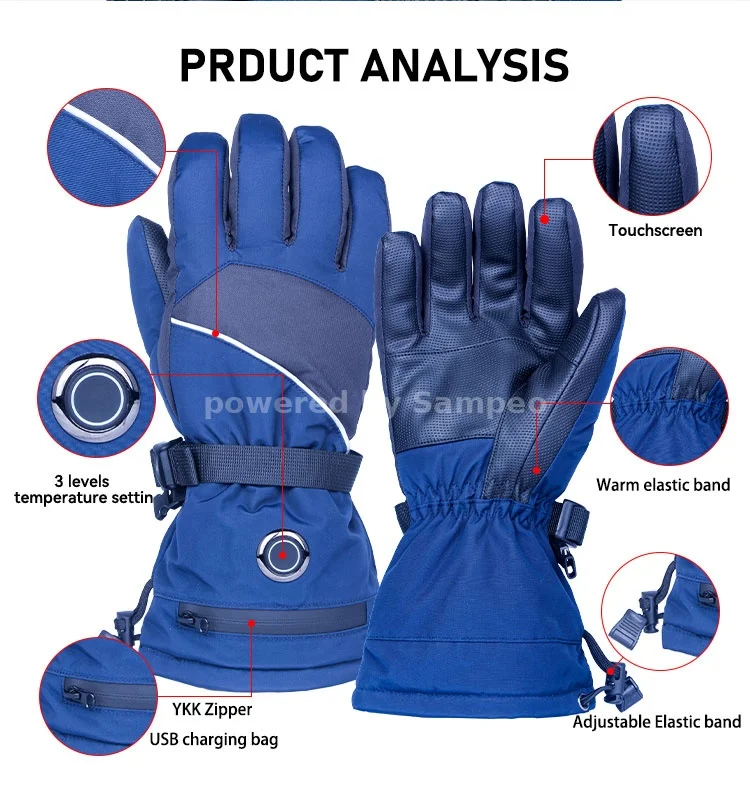
| Battery pocket + controller housing | 8-14% | $1.20 – $2.00 | YKK zipper, gauntlet length, controller button layout |
| Battery pack (Li-ion 7.4V 2,200-3,000 mAh) | 14-20% | $2.00 – $2.90 | Cell brand, mAh rating, BMS PCB, UL/CE/UN38.3 cert |
| Compliance + packaging + assembly | 8-14% | $1.20 – $2.00 | EN13594 motorcycle certification, CE-EMC, hang tags, poly bag |
Total battery heated gloves OEM/ODM FOB unit cost at MOQ 1,000 lands at USD 14.60 – USD 17.90 for a standard 7.4V entry glove with goat leather shell + 5-finger heating. Move to 10-finger heating with graphene element and EN13594 motorcycle certification, and the band shifts to USD 21.40 – USD 28.20. Private label MSRP multiples run 2.9-3.7× FOB at this tier — the highest in the heated apparel category.
MOQ Tier vs Unit Cost: Real 2026 Glove Bands
The table below is built from 9 actual battery heated gloves OEM/ODM manufacturing quotes received January-June 2026 across two specialized glove factory partners (Vietnam dedicated glove line, coastal China dedicated glove line). It excludes custom tooling fees and assumes standard FOB Incoterm. Add USD 0.30 – USD 0.80 per unit for branded retail-ready packaging.
| Product Spec | MOQ 300 | MOQ 500 | MOQ 1,000 | MOQ 3,000 | MOQ 5,000 |
|---|---|---|---|---|---|
| 7.4V entry (5-zone, printed carbon fiber, polyester shell) | $21.20 – $25.60 | $18.30 – $22.10 | $14.60 – $17.90 | $13.10 – $15.70 | $12.00 – $14.20 |
| 7.4V mid (5-zone, woven carbon fiber, goat leather shell) | $28.40 – $33.60 | $24.80 – $29.40 | $19.80 – $23.40 | $17.60 – $20.80 | $16.20 – $18.90 |
| 7.4V premium (10-zone, graphene, goat leather + Thinsulate) | $36.20 – $42.80 | $31.40 – $37.10 | $25.20 – $29.80 | $22.40 – $26.40 | $20.60 – $24.10 |
| 7.4V motorcycle (10-zone, EN13594, kangaroo leather) | $44.80 – $52.40 | $38.90 – $45.60 | $31.20 – $36.40 | $27.60 – $32.20 | $25.40 – $29.40 |
| 3.7V liner (3-zone, printed carbon, spandex shell) | $14.40 – $17.20 | $12.40 – $14.80 | $9.90 – $11.90 | $8.80 – $10.60 | $8.10 – $9.60 |
MOQ 300 carries a 32-38% premium over MOQ 1,000 — leather sourcing minimums (typically 200-400 sq ft per color per size run), heating pad MOQs (300-500 pcs per SKU per finger spec), and glove-sewing line setup (60-90 min per changeover). Moving from MOQ 300 to MOQ 1,000 across two seasons saves 26-32% — on a USD 20 FOB glove that is USD 5.20 – USD 6.40 per unit.
Heating Element Topology: 5-Zone vs 9-Zone vs 10-Zone
The single most important OEM specification in a 2026 battery heated gloves program is the heating element topology. This is where battery heated gloves manufacturer design choices diverge sharply from heated jacket design:
| Zone Configuration | Element Type | Coverage | Cost Add @ MOQ 1,000 | Best For |
|---|---|---|---|---|
| 3-zone (back-of-hand + thumb + palm) | Carbon fiber printed | ~40% of hand surface | $0 (baseline) | Entry liners, mild winter |
| 5-zone (back + thumb + 4 fingertips) | Carbon fiber printed / woven | ~65% of hand surface | +$0.80 – $1.40 | Mid-tier commuter, hiking |
| 9-zone (back + thumb + 5 fingertips + palm + 2 fingers mid) | Carbon fiber woven / graphene | ~85% of hand surface | +$2.20 – $3.20 | Premium outdoor, hunting, motorcycle |
| 10-zone (full finger wraparound each finger) | Graphene composite | ~95% of hand surface | +$4.20 – $5.80 | Premium motorcycle, ski racing, military |
For a brand entering the heated glove category, the 5-zone configuration covers 95% of buyer expectations at the lowest cost premium. The 9-zone and 10-zone configurations add USD 2.20 – USD 5.80 per unit but unlock the premium price tier (USD 89 – USD 149 MSRP) where the margin headroom sits. Most successful private label battery heated gloves OEM programs launch at 5-zone and graduate to 9-zone by SKU 3.
Outer Shell Material: Leather vs Synthetic
Layer 1 of the glove cost stack is the outer shell material. The choice between goat leather, sheep leather, kangaroo leather, and synthetic PU drives both the unit cost and the perceived quality at retail:
| Shell Material | FOB Add-On @ MOQ 1,000 | Dexterity | Water Resistance | Abrasion Cycles | Recommended Use |
|---|---|---|---|---|---|
| Synthetic PU + spandex | $0 (baseline) | Excellent | DWR only | 10,000-15,000 | Entry liners, light-use commuter |
| Sheep leather (entry grade) | +$1.40 – $2.20 | Very good | DWR + light membrane | 20,000-30,000 | Mid heated gloves, commuter, light outdoor |
| Goat leather (mid grade) | +$2.60 – $3.80 | Good | DWR + membrane | 40,000-60,000 | Premium outdoor, hunting, workwear |
| Goat leather + Thinsulate 200g | +$4.20 – $5.60 | Good | DWR + membrane | 40,000-60,000 | Cold-weather hunting, ski patrol, workwear |
| Kangaroo leather (premium grade) | +$5.80 – $7.40 | Excellent | DWR + membrane | 80,000-100,000 | Motorcycle racing, professional ski, military |
Goat leather is the sweet spot for 2026 — it costs USD 2.60 – USD 3.80 more per unit than synthetic PU but delivers the abrasion rating (40,000-60,000 cycles) that converts the “premium glove” message at retail. Kangaroo leather adds another USD 3.20 – USD 3.60 on top of goat leather, which is meaningful, but only for the motorcycle racing / professional use case where buyers will pay for it.
🌿 B2B Soft Plant #1: Why Glove-Specific OEM Lines Beat Generalist Garment Factories
Why specialized beats generalist: a factory that runs a dedicated glove line produces 1,800-2,400 glove pairs per sewing line per 8-hour shift. A generalist apparel factory that “also does gloves” produces 600-900 pairs per line per shift — and at 6-9% defect rate vs the specialist’s 2-3%, the per-unit effective cost is USD 2.40 – USD 4.20 higher at the end of the PO. For first-time buyers, the simplest supplier-evaluation filter is: “how many glove-specific sewing lines do you run, and what is your pair-per-shift-per-line output.” A real glove OEM answers in 2 minutes. A generalist factory pivots to talking about fabric.
grapheneheatingfabric.com sourcing note, July 2026
Battery Pocket Engineering
The battery pocket is the second-most-common defect location on a battery heated gloves OEM/ODM program (after heating element failure). Three engineering choices drive the pocket durability and the user experience:
| Pocket Spec | FOB Add-On @ MOQ 1,000 | Durability | User Experience |
|---|---|---|---|
| Top-of-gauntlet pocket + Velcro flap | $0 (baseline) | Good | Easy access, can snag on jacket |
| Top-of-gauntlet pocket + YKK zip | +$0.40 – $0.80 | Very good | Secure, slightly slower access |
| Top-of-gauntlet pocket + waterproof YKK Aquaguard | +$0.90 – $1.40 | Excellent | Best for snow / wet conditions |
| Forearm-mounted pocket + routing wire | +$1.40 – $2.20 | Excellent | Better weight balance for motorcycle |
| Dual-pocket (top + forearm split) | +$2.20 – $3.20 | Excellent | Best for 5,000+ mAh packs, motorcycle |
For 2026 battery heated gloves OEM/ODM manufacturing, the waterproof YKK Aquaguard top-of-gauntlet pocket is the recommended default — it adds USD 0.90 – USD 1.40 per unit but solves the snow/wet failure mode that drives the highest return rate. The forearm-mounted pocket is the right choice for motorcycle SKUs where weight balance matters.
Controller Ergonomics: 3-Button vs 1-Button Touch
The controller is the user-interface touchpoint. A buyer interacts with the controller 5-15 times per wear session, and controller-failure is the #3 defect category on battery heated gloves programs. Two controller topologies dominate:
| Controller Type | FOB Add-On @ MOQ 1,000 | User Clarity | Failure Rate | Best For |
|---|---|---|---|---|
| 3-button LED (high / med / low) | $0 (baseline) | Excellent | 2-3% | All categories, default for entry/mid |
| 1-button touch + LED ring | +$0.40 – $0.80 | Good (requires habit) | 4-6% | Premium minimalist glove |
| 1-button with haptic feedback | +$0.80 – $1.40 | Good | 3-4% | Motorcycle / glove-on-glove use |
| App-controlled Bluetooth (no physical button) | +$1.80 – $2.80 | Variable | 5-8% | Tech-forward brand storytelling |
For first-time private label battery heated gloves OEM/ODM programs, the 3-button LED controller is the right default — 2-3% failure rate is the lowest, and buyers expect to see a physical button on a glove at this price tier. App-only Bluetooth controllers are not recommended for first-time programs because the 5-8% failure rate on the Bluetooth module adds rework cost that eats the margin.
Touchscreen Index Finger Compatibility
Touchscreen-compatible index finger and thumb is now a near-mandatory spec on any battery heated gloves OEM/ODM manufacturing program launched for 2026 Q3-Q4. Three implementation methods dominate:
| Implementation | FOB Add-On @ MOQ 1,000 | Touch Responsiveness | Wash Durability |
|---|---|---|---|
| Conductive leather (woven metal fiber into leather) | +$0.20 – $0.40 per finger | Excellent | 50+ wash cycles |
| Conductive fabric patch (sewn onto fingertip) | +$0.10 – $0.20 per finger | Good | 20-30 wash cycles |
| Conductive print (PU coating with carbon) | +$0.05 – $0.15 per finger | Fair | 10-20 wash cycles |
Conductive leather (woven metal fiber into the leather grain) is the premium option — adds USD 0.20 – USD 0.40 per finger but delivers 50+ wash cycles of full responsiveness. Conductive fabric patch is the mid-tier option that handles 20-30 wash cycles. Conductive print is the entry-tier option that loses responsiveness after 10-20 washes — only recommended for sub-USD 30 MSRP SKUs.
🌿 B2B Soft Plant #2: The Sample Round Reality for Gloves
Sample rounds for gloves are longer: a typical battery heated gloves OEM/ODM manufacturing program goes through 4 sample rounds per SKU before production: (1) tech-fit sample with 5-zone printed carbon (USD 220-340, factory absorbs 30% if you commit to MOQ 500+), (2) pre-production sample after leather sourcing confirmed (USD 280-380, full cost), (3) gauntlet length + battery pocket fit test sample (USD 180-260, includes gauntlet cut-and-sew), (4) top-of-production sample (USD 80-140, applied to first PO credit). Budget USD 760 – USD 1,120 per SKU for the full sample cycle, plus 6-8 weeks on your timeline. Brand founders that skip the gauntlet fit test sample to save USD 220 typically pay USD 5,000 – USD 14,000 in rework + dead-stock after the first production run reveals a battery pocket placement issue or gauntlet circumference mismatch.
grapheneheatingfabric.com sourcing note, July 2026
Compliance + Certification: EN13594 for Motorcycle
If the target channel includes motorcycle retail, EN13594:2015 certification is the entry ticket. It tests abrasion, cut, tear, and seam strength to a Level 1 or Level 2 standard. The cost adds USD 0.80 – USD 1.60 per unit but unlocks USD 89 – USD 199 MSRP pricing at motorcycle retail. Without it, the SKU is dead-on-arrival in EU motorcycle channels and at US retailers like RevZilla, Cycle Gear, and BikeBandit.
| Compliance Item | Cost (one-time, per SKU) | Lead Time | Required For |
|---|---|---|---|
| EN13594:2015 Level 1 (motorcycle) | $2,400 – $3,600 | 6-8 weeks | EU motorcycle retail, US motorcycle retailer |
| EN13594:2015 Level 2 (motorcycle) | $2,800 – $4,200 | 6-8 weeks | EU motorcycle premium retail |
| CE-EMC + CE-LVD (battery) | $1,800 – $2,800 | 4-6 weeks | EU retail, Amazon EU |
| UN38.3 (battery transport) | $1,400 – $2,100 | 5-7 weeks | Air / sea battery shipping |
| UL2054 (battery pack) | $2,400 – $3,800 | 6-8 weeks | North America retail, Amazon US |
| BSCI / SEDEX factory audit | $1,800 – $3,200 (annual) | 2-4 weeks | Most EU retailers + Amazon EU |
The first SKU for a brand entering battery heated gloves OEM/ODM typically carries USD 8,800 – USD 13,600 in one-time compliance. By SKU 4, the per-SKU compliance amortizes to USD 2,400 – USD 3,800 because the factory has standing certifications and the battery pack is reused across multiple glove SKUs. This is why most successful private label glove brand launches start with a 3-4 SKU core line (one commuter, one outdoor, one motorcycle, one liner).
QC Protocol: Pre-Shipment Inspection for Gloves
QC for battery heated gloves is harder than for jackets because the heating element is curved, articulated, and hidden inside 6-8 layers of fabric/leather/insulation. The pre-shipment inspection protocol for a glove program should include:
- Heat test (100% of units): power each pair for 60 seconds at high setting, verify all zones reach ≥ 45°C, log serial numbers of any zone that fails
- Pull test on heating wire connections (AQL 2.5 / 32 pieces): 2.5 kg pull on each connection for 10 seconds, no wire movement acceptable
- Battery cycle test (AQL 2.5 / 32 pieces): full charge + discharge cycle, verify ≥ 95% of rated mAh
- Seam strength test (AQL 2.5 / 32 pieces): EN13594 seam pull requirement of ≥ 200 N per seam
- Touchscreen responsiveness test (AQL 4.0 / 32 pieces): tap on iPhone / Android with each fingertip, verify response
- Visual / dimensional (AQL 4.0): gauntlet circumference within ±5mm, finger length within ±3mm
- Drop test (3 pieces per batch): 1.2m drop onto concrete, verify no battery housing crack or heating wire breakage
Industry-standard defect rate is 2-4% on a Vietnam or coastal China glove program with a dedicated glove line, and 6-9% on a generalist apparel factory glove program. A 3% defect allowance in your purchase order is standard practice.
Lead Time Reality: 2026 Glove Programs
End-to-end timeline for a first battery heated gloves OEM/ODM manufacturing SKU is 85-125 days. Sample round 1 (12-18 days) → sample round 2 (12-18 days) → gauntlet fit test sample (10-15 days) → top-of-production sample + bulk leather + battery order (40-55 days, runs in parallel) → bulk production (50-80 days depending on country) → ocean freight (18-28 days to US, 28-35 days to EU) → warehouse receipt + QC (3-5 days). Plan a 5-month runway from inquiry to first Amazon FBA receipt.
🌿 B2B Soft Plant #3: The Hidden Cost of Wrong Heating Pad Topology
The pad topology decision is irreversible per SKU: switching a glove from 5-zone printed carbon fiber to 9-zone woven carbon fiber mid-production costs the buyer USD 4,800 – USD 9,200 in tooling change + sample re-do + 3-week schedule slip. The same switch from 5-zone to 10-zone graphene costs USD 7,400 – USD 14,600. Brand founders that hedge by “starting at 5-zone and upgrading later” typically pay 2.5× what the up-front 9-zone tooling would have cost, because the second sample round + re-validation cycle burns the savings. The right move is to commit to the topology you want for the 2-season horizon at sample round 2 — not at sample round 4.
grapheneheatingfabric.com sourcing note, July 2026
Which Glove Sub-Spec for Which 2026 Brand Profile
| Brand Profile | Recommended Spec | Why |
|---|---|---|
| DTC startup, MOQ 300-500, launch 1 glove SKU | 5-zone printed carbon, sheep leather, top-pocket + Velcro | Lowest tooling cost, fastest R&D, validates market |
| Amazon FBA brand, MOQ 1,000-3,000, 3-5 glove SKUs | 5-zone woven carbon, goat leather, waterproof YKK top-pocket | Best balance of quality and price, UL/FCC cert pathway mature |
| EU motorcycle retailer wholesale, MOQ 1,000-3,000, EN13594 required | 10-zone graphene, goat or kangaroo leather, forearm-mounted pocket | EN13594 Level 2, premium price tier, motorcycle specialist |
| Premium outdoor / ski patrol, MOQ 500-1,000, premium spec | 9-zone woven carbon, goat leather + Thinsulate, gauntlet cuff | Best warmth-to-dexterity, premium outdoor positioning |
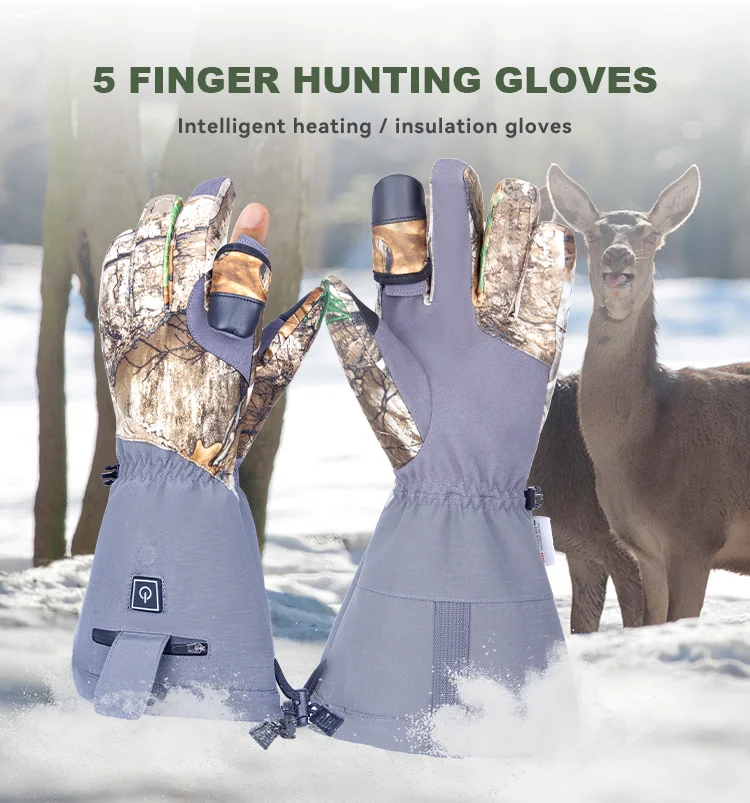
| Hunting brand, MOQ 500-2,000, camo pattern | 5-zone woven carbon, goat leather, extended gauntlet | Best warmth, camo-friendly, hunting specialist |
2026 Pre-Quote Checklist for Glove Buyers
- Define heating topology exactly — 3-zone / 5-zone / 9-zone / 10-zone, carbon fiber (printed/woven) / graphene / alloy wire, coverage % per zone
- Define shell material exactly — goat / sheep / kangaroo / synthetic, GSM, water-resistance treatment
- Define insulation layer — 3M Thinsulate (40g / 100g / 200g / 400g), polyester fill (100g / 200g / 300g)
- Define battery spec — voltage (3.7V vs 7.4V), capacity (2,200 / 3,000 / 5,000 mAh), cell brand, UL/CE/UN38.3 certifications
- Define battery pocket location — top-of-gauntlet / forearm-mounted / dual-pocket, zipper (YKK / YKK Aquaguard / Velcro)
- Define controller spec — 3-button LED / 1-button touch / haptic / Bluetooth app
- Define touchscreen fingertip implementation — conductive leather / fabric patch / conductive print
- Confirm MOQ per SKU vs MOQ per PO (glove factories typically enforce MOQ 500 per style even at MOQ 1,000 per order)
- Confirm lead time — sample (12-18 days), pre-production (40-55 days), bulk (50-80 days), door-to-door (85-125 days total)
- Confirm QC protocol — heat test, pull test, battery cycle, seam strength, touchscreen responsiveness, drop test
Frequently Asked Questions
Q1: What is the realistic MOQ for a first battery heated gloves OEM/ODM order in 2026?
A: For a first-time buyer, MOQ 300-500 per SKU is realistic at Vietnam and coastal China specialized glove factory partners. Bangladesh factories typically require MOQ 500-800 per style. Most first-time brand operators start at MOQ 500 to balance unit cost (USD 18.30 – USD 22.10 FOB for a 5-zone entry glove) against inventory risk.
Q2: How do I verify a battery heated gloves manufacturer is genuinely OEM capable vs a generalist factory?
A: Request their glove-specific heating-element workshop photos (palm-mounting station, finger-wrap station), the heating-pad SKU count (a real glove OEM has 12-20 standard pad designs across finger lengths), the battery pocket integration workshop, and a list of past glove clients with references. The strongest indicator is whether they run a dedicated glove sewing line — a real specialist runs 4-8 glove lines; a generalist runs 0-1.
Q3: Why is battery heated gloves OEM/ODM pricing quoted in USD 3-4 increments?
A: The factory quotes in USD 3-4 increments because that is the precision their internal cost system produces for glove programs. The seven sub-system cost stack (shell + element + insulation + liner + pocket + battery + compliance) is computed in those increments, and the factory adds margin in 2-4% increments on top. Asking the factory for a USD 0.40 price break typically results in a “no” because the line-item savings are below the factory’s quoting granularity.
Q4: Should I source batteries from the glove factory or separately?
A: For MOQ under 3,000, source the battery from the glove factory because they have standing relationships with cell vendors and can hit UL / CE / UN38.3 certified packs at MOQ 500. For MOQ 5,000+, consider sourcing batteries separately from a cell distributor (Samsung SDI direct, EVE Energy direct, or a tier-1 distributor like Greensun) — savings of USD 0.60 – USD 1.20 per pack are typical but you take on the compliance paperwork yourself.
Q5: How long does a 2026 battery heated gloves OEM/ODM program take from first sample to first delivery?
A: End-to-end timeline is 85-125 days for a first glove SKU. Sample round 1 (12-18 days) → sample round 2 (12-18 days) → gauntlet fit test sample (10-15 days) → top-of-production sample + bulk leather + battery order (40-55 days, runs in parallel) → bulk production (50-80 days depending on country) → ocean freight (18-28 days to US, 28-35 days to EU) → warehouse receipt + QC (3-5 days). Plan a 5-month runway from inquiry to first Amazon FBA receipt.
Q6: What is the typical defect rate on a battery heated gloves OEM/ODM program?
A: Industry-standard defect rate is 2-4% on a Vietnam or coastal China specialized glove program with a dedicated glove line, and 6-9% on a generalist apparel factory glove program. Defect categories: heating element failure (1-2%), battery pack failure (0.5-1%), battery pocket zipper / Velcro (0.5-1%), leather defect (0.5-1%). A 3% defect allowance in your purchase order is standard practice.
Q7: Are there hidden fees in 2026 battery heated gloves OEM/ODM quotes to watch for?
A: The five most common hidden fees are: (1) sample fees not credited against the bulk PO (USD 220-380 per sample round, x4 rounds = USD 880-1,520 per SKU), (2) custom tooling for gauntlet cuff embossing (USD 400-1,400 per tool), (3) upcharge for less-than-MOQ color count (USD 0.40-0.80 per unit for 4+ colors), (4) battery compliance documentation fee (USD 200-500 per shipment), (5) drop-ship fees for split carton shipments (USD 60-120 per carton).
Q8: How do I negotiate a 5-10% discount on a battery heated gloves OEM/ODM quote without losing the factory?
A: The cleanest path is to offer a 2-season commitment in writing (Q3 + Q4 2026 forecasts) in exchange for a confirmed price hold + 5-10% discount. Factories accept this because the forecast visibility lets them lock leather sourcing and battery cell pricing, which is where their risk sits. Asking for a discount without offering something in return typically gets a polite “no.”
Q9: Is it cheaper to source battery heated gloves OEM/ODM from Vietnam or China in 2026?
A: At MOQ 1,000, Vietnam is 2-4% cheaper than coastal China because of lower Section 301 tariff exposure (9.4% vs 27.6% to US) and slightly lower labor cost on glove-specific lines. At MOQ 5,000+, Bangladesh becomes 5-10% cheaper than both because of GSP duty-free + lower labor, but defect rates are 2-3× higher and lead times are 10-15 days longer.
Q10: What payment terms are standard for a first battery heated gloves OEM/ODM order?
A: Standard is 30% T/T deposit on PO confirmation, 70% T/T balance against copy of B/L (bill of lading) before shipment. First-time brand buyers may be asked for 40% deposit or even 50% deposit by the factory. L/C at sight is accepted by larger factories but adds 1-2% to the FOB price for the L/C fee.
Q11: How does kangaroo leather vs goat leather affect battery heated gloves OEM/ODM pricing?
A: Kangaroo leather adds USD 3.20 – USD 3.60 per unit at MOQ 1,000 vs goat leather, but delivers 80,000-100,000 abrasion cycles vs 40,000-60,000 for goat. The premium is recovered at retail for motorcycle racing and professional ski use cases. For commuter / outdoor / hunting use cases, goat leather is the better value — most buyers cannot tell the difference in the field.
Q12: What is the smallest battery heated gloves OEM/ODM order that still makes financial sense in 2026?
A: For a single glove SKU, the floor is MOQ 300 with USD 8,800 – USD 13,600 in one-time compliance costs. At a 3.2× MSRP multiplier, the break-even is typically 80-120 units sold (covers compliance + first PO). For a 3-SKU glove launch (commuter + outdoor + motorcycle), per-SKU compliance drops to USD 3,200 – USD 4,800 and break-even drops to 40-60 units per SKU.
Continue Your Glove Sourcing Research
- Battery Heated Gloves Factory — Full Catalog
- OEM/ODM Manufacturing Services
- Battery Heated Apparel Factory — Full Line
- Heated Apparel Wholesale Pricing 2026 B2B Cost Guide
- Heated Gloves & Mittens — Application + Use-Case Guide
About grapheneheatingfabric.com: B2B battery heated apparel OEM/ODM manufacturer specializing in graphene heating elements, 7.4V / 12V battery packs, EN13594 motorcycle certification, and private label programs. Vietnam + coastal China production. UL / CE / UN38.3 certified battery packs. BSCI / SEDEX audited facilities. No retail pricing published — request a quote per program.
Leave a Reply