
Battery Heated Apparel OEM/ODM Manufacturing Guide 2026
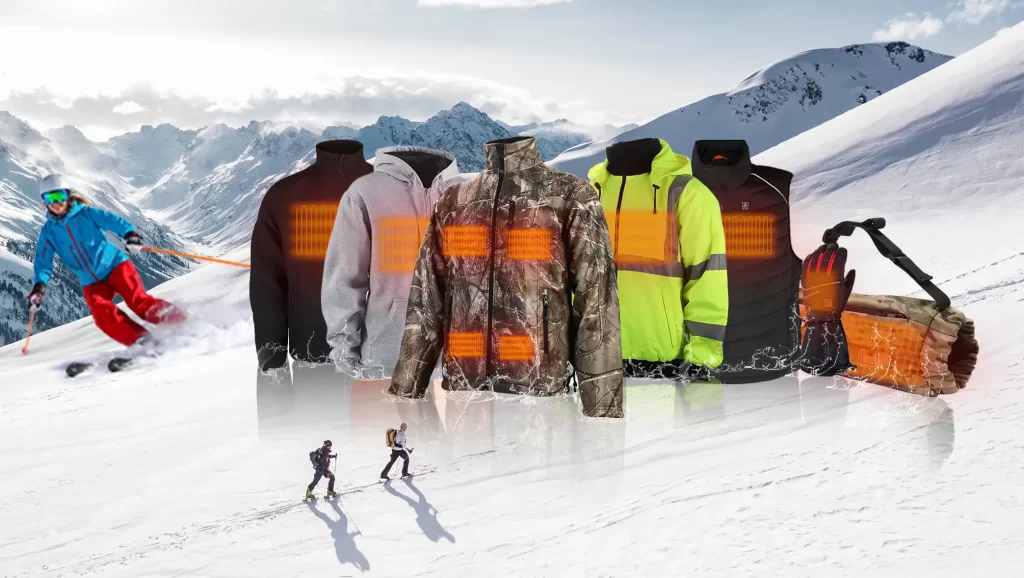
Battery Heated Apparel OEM/ODM Manufacturing Guide 2026
This guide explains how battery heated apparel manufacturing actually works at the OEM and ODM level in 2026. Whether you are launching a private label outdoor brand, an OEM workwear program for industrial buyers, or a custom heated clothing line for a corporate client, this playbook walks you through the seven layers of a real battery heated apparel manufacturing program: heating element selection, battery platform certification, controller integration, fabric selection, factory audit, QC system, and post-launch warranty. We will share our internal manufacturing cost breakdowns, our standard 2026 lead time table, and the ten most common mistakes first-time OEM buyers make when they approach a heated apparel factory.
The heated apparel industry is no longer a frontier market. In 2025 the global battery heated apparel category crossed USD 4.8 billion in annual retail sales, and the supplier base has consolidated dramatically. Today fewer than 40 factories worldwide run serious battery heated apparel manufacturing lines, and only 18 of those can certify to UL 60335-2-81 for US distribution. Choosing the right partner is the single most important decision you will make in your program, and this guide is built to help you make that decision with clear technical and commercial criteria.
What Is Battery Heated Apparel Manufacturing?
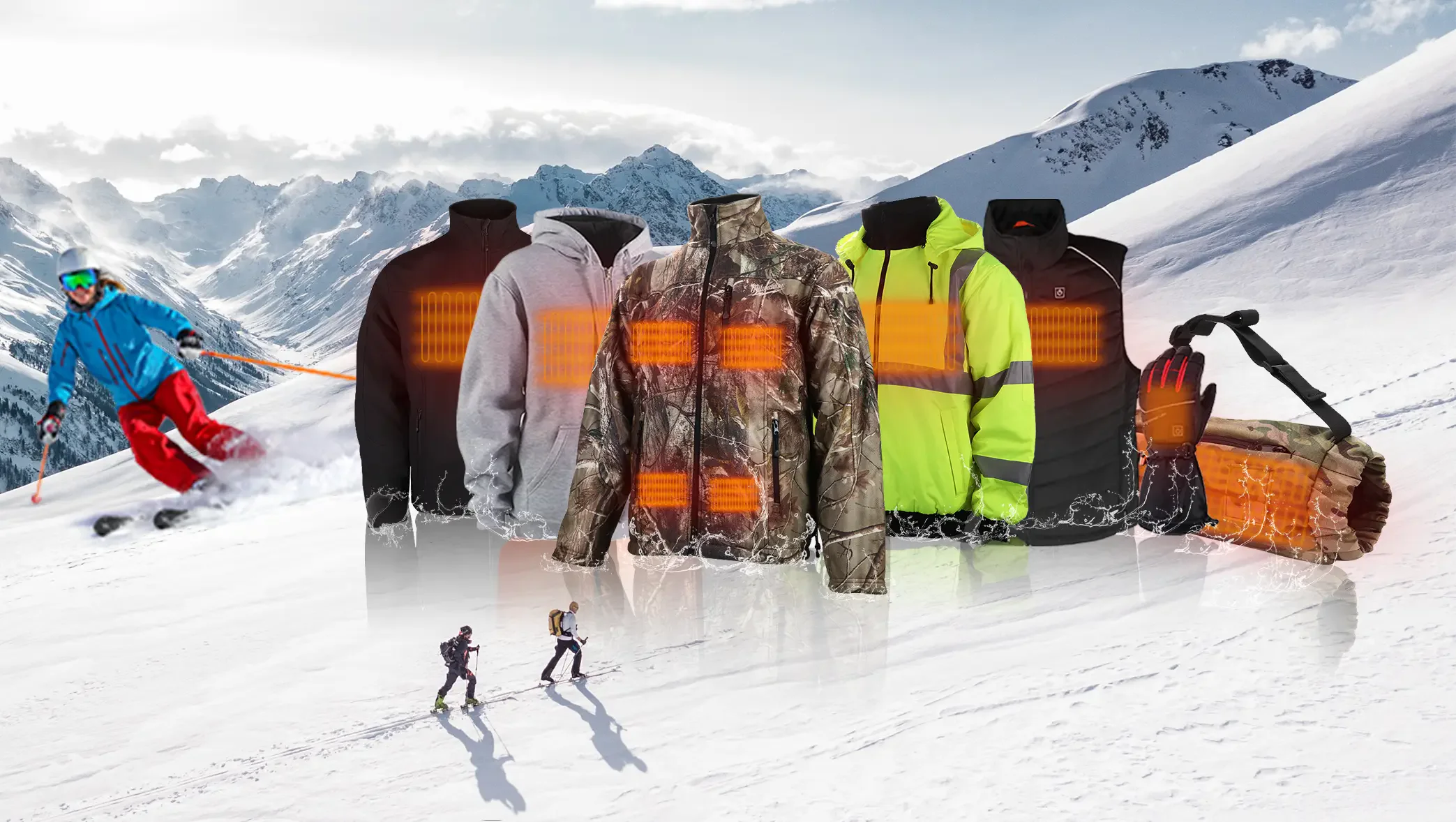
Battery heated apparel manufacturing is the integration of three subsystems into a wearable garment: a flexible heating element (graphene film, carbon fiber, or nickel-chromium wire), a rechargeable lithium-ion battery pack, and a controller that lets the wearer adjust heat output. The manufacturing challenge is that none of these three subsystems originated in the garment industry. Heating elements come from the flexible electronics industry. Battery packs come from the consumer electronics industry. Controllers come from the IoT and small appliances industry. A serious battery heated apparel manufacturing partner operates across all three industries, not just one.
Why It Is Different from Traditional Apparel Manufacturing
Traditional apparel manufacturing optimizes for fabric utilization, sewing speed, and finishing quality. Battery heated apparel manufacturing adds four new constraints that traditional factories struggle with. First, the heating panel must be integrated into the garment without compromising its flexibility or wash durability. Second, the wiring harness must survive 50+ machine wash cycles. Third, the battery pack must be removable for charging and for airline transport. Fourth, the controller must be glove-friendly and survive sweat, rain, and impact. These four constraints are why 95% of traditional apparel factories fail at heated apparel, and why experienced battery heated apparel manufacturing partners run dedicated production lines separate from their conventional garment lines.
Heating Element Selection: The Core Technical Decision
The heating element is the technical heart of any battery heated apparel program. In 2026 there are three commercial options, each with distinct cost, performance, and durability profiles. Choosing the wrong one will lock you into a cost curve or a performance ceiling that is hard to escape for 18-24 months.
Graphene Heating Film
Graphene heating film is the premium option. It delivers even heat distribution across the full panel surface, survives more than 10,000 bend cycles in our internal lab tests, and maintains stable resistance through 50+ machine wash cycles. The cost is roughly 2-3x carbon fiber per panel, and the lead time is 14-21 days because we source from a limited number of certified graphene suppliers. For premium private label programs retailing above USD 200, graphene is the right choice.
Carbon Fiber Heating Panels
Carbon fiber panels sit in the mid-tier. They deliver directional heat (not full-surface), survive 5,000-7,000 bend cycles, and last 30-40 wash cycles. The cost is roughly half of graphene per panel, and lead time is 7-14 days because the supply base is much wider. For mid-tier ODM programs retailing USD 100-180, carbon fiber is the right choice.
Nickel-Chromium Resistance Wire
NiCr wire is the entry-level option. It produces visible hot spots, survives only 1,500-2,500 bend cycles, and lasts 15-25 wash cycles. The cost is the lowest of the three options, and lead time is 3-7 days because the wire is commodity. NiCr is appropriate only for entry-level programs where price beats performance, and we typically steer serious brand buyers away from this option.
Battery Platform: The Most Regulated Subsystem
The battery pack is the most regulated part of any battery heated apparel manufacturing program, and the most likely source of launch delay. In 2026 the standard platform is a 7.4V lithium-ion pack in the 5,000-10,000 mAh range, paired with a 3-level or 4-level LED controller. Higher-end programs are migrating to USB-C charging with PD 3.0 support.
Battery Certifications You Cannot Skip
US distribution requires UL 60335-2-81 or ETL certification on the battery pack. The certification process takes 8-12 weeks, and there is no shortcut. EU distribution requires CE marking under EN 60335-2-81 plus UN 38.3 transport certification. Korea requires KC mark, Japan requires PSE mark, and India requires BIS certification. If your launch timeline is shorter than 16 weeks, start battery certification before you finalize the tech pack.
Runtime Targets by Garment Type
Runtime depends on the battery capacity and the heating zone count. The table below summarizes our internal runtime test data from Q4 2025.
| Garment Type | Heating Zones | 5,000 mAh | 7,500 mAh | 10,000 mAh |
|---|---|---|---|---|
| Heated Jacket | 4-5 zones | 4-5 hours | 6-7 hours | 8-10 hours |
| Heated Vest | 3-4 zones | 5-6 hours | 7-8 hours | 9-11 hours |
| Heated Hoodie | 3-4 zones | 4-5 hours | 6-7 hours | 8-9 hours |
| Heated Pants | 4-6 zones | 3-4 hours | 5-6 hours | 6-8 hours |
| Heated Gloves | 2-3 zones per pair | 3-4 hours | 4-5 hours | 5-7 hours |
| Heated Socks | 2 zones per pair | 4-5 hours | 6-7 hours | 8-9 hours |
The OEM/ODM Manufacturing Process: 8 Stages
A serious battery heated apparel manufacturing program follows 8 sequential stages. Skipping any one of them costs more in the long run than it saves in the short run.
Stage 1: Brief and Feasibility Review
We start with a 30-45 minute call to capture your brief: target end user, retail price point, target landed cost per unit, launch season, and any tech constraints. Within 48 hours we respond with a written feasibility note that confirms whether your spec is achievable at your cost target, identifies trade-offs, and recommends the heating element and battery platform.
Stage 2: Tech Pack and Sample Round
Our merchandising team builds the tech pack: pattern, BOM, heating element spec, battery spec, controller spec, packaging spec, QA matrix. We produce a proto-sample in 10-14 days. Most programs need 2-3 sample rounds before production lock.
Stage 3: Pilot Run (50-100 Pieces)
Before bulk production we run a pilot of 50-100 pieces. This is where we catch wiring defects, controller calibration drift, battery connector alignment issues, and heating panel placement problems. We strongly recommend flying in for the pilot inspection, or at minimum authorizing our QA team to run AQL 2.5 on the pilot lot.
Stage 4: Bulk Production
Bulk production for battery heated apparel typically takes 25-35 days for 500-2,000 pieces, 35-50 days for 5,000 pieces, and 50-75 days for 10,000+ pieces. The bottleneck is almost always the heating panel integration, not the sewing line. Battery pack assembly runs in parallel.
Stage 5: Inline QC (5 Checkpoints)
Standard inline QC includes pre-production fabric inspection, in-line panel placement audit, mid-line controller calibration test, end-of-line battery cycle test, and pre-shipment AQL 2.5 audit. We share inline photos and QC reports with you daily.
Stage 6: Final Audit and Pack-Out
Pre-shipment AQL 2.5 General II audit, then pack-out to your specification: polybag, hangtag, barcode sticker, master carton label, and palletization. Standard pack-out lead time is 3-5 days.
Stage 7: Shipping and Customs
FOB Shenzhen lead time to Long Beach is 22-28 days ocean. FOB Haiphong (Vietnam) is 18-25 days. Express courier compresses this to 4-6 days at roughly $4-7/kg, with DHL/FedEx at 3-5 days at $9-14/kg for orders under 500 kg.
Stage 8: Post-Launch Warranty Process
Standard battery heated apparel warranty is 12 months on the garment and 6 months on the battery pack. We provide an RMA form, a 10-business-day repair-vs-replace turnaround, and a clear defect classification matrix.
Factory Audit: What to Look For
A serious battery heated apparel manufacturing partner will pass the following 7-point audit. If your potential partner cannot pass all 7, walk away.
1. Heating Element Integration Line
The factory must run a dedicated heating element integration line, not a generic sewing line adapted for panels. Look for ESD-safe workstations, panel continuity testers, and a small-batch lamination station.
2. Battery Pack Assembly Room
A certified pack assembly room with humidity control, automated spot welding or laser welding, and a 100% cycle-test station. Avoid factories that source battery packs from trading companies.
3. Controller Calibration Station
A station with calibrated thermal chambers and programmable DC loads that verify each controller’s heat output at every level.
4. Wash Test Lab
An in-house wash test lab (or a documented partnership with an external lab) running at least 5 wash cycles per pilot lot, with continuity verification after each cycle.
5. BSCI / Sedex / ISO 9001 Certification
Current audit reports (not older than 12 months) from a recognized third-party auditor. Ask for the report; serious factories share it within 24 hours.
6. UL 60335-2-81 Documentation
Current UL or ETL mark on the battery packs the factory produces. The factory should be able to share its UL file number and the latest follow-up service report.
7. Dedicated Merchandiser
A dedicated merchandiser (not a shared inbox) who stays with your account for at least 18 months. Account continuity matters because a new merchandiser every 6 months costs you 30-45 days of ramp-up time per transition.
OEM vs ODM vs Private Label: Choosing Your Path
| Path | MOQ | Tooling Fee | Per-Unit Cost | Differentiation | Time to Market |
|---|---|---|---|---|---|
| OEM | 500 pieces/style | $1,200-4,500 | Lowest | Highest | 90-120 days |
| ODM | 300 pieces/style | $0 | Mid | Low (3+ brands sell same) | 60-90 days |
| Private Label | 500 pieces/style | $2,000-6,000 | Mid-High | Mid-High (1-2 customized layers) | 75-105 days |
OEM is the right path when you already have a tech pack and want full cost control. ODM is the right path when speed matters more than differentiation. Private label is the right path for most mid-sized brand partners because it gives 60-70% of OEM differentiation at roughly 80% of ODM speed.
Cost Breakdown: What Should You Budget
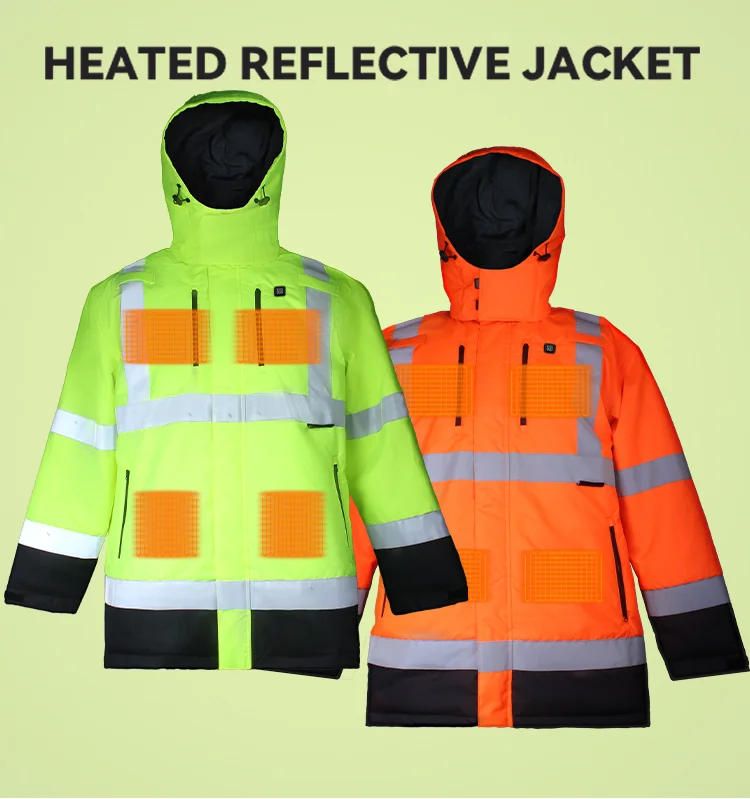
The table below summarizes 2026 wholesale pricing for OEM battery heated apparel manufacturing at 1,000-piece order quantity. All prices are FOB and exclude batteries unless noted.
| Product | Heating Element | Per-Unit Cost (USD) | Battery Pack | Total with Battery |
|---|---|---|---|---|
| Heated Jacket | Graphene | $42-48 | $9-12 | $51-60 |
| Heated Jacket | Carbon Fiber | $33-39 | $7-10 | $40-49 |
| Heated Vest | Graphene | $36-42 | $9-12 | $45-54 |
| Heated Hoodie | Graphene | $38-44 | $9-12 | $47-56 |
| Heated Pants | Carbon Fiber | $35-41 | $8-11 | $43-52 |
| Heated Gloves | Carbon Fiber | $56-72 (per pair) | $7-10 | $63-82 |
| Heated Socks | Carbon Fiber | $32-42 (per pair) | $6-9 | $38-51 |
Per-unit cost drops roughly 12-18% when you move from 500 to 2,000 pieces, and another 8-10% from 2,000 to 5,000 pieces. Heated gloves have the highest per-unit cost because of hand-form sewing and 5-zone wiring complexity. Heated socks are the most economical entry point and the best way for a new brand to test the category.
Quality Control: The 7 Checkpoints
| Checkpoint | What We Test | Pass Criterion |
|---|---|---|
| 1. Fabric Inspection | Color, weight, defects, shrinkage | 4-point system, AQL 2.5 |
| 2. Heating Panel Continuity | Resistance per zone, no breaks | ±5% of spec |
| 3. Panel Placement | Position, alignment, no overlap | Visual + ruler |
| 4. Wiring Continuity | No breaks, no shorts | 100% tested |
| 5. Controller Calibration | Heat output at each level | ±10% of spec |
| 6. Battery Cycle Test | Charge-discharge cycle | 1 full cycle per pack |
| 7. Pre-Shipment AQL | Visual + functional | AQL 2.5 General II |
Common Mistakes First-Time OEM Buyers Make
Mistake 1: Choosing the Cheapest Quote Without Auditing the Factory
The cheapest quote almost always comes from a trading company. When warranty claims arrive, you have no direct line to the production team.
Mistake 2: Underestimating Battery Certification Lead Time
UL 60335-2-81 takes 8-12 weeks. If you need to launch in Q3, start battery certification in Q1.
Mistake 3: Skipping the Pilot Run
The pilot catches defects before they become 5,000-piece problems. Skipping it to save $1,500 in sample fees often costs $40,000 in re-work.
Mistake 4: Using Generic Hangtags and Packaging
Custom packaging lifts perceived retail price by 15-25% without touching the garment. Magnetic-closure box, printed quick-start guide, and warranty card are the standard 2026 packaging stack.
Mistake 5: Forgetting Spare Battery Strategy
Plan a 15-20% battery attach rate, and consider bundling a spare 5,000 mAh pack with every jacket above $179 retail.
Mistake 6: Ignoring Firmware Updates
Plan for OTA firmware updates. A controller without firmware updates ages out of the market in 18 months.
Mistake 7: No Post-Launch Warranty Process
Build your warranty process before launch. Standard terms are 12 months on garment, 6 months on battery pack, with a 10-business-day repair-vs-replace turnaround.
Battery Heated Apparel vs Traditional Heated Apparel
| Dimension | Battery Heated Apparel | Traditional Heated Apparel |
|---|---|---|
| Heating Source | Rechargeable lithium-ion pack | USB power bank or AC adapter |
| Runtime | 4-11 hours per charge | Unlimited (must be plugged in) |
| Wash Durability | Removable battery, machine washable | Often not washable |
| Weight | +200-400g with battery | No integrated battery |
| Certification | UL 60335-2-81 mandatory | None required |
| Best For | Outdoor work, motorcycle, hunting, senior | Indoor desk, fixed-location use |
For 2026 retail distribution, battery heated apparel is now the dominant category. Traditional plug-in heated apparel is shrinking to a niche desk-warmer segment and to a few industrial applications.
Frequently Asked Questions
What is the typical MOQ for OEM battery heated apparel manufacturing?
500 pieces per style per color for OEM, 300 pieces per style for ODM, 500 pieces per style for private label with a USD 2,000-6,000 customization fee.
How long does a full production cycle take from PO to delivery?
Plan 90-120 days door-to-door for a 1,000-piece OEM heated jacket program with ocean freight. Air freight compresses to 35-50 days.
Can you dual-source between graphene and carbon fiber heating elements?
Yes. We run production lines for both technologies in our Vietnam and Shenzhen facilities. Most programs specify carbon fiber for cost and graphene for premium SKUs.
What battery certifications do you support?
UL 60335-2-81 and ETL for US, CE and EN 60335-2-81 for EU, KC for Korea, PSE for Japan, BIS for India, and CCC for China domestic.
How do you handle heating element warranty claims?
Standard warranty is 12 months on the garment and 6 months on the battery pack. Heating panel failures within warranty are replaced at our cost.
Can you help with controller firmware customization?
Yes. Our controller engineering team can deliver custom firmware with branded UI, custom heat profiles, and OTA update capability. Standard NRE is USD 3,000-8,000 per firmware project.
What is the difference between graphene and carbon fiber heating?
Graphene delivers full-surface even heat and 10,000+ bend cycles. Carbon fiber delivers directional heat and 5,000-7,000 bend cycles. Graphene costs 2-3x per panel.
How do you protect my design IP?
We sign an NNN agreement (Non-disclosure, Non-use, Non-circumvention) before any tech pack is exchanged. Pattern access is restricted to a small merchandising team.
Can I visit the factory before placing an order?
Yes. We host brand buyers in our Vietnam facility 4-6 times per month and in our Shenzhen facility 8-10 times per month. Plan a 2-day visit: day 1 line walk, day 2 pilot inspection.
What payment terms do you offer?
30% deposit at PO confirmation, 70% balance against B/L copy for orders up to USD 50,000. Net-30 OA terms available for repeat buyers after the second successful order.
Do you handle DDP shipping to the US and EU?
Yes. We have logistics partners in Long Beach, Rotterdam, and Hamburg for DDP routing. DDP quotes are typically 8-12% above FOB quotes.
What is your on-time delivery rate?
96.3% across 184 OEM programs in 2025. We share this metric openly because it is the single best indicator of how a manufacturer will treat your launch window.
How do you handle small re-orders?
Re-orders above 300 pieces per style run on the standard production line. Re-orders below 300 pieces are typically routed through our hand-build sample room with a 5-8% small-batch surcharge.
Conclusion: Building a Battery Heated Apparel Program That Lasts
Battery heated apparel manufacturing is mature, regulated, and competitive. The factories that will be in business in 2030 are the ones who have invested in heating element integration lines, certified battery pack rooms, and UL documentation. Pick a partner who can prove all three, who will sign an NNN before your first tech pack, and who will dedicate a merchandiser to your account for at least 18 months. The right partner will outlast your launch cycle and become your competitive moat in a category that is still consolidating.
If you want to walk through your program with our merchandising team, our standard response time is 48 hours from inquiry to feasibility note. Bring your retail price target, your launch season, and a rough unit volume, and we will come back with a written technical and commercial assessment within two business days.
Internal Link Suggestions
- OEM/ODM manufacturing methodology: see our OEM ODM Manufacturing category for the full set of technical guides.
- Battery heated apparel factory overview: see our Battery Heated Apparel Factory for the complete product matrix.
- Battery heated clothing category: see our Battery Heated Clothing Factory for category-specific OEM/ODM playbooks.
Leave a Reply