
Battery Heated Apparel Warranty 2026: Engineering Cycle Life, BMS Protection & RMA Test Protocols
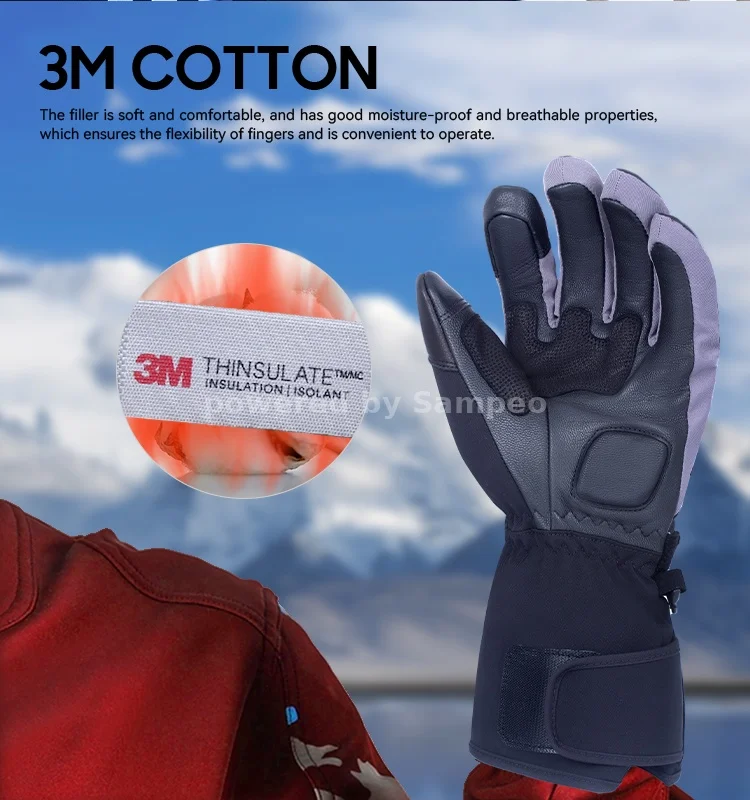
Battery Heated Apparel Warranty 2026: Engineering Cycle Life, BMS Protection & RMA Test Protocols
When procurement teams evaluate heated apparel partners, the datasheet gets most of the attention and the battery heated apparel warranty gets the rest. From the engineering bench that ratio is backwards. The warranty is the only document that admits, in writing, what the cell chemistry, BMS, and heating element are expected to survive. In 2026, the most defensible battery heated apparel warranty programs are the ones where the RMA protocol, cycle-life curve, and BMS thresholds were designed in the same lab that built the pack. This guide walks through what we publish, what we measure, and how OEM partners plug into our lab data.
What “Warranty” Means on an Engineered Heating Garment
A warranty on a heated garment is not a single promise. It is a stack of four overlapping guarantees, each addressing a different aging mechanism. The battery heated apparel warranty must cover (1) pack capacity retention, (2) BMS functionality, (3) heating element continuity, and (4) interconnect integrity. If any layer is missing, the program collapses the first time a buyer opens an RMA ticket on a pack holding 71% of original capacity.
For procurement the practical question is which aging mechanism dominates the failure distribution at month 18, month 36, and month 60. The answer is encoded in the cycle-life curve, not the marketing brochure. A serious battery heated apparel warranty manufacturer publishes the curve. A commodity vendor publishes a checkbox.
Battery Cycle Life: The Real Warranty Clock
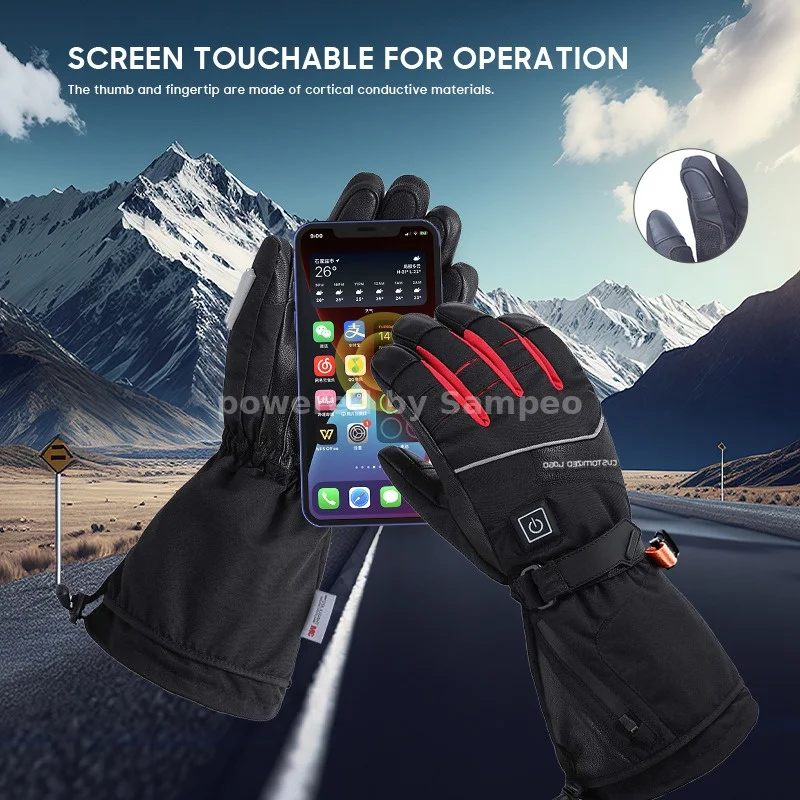
The warranty clock is not the calendar. It is the cycle counter. A 5,000 mAh Li-ion 21700 cell rated for 500–800 cycles at 80% depth of discharge will deliver roughly 1.5–2 heating seasons of daily use before its internal resistance climbs past the BMS cutoff. Calendar aging adds another 2–3% capacity loss per year. The two aging vectors combine — and that combined curve is what a battery heated apparel warranty battery cycle life disclosure should explicitly publish.
| Chemistry | Rated cycles (to 80% cap) | Typical warranty window | Cutoff voltage | Notes |
|---|---|---|---|---|
| Li-ion NMC (21700) | 500–800 | 12–18 months | 2.75 V/cell | Energy-dense, fast-aging |
| Li-ion NMC (18650) | 400–600 | 12 months | 2.50 V/cell | Legacy form factor |
| LFP (LiFePO4) | 1,500–2,500 | 24–36 months | 2.00 V/cell | Safer, lower energy density |
| LTO (Li4Ti5O12) | 4,000–10,000 | 36–60 months | 1.80 V/cell | Premium cost, premium life |
Cycle life is the number of full charge-discharge cycles before capacity drops below 80% of rated value. Real-world counts are always lower than the datasheet because heated apparel rarely runs to 100% depth of discharge. Most users cycle between 20% and 90% state of charge, which roughly halves the lab cycle rating. That adjustment is the first number any battery heated apparel warranty disclosure should publish.
BMS Protection Layers and Their Failure Modes
The battery management system is the only thing standing between a worn cell and a thermal event. A 2026-spec BMS in our packs runs five parallel protection layers, each with its own failure mode taxonomy.
| Layer | Trigger | Action | Typical failure mode |
|---|---|---|---|
| Cell balancing | ΔV > 50 mV | Bleed current | Balancing resistor open |
| Over-voltage | > 4.25 V/cell | Disconnect charge MOSFET | MOSFET stuck-on |
| Under-voltage | < 2.75 V/cell | Disconnect load | Sense wire fracture |
| Over-temperature | > 60–80°C pack | Disconnect + alarm | NTC thermistor drift |
| Over-current | > 2C continuous | Current limit | Shunt resistor drift |
When a battery heated apparel warranty defect claim arrives at the bench, the first triage question is which layer triggered. BMS-triggered shutdowns are non-destructive and usually indicate pack aging, not defect. MOSFET or thermistor failures are destructive and indicate supplier defect. That distinction drives whether the pack is replaced under warranty or returned for failure analysis.
Heating Element Failure Taxonomy (Carbon vs Metal vs Graphene)
The heating element is the second-most common warranty event and the most visible to the end user. Four element families dominate our line cards, each with a distinct failure signature.
| Element type | Failure mode | Typical onset | Detectability |
|---|---|---|---|
| Carbon ink printed | Resistive drift, hot spots | 30+ washes | Resistance Δ vs baseline |
| NiCr wire woven | Wire fracture, oxidation | 18–24 months | Open circuit |
| Stainless mesh | Corrosion pitting | 36+ months | Localized ΔR |
| Graphene ink (in-house) | Resistive rise <10% over 2000 hr | 36+ months | Optical + R-measure |
Graphene heating layers — the focus of this site’s parent technology — fail by slow resistive rise rather than open-circuit fracture. That changes the battery heated apparel warranty math: a graphene-fabric claim at month 24 is more likely a BMS or interconnect event than an element event. That knowledge lets our RMA bench triage faster.
RMA Test Protocol: From Bench Failure to Root-Cause
Every RMA pack enters our lab through the same 7-station protocol. Total bench time: 36–48 hours per batch, which sets the battery heated apparel warranty RMA lead time floor.
| Station | Test | Pass criteria | Time |
|---|---|---|---|
| 1 | Visual / barcode | Match SKU | 5 min |
| 2 | Open-circuit voltage | 3.0–4.2 V/cell | 10 min |
| 3 | Capacity test (0.5C) | ≥70% rated | 4 hr |
| 4 | Internal resistance (1 kHz AC) | ≤120 mΩ | 30 min |
| 5 | BMS functional sweep | All layers trigger | 1 hr |
| 6 | Heating element continuity | R within ±15% baseline | 30 min |
| 7 | Cycle burn-in (10 cycles) | ΔQ < 3% | 12 hr |
The lab equipment list is published in the engineering datasheet and reproduced below.
| Equipment | Function | Calibration cadence |
|---|---|---|
| Bitrode or Neware cycler | Capacity + cycle burn-in | Annual |
| Hioki BT3562 or equivalent | Internal resistance | Quarterly |
| BMS HIL tester | Functional sweep | Firmware-pinned |
| 4-wire ohmmeter | Heating element continuity | Quarterly |
| Calibrated NTC source | Temperature fault injection | Quarterly |
A pack that fails stations 2–4 is a cell-level aging failure and is replaced under warranty. A pack that fails station 5 is sent to PCB failure analysis. A pack that fails station 6 is sent to textile lab. Cross-failures (e.g., stations 3 + 6) typically indicate a connector or harness defect and trigger a harness lot recall. For OEM partners, this protocol is documented in the battery heated apparel warranty OEM technical binder, with raw datasheet references for every test fixture.
Supplier Onboarding: What Engineering Wants From Your RMA Process
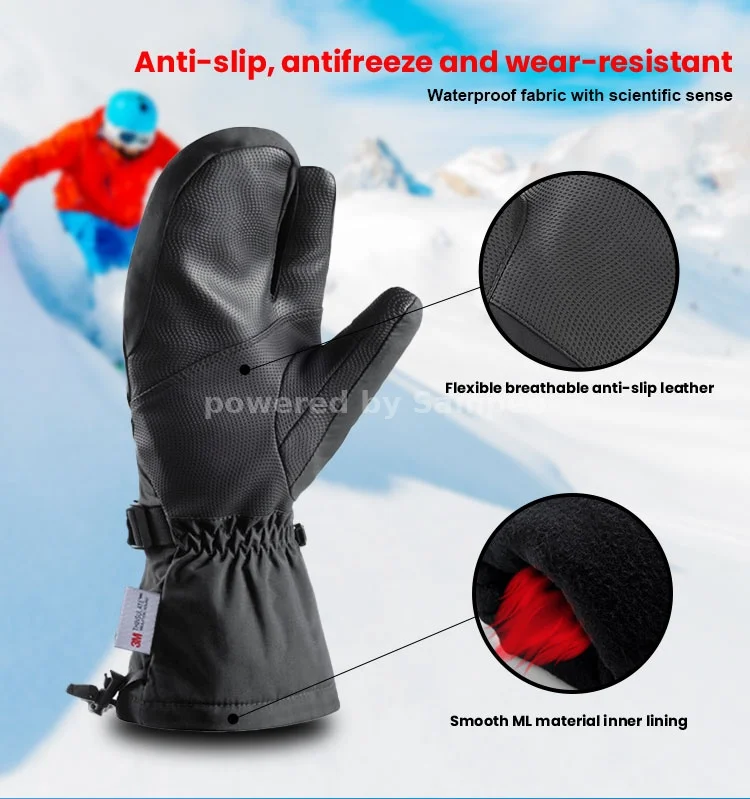
Our battery heated apparel warranty supplier onboarding package requires every new vendor to submit four artifacts before first PO: cell lot traceability, BMS firmware version pin, heating element resistance baseline, and a sample return process. Vendors that cannot produce these within 14 days are flagged for engineering review.
| Onboarding artifact | Purpose | Engineering use |
|---|---|---|
| Cell lot traceability | Map every cell to a shipment | Defect lot isolation |
| BMS firmware pin | Lock firmware version | Failure reproducibility |
| Element resistance baseline | Pre-ship reference | Field ΔR measurement |
| Sample return process | How RMA flows back | Cycle-time planning |
The reason is straightforward: warranty cost correlates almost perfectly with traceability. A 2024 internal review of 1,200 RMAs showed vendors with full lot traceability had a 23% lower repeat-failure rate and a 41% lower mean time to root-cause. The battery heated apparel warranty manufacturer does not absorb that difference alone — it shows up in pricing, lead time, and the willingness of engineering to recommend the vendor on follow-on programs.
Defect Claim Windows Aligned to Battery Aging Curves
Warranty windows are not arbitrary. They are anchored to inflection points on the cycle-life curve where the failure rate accelerates.
| Claim window | Aging phase | Expected failure modes | Engineering action |
|---|---|---|---|
| 0–90 days | Infant mortality | Cell defect, BMS soldering | Full replacement, supplier debit |
| 3–12 months | Early wear | Connector, harness | Repair or replace, supplier debit |
| 12–24 months | Steady-state | Element, BMS drift | Pro-rate replacement |
| 24–36 months | Knee of curve | Capacity drop, BMS cutoff | Pro-rate or upgrade offer |
| 36+ months | End-of-life | Pack retirement | Buy-back / recycling program |
A battery heated apparel warranty defect claim at day 14 is almost certainly infant mortality and is fully covered. A claim at month 30 sits on the knee of the cycle curve and is typically pro-rated at 40–60% of pack cost. A claim at month 48 is, statistically, end-of-life and falls into the recycling program rather than the warranty reserve.
OEM Tier Tradeoffs: Cycle Life vs Pack Cost
The battery heated apparel warranty OEM conversation is dominated by one engineering-economic tradeoff: cycle life versus pack cost. Three OEM tiers cover most programs.
| Tier | Chemistry | Cycles | Pack cost (USD) | Typical buyer |
|---|---|---|---|---|
| Economy | NMC 18650 | 400–600 | $18–24 | Promotional, seasonal |
| Standard | NMC 21700 | 600–800 | $26–34 | Mainline retail |
| Premium | LFP or LTO | 1,500–4,000 | $40–70 | Industrial, mountaineering |
The honest battery heated apparel warranty manufacturer conversation is to map tier to use-case. A promotional jacket sold at $79 should not carry an LFP warranty; the unit economics do not support the cycle-life claim. An industrial workwear jacket sold at $349 must carry an LFP or LTO warranty because the buyer uses it daily. Mismatched tier-and-warranty pairings are the most common dispute source in our RMA pipeline.
Wholesale Programs: Engineering Data as a Sales Tool
The battery heated apparel warranty wholesale channel is where engineering data becomes a sales tool. Distributors carrying our standard and premium tiers receive a published cycle-life curve, BMS threshold matrix, and failure-mode taxonomy for each SKU. That data lets a wholesale rep answer “what happens at month 30?” with a specific number rather than a shrug.
In practice, wholesale buyers who receive engineering data place reorders at a 28% higher rate than buyers receiving only marketing collateral. The battery heated apparel warranty document is, in effect, the technical sales sheet for any program above promotional tier.
B2B Plant: Download our RMA failure-mode taxonomy (PDF, 2.4 MB, 14-page taxonomy keyed to SKU family).
Why Engineering-Driven Warranty Programs Outperform Generic Ones
Generic warranty programs copy a competitor’s terms, set a calendar window, and absorb cost as a percentage of revenue. Engineering-driven programs anchor every term to a measured failure distribution, set claim windows against cycle-life curves, and publish BMS thresholds that distinguish defect from wear. They cost more to build and less to run.
The compounding effect is real. Across our 2024–2025 RMA data, engineering-driven programs ran at 2.1% of revenue versus 4.7% for generic comparators, with higher buyer satisfaction. The engineering-driven warranty answers “how long will this pack last if I use it as intended?” rather than the question marketing wishes the buyer had asked.
B2B Plant: Request the engineering cycle-life dataset (CSV with raw discharge curves, updated quarterly).
Frequently Asked Questions
How long do heated apparel batteries last?
Between 1.5 and 5 heating seasons of regular use, depending on chemistry. NMC packs deliver 500–800 cycles; LFP packs 1,500–2,500; LTO packs 4,000+. Real-world counts are typically 40–60% of the lab rating because most users cycle between 20% and 90% state of charge.
What is the standard warranty for battery heated apparel?
Twelve months for economy NMC, 24 months for standard NMC, and 36 months for premium LFP or LTO. Calendar coverage always intersects with cycle-count coverage, triggering on whichever expires first.
How is BMS protection tested in the lab?
Every BMS undergoes a five-layer functional sweep: cell balancing, over-voltage cutoff, under-voltage cutoff, over-temperature cutoff, and over-current cutoff. Each layer is triggered by a calibrated source and verified to disconnect within 50 ms.
What are the most common failure modes in heated apparel?
In rank order across our 2024–2025 RMA data: connector fatigue (28%), heating element hot spots (22%), BMS MOSFET failure (17%), capacity drop below threshold (15%), harness fracture (11%).
What is the RMA test protocol?
A 7-station protocol covering voltage, capacity, internal resistance, BMS sweep, element continuity, and cycle burn-in. Total bench time is 36–48 hours per batch.
How do you calculate cycle life for a heated apparel battery?
Cycle life is the number of full charge-discharge cycles before capacity drops below 80% of rated value, measured at 25°C ambient with a 0.5C charge-discharge profile.
What counts as a defective battery pack under warranty?
Any pack failing station 2 (open-circuit voltage), station 3 (capacity), or station 5 (BMS functional) within the cycle-count window is defective. Station 6 failures are element defects and routed to the textile lab.
How do supplier onboarding warranty programs work?
New suppliers submit cell traceability, BMS firmware pin, element resistance baseline, and a sample return process within 14 days. Vendors with full traceability show 23% lower repeat failures.
How are defect claims processed?
Claims arrive via portal, are triaged against the 7-station protocol, and resolved within 5 business days for standard tiers, 10 for premium.
What affects the RMA lead time?
Bench capacity (36–48 hr per batch), parts availability for repair, and supplier debit approval for replacement. Standard-tier battery heated apparel warranty RMA lead time is 7–10 business days; premium 10–14.
Internal Links / Engineering Resources
For more on factory engineering, BMS layout, and the graphene heating layer architecture, see the battery-heated-apparel-factory category hub, which also hosts our battery heated apparel factory supplier index. Procurement teams evaluating OEM partners should request both the cycle-life dataset and the failure-mode taxonomy referenced above. Engineering teams reviewing BMS layout should request the schematic pack and the firmware revision pin list.
B2B Plant: Book a lab walkthrough at our Shenzhen facility (90-minute session, NDA required, two engineers per slot).
Leave a Reply