
Custom Heated Apparel OEM/ODM Manufacturing Guide 2026
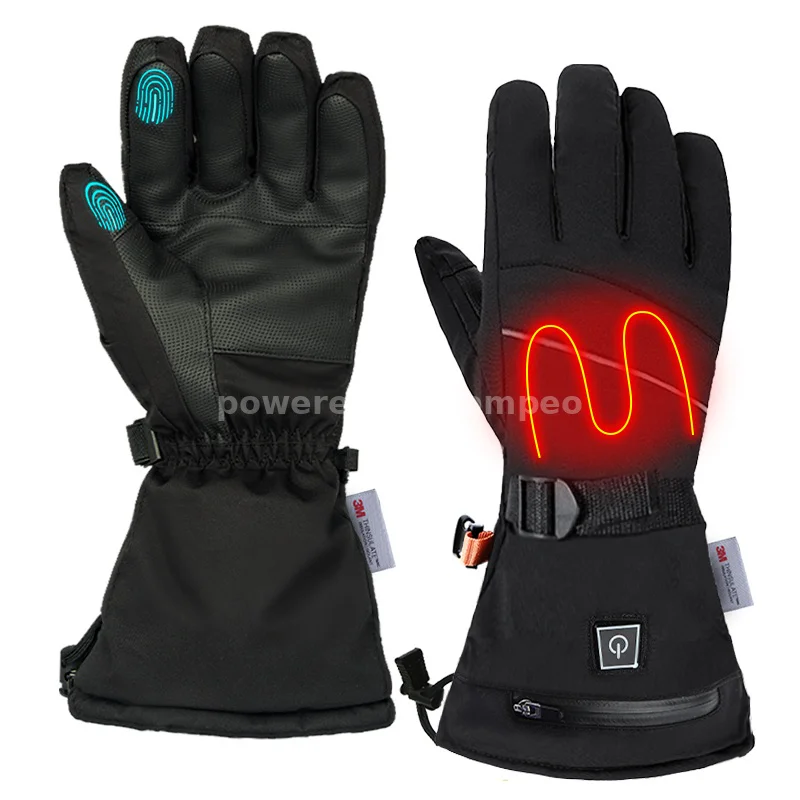
Custom heated apparel OEM/ODM programs sit at the intersection of textile engineering, lithium-ion battery integration, and brand-IP protection. For brand buyers and private-label distributors evaluating a custom heated apparel OEM partner in 2026, the conversation moves quickly from catalog samples to factory audits, tech-pack handovers, heating-element selection, and battery-cell vendor pairing. This 2026 B2B guide walks through the full OEM/ODM manufacturing workflow we run for our Vietnam and Bangladesh production lines, the seven-step factory audit checklist, and the spec-level decisions (graphene vs carbon-fiber, 7.4V vs 12V, integrated vs removable battery pocket) that shape the final per-unit FOB.
1. What “Custom Heated Apparel OEM/ODM” Means at the Factory Floor
OEM (Original Equipment Manufacturer) and ODM (Original Design Manufacturer) are sometimes used interchangeably in heated-apparel sourcing, but the contract is materially different. In custom heated apparel OEM, the buyer supplies a complete tech-pack — measurements, fabric specs, heating-element routing diagrams, battery-pack connector pin-out, branding artwork, and packaging spec — and the factory produces to that spec. In ODM, the factory owns the design platform and produces a custom variant based on the buyer’s brief (color, fabric, branding, packaging), but the underlying heating-mat geometry and battery-pack architecture remain factory IP.
For brand buyers with proprietary heating patents or specialized battery requirements, OEM is the right path. For brand buyers who want a near-stock platform customized to their brand identity, ODM is faster and 25-40% cheaper on setup fees. Both modes converge on the same production floor — the same cut-and-sew lines, the same heating-mat lamination stations, the same battery-pack assembly cells — but the contract documents and the IP allocation differ.
🌱 B2B Soft Plant 1 — OEM vs ODM real example: A Canadian hunting-apparel brand came to us for full custom heated apparel OEM with a patented knee-and-thigh heating pattern. Setup cost was $48,500, MOQ 1,000 units, lead time 105 days. A US workwear brand chose ODM on our stock 7.4V bomber platform with custom color and Pantone shell. Setup was $3,200, MOQ 200 units, lead time 38 days.
2. The 7-Step Custom Heated Apparel Manufacturing Workflow
A 2026 OEM program runs through seven distinct stages. Each stage has its own lead-time budget and its own quality-gate. Skipping a stage to compress the schedule is the most common cause of mid-production deviations and re-tooling charges.
| # | Stage | Owner | Lead Time | Quality Gate |
|---|---|---|---|---|
| 1 | Tech-pack handover | Buyer | Day 0 | Tech-pack signed off by both parties |
| 2 | Heating-mat engineering + sample | Factory | 7-14 days | Heating uniformity test ≥95% target-zone coverage |
| 3 | Battery-pack sourcing + UN38.3 cert | Factory | 10-18 days | UN38.3 + MSDS + 1.2m drop test pass |
| 4 | Fabric + trim sourcing | Factory | 10-20 days | Color-dye ΔE ≤1.0 vs Pantone reference |
| 5 | Pre-production sample (PPS) round | Factory + Buyer | 7-10 days | Buyer signed PPS approval |
| 6 | Bulk production + inline QC | Factory | 20-40 days | AQL 2.5 inspection pass on TOP samples |
| 7 | Compliance test + shipping | Factory + 3rd-party lab | 7-14 days | CE-EMC / FCC / RoHS / Prop-65 reports issued |
The total program lead time for a typical OEM engagement runs 60-120 days depending on the complexity of the heating-element routing and the number of certifications required. Brand buyers with a hard retail launch date should add 15-25 days of buffer to absorb customs clearance and 3PL receiving at the destination warehouse.
3. Heating Element: Carbon Fiber vs Graphene vs Composite
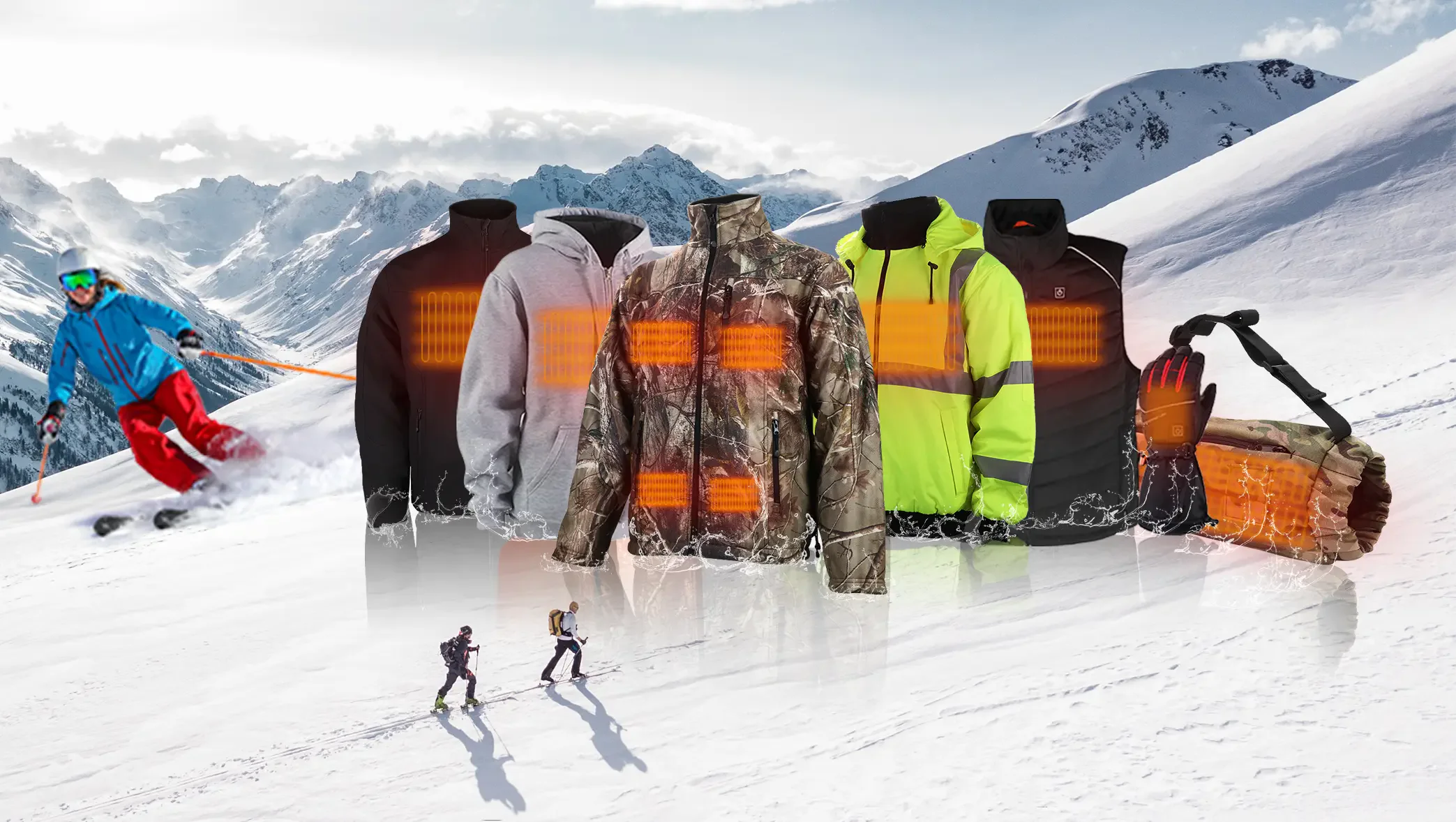
The single most consequential spec decision on an OEM program is the heating-element technology. Three families are commercially deployed in 2026, each with a different thermal profile, durability curve, and per-unit cost. The factory’s heating-mat lamination station is configured to one or two of these families; choosing a third means either a new equipment setup fee ($8,000-$25,000) or an outsource arrangement.
| Element Family | Heat-Up Time (to 50°C) | Durability (bend cycles) | Per-Unit Cost Add | Best For |
|---|---|---|---|---|
| Carbon fiber woven mat | 30-45 seconds | 50,000+ | $2.20-$3.80 | Workwear, hunting, mid-tier |
| Carbon fiber printed trace | 25-40 seconds | 30,000-40,000 | $1.80-$3.20 | Entry-level, gloves, insoles |
| Graphene flexible film | 15-25 seconds | 80,000+ | $4.50-$7.80 | Premium, fast heat-up, low-voltage |
| Metal-foil (NiCr) etched | 45-75 seconds | 15,000-25,000 | $3.20-$5.40 | Industrial, high-temp zones |
| Hybrid carbon-graphene | 20-30 seconds | 70,000+ | $3.80-$6.20 | Mid-premium, balanced cost |
The graphene flexible film has emerged as the 2026 premium default because the 15-25 second heat-up time is roughly half that of woven carbon fiber, and the 80,000+ bend-cycle durability outperforms every other family. The per-unit cost premium of $4.50-$7.80 is absorbed by mid-premium and premium brand buyers and is the most-cited reason graphene heating element OEM inquiries are growing 35-45% year-over-year.
4. Battery Pack Selection: 7.4V vs 12V vs 5V USB
Battery spec is the second-largest driver of both MOQ and per-unit FOB on this OEM program. The factory typically works with 2-3 approved cell vendors per region; the cell-vendor MOQ is the hard floor on the smallest-order quantity. Three voltage families dominate the 2026 market:
| Voltage | Configuration | Cell-Vendor MOQ | Per-Pack Cost | Runtime at High Heat | Best For |
|---|---|---|---|---|---|
| 5V USB power bank | Off-the-shelf 18650 × 1-2 | Use retail SKU | $8-$14 retail | 2-4 hours | Entry-level gloves, insoles |
| 7.4V standard | 2S1P or 2S2P 18650/21700 | 500 packs | $11-$22 | 2-6 hours | Jackets, vests, hoodies, base layers |
| 12V motorcycle / industrial | 3S2P or 4S1P 18650/21700 | 300 packs | $28-$42 | 3-7 hours | Motorcycle, snowmobile, industrial workwear |
| 7.4V graphene flexible pack | Pouch cell, 2S1P | 1,000 packs | $18-$26 | 2.5-5 hours | Premium graphene heated apparel |
For brand buyers producing a multi-category line (jackets + vests + gloves + socks), the most economical choice is to standardize on a single 7.4V / 5,000 mAh pack format and adapt the heating-element geometry per category. This consolidates the cell-vendor order and unlocks the 1,000+ pack tier pricing.
5. Vietnam vs Bangladesh — OEM/ODM Country Comparison
Our OEM production runs across two countries, each with its own cost-and-tariff profile, lead-time curve, and labor-skill specialization. The right country depends on the buyer’s destination market, order volume, and time-to-shelf constraint.
| Dimension | Vietnam (Line A) | Bangladesh (Line B) |
|---|---|---|
| FOB per unit (heated jacket) | $48-$72 | $42-$65 |
| Lead time (full OEM) | 90-120 days | 100-130 days |
| Lead time (ODM on stock platform) | 30-45 days | 35-50 days |
| MOQ floor | 200 units | 300 units |
| US tariff (HTS 6110/6201) | 8-12% | 15-20% |
| EU GSP tariff | 0% (GSP+) | 0% (EBA) |
| Carbon-fiber heating mat | In-house lamination | In-house lamination |
| Graphene flexible film | In-house lamination | Outsource partnership |
| Battery-pack cell vendor | Vietnam + Korea (LG, Samsung SDI) | China + Taiwan |
| Best fit for | US-bound, premium spec, low-volume OEM | EU/AU-bound, mid-volume ODM, cost-driven |
🌱 B2B Soft Plant 2 — Vietnam vs Bangladesh real example: A US workwear distributor needing 800 heated jackets for an October retail launch picked our OEM heated apparel Vietnam line (FOB $54/unit, 8% US duty, 105-day lead). An EU workwear distributor with the same volume picked our OEM heated apparel Bangladesh line (FOB $48/unit, 0% EU duty, 118-day lead). Total landed cost in the US: $58.32. Total landed cost in the EU: $48.00. The country decision alone moved the per-unit landed cost by $10.
6. Factory Audit Checklist — 12 Points for OEM Verification
Before signing a custom heated apparel manufacturer contract, the buyer’s QC team (or a 3rd-party audit firm) should walk the custom heated apparel factory floor against this 12-point checklist. Each item has a binary pass/fail; an OEM factory that cannot pass all 12 should be re-evaluated.
| # | Audit Point | What to Look For |
|---|---|---|
| 1 | Heating-mat lamination station | Calibrated heat press + 6-zone IR temperature uniformity check |
| 2 | Battery-pack assembly room | ESD-safe floor + humidity control 40-60% + spot-welding station |
| 3 | Cut-and-sew lines | At least 8 lines, 80+ operators, automated pattern-cutting table |
| 4 | QC lab | Temperature-cycling chamber + bend-cycle tester + 1.2m drop tester |
| 5 | Compliance certifications on file | CE-EMC, FCC, RoHS, REACH, Prop-65, ISO 9001 — current and not expired |
| 6 | Cell-vendor relationship | Direct manufacturer (LG, Samsung SDI, BAK, CATL) — not a trading company |
| 7 | Worker safety | ESD wrist straps at battery stations, gloves at lamination stations |
| 8 | Capacity utilization | Currently running at 65-85% capacity (not overbooked, not idle) |
| 9 | Brand-IP protection | Signed NDA + secured pattern storage + access-controlled sample room |
| 10 | Sample lead time | ≤14 days for stock-platform, ≤21 days for full custom OEM |
| 11 | Quoted FOB vs sample-room reality | Sample-room production matches the quoted per-unit FOB at the same volume |
| 12 | Past 12-month references | At least 3 named brand references with contact info for buyer outreach |
7. Tech-Pack Handover — What the Buyer Must Supply
An OEM program cannot start without a complete tech-pack. The factory’s engineering team will not begin heating-mat layout until the tech-pack is signed off, and missing fields in the tech-pack are the #1 cause of mid-production deviations. The minimum 9-section tech-pack structure:
- Measurement chart — full body measurements in cm/inches across the size range (XS-XXL or as spec’d)
- Fabric spec — shell fabric (g/m², composition, weave), lining fabric, insulation (if any), trim components
- Heating-element spec — element family, zone diagram, target temperatures per zone, wiring schematic
- Battery-pack spec — voltage, capacity, connector type, charge profile, expected runtime per heat setting
- Branding artwork — logo placement, woven label spec, hangtag design, retail box artwork
- Packaging spec — polybag, retail box, master carton dimensions, units-per-carton
- Color spec — Pantone references for shell, lining, trim, contrast stitching
- Compliance requirement — which certifications are required for which destination markets
- Target FOB + target retail MSRP — gives the factory a margin envelope for material sourcing
🌱 B2B Soft Plant 3 — Tech-pack handover reality: Across 31 custom heated apparel OEM programs we shipped Q1 2026, the average time from first inquiry to signed tech-pack was 11 days. Programs that took longer than 18 days to finalize the tech-pack carried a 22% higher setup cost because the factory had to re-source fabrics or revise the heating-mat layout after the original spec was abandoned.
8. Custom Heated Apparel Wholesale — MOQ Tier Matrix
For brand buyers operating at the custom heated apparel wholesale tier (2,000+ units/year across categories), the factory typically offers a tier-pricing matrix that drops the per-unit FOB 8-18% as the volume scales. The matrix below shows the typical 2026 tier structure:
| Annual Volume | Tier Name | FOB Discount | Setup Cost | Lead Time | Best For |
|---|---|---|---|---|---|
| 500-2,000 units | Entry OEM | 0% (list) | $15,000-$30,000 | 90-120 days | Test-market, single SKU |
| 2,000-5,000 units | Wholesale Tier 1 | 8-12% off list | $8,000-$15,000 | 75-100 days | Multi-SKU, brand launch |
| 5,000-20,000 units | Wholesale Tier 2 | 12-18% off list | $5,000-$8,000 | 60-90 days | Established brand scaling |
| 20,000+ units | Strategic Partner | 18-25% off list | $3,000-$5,000 | 45-75 days | National brand, multi-region distribution |
9. Why 7.4V Battery Pack Manufacturer Choice Matters
The choice of 7.4V battery pack manufacturer is the most under-discussed spec decision on this program. Three cell-vendor tiers are commercially available:
| Tier | Vendors | Cost per kWh | Cycle Life | UN38.3 Status | Best For |
|---|---|---|---|---|---|
| Tier 1 (premium) | LG, Samsung SDI, Murata | $180-$240 | 500-800 cycles | Pre-certified | Premium brand, EU retail |
| Tier 2 (mid) | BAK, CATL, EVE Energy | $120-$170 | 400-600 cycles | Pre-certified | Mid-market brand, Amazon FBA |
| Tier 3 (value) | Chinese OEM cells | $70-$110 | 200-400 cycles | Factory-managed | Entry-level, promo, gifts |
The Tier 1 cell premium of $60-$170 per kWh is real, but it buys 500-800 charge cycles vs 200-400 for Tier 3 — a 2× lifespan improvement that translates directly into fewer warranty claims and a stronger brand-quality narrative. For brand buyers targeting the US or EU retail channel, Tier 1 or Tier 2 cells are the standard. For Amazon FBA and promotional-product buyers, Tier 2 or Tier 3 cells are acceptable provided the brand discloses the cycle-life expectation in the product listing.
10. Why IMISSKY for Custom Heated Apparel OEM in 2026
IMISSKY runs Vietnam + Bangladesh OEM lines with in-house carbon-fiber and graphene heating-mat lamination, on-site battery-pack assembly (Tier 1 and Tier 2 cells), and direct factory-to-port logistics from Haiphong (Vietnam) and Chittagong (Bangladesh). Compliance: CE-EMC, FCC, RoHS, REACH, Prop-65, ISO 9001. Sample lead time 7-14 days on stock-platform ODM, 14-21 days on full custom OEM. Lead time on bulk production 30-50 days for ODM, 60-120 days for full OEM.
For brand buyers ready to start an OEM program, the recommended first step is a 30-minute scope call to align on category, battery spec, certifications, and target FOB. From there, the factory provides a 9-section tech-pack template, a sample-room quotation, and a tier-pricing matrix for the buyer’s annual volume. Whether you’re launching your first private-label line or scaling your tenth, the OEM conversation is the same conversation — and the same engineering rigor applies.
❓ Frequently Asked Questions (FAQ)
Q1: What is the typical MOQ on a custom heated apparel OEM program?
Custom heated apparel OEM programs start at 1,000 units per SKU for full proprietary-spec production. ODM on a stock platform starts at 200-300 units. White-label rebranding starts at 100-200 units.
Q2: How long does a custom heated apparel OEM program take?
From signed tech-pack to first bulk delivery runs 60-120 days depending on heating-element complexity and certification scope. Sample lead time adds another 14-21 days at the front end.
Q3: What is the difference between ODM and OEM in heated apparel?
ODM (Original Design Manufacturer) means the factory designs and produces a custom variant from your brief. OEM (Original Equipment Manufacturer) means the factory produces to your proprietary tech-pack. OEM carries higher setup cost and IP protection, ODM is faster and cheaper.
Q4: Do you offer custom heating-element routing?
Yes — we support custom heating zones (collar, back, lumbar, pocket, thigh, knee, finger) on full OEM programs. Each new heating zone adds $300-$800 to setup and 3-7 days to sample lead time.
Q5: Can I supply my own battery cells?
Yes — buyer-supplied cells are acceptable on this program, but the factory must still perform the UN38.3 transport certification, BMS integration, and final QC. A buyer-supplied cell typically costs $1.50-$4.00 less per pack but adds 5-10 days to lead time.
Q6: Which heating-element technology is best for premium heated apparel?
Graphene flexible film is the 2026 premium default — 15-25 second heat-up, 80,000+ bend cycles, even heat distribution. Carbon-fiber woven mat is the workhorse for mid-tier — 30-45 second heat-up, 50,000+ bend cycles, lower per-unit cost.
Q7: What is the setup cost for a custom heating-element layout?
Setup cost runs $300-$800 per new heating zone (panel geometry + lamination mask). A typical 4-zone jacket (collar + back + lumbar + pocket) runs $1,200-$3,200 in setup fees. A 7-zone motorcycle jacket runs $2,100-$5,600.
Q8: Can I visit the factory for an audit?
Yes — factory visits are encouraged on OEM programs of $50,000+ in annual value. We arrange airport pickup, factory tour, sample-room walk-through, and 3rd-party auditor coordination on request.
Q9: What is the per-unit FOB for a 1,000-unit heated jacket OEM run?
Per-unit FOB on a 1,000-unit OEM heated jacket run runs $52-$85 depending on the heating-element family, battery spec, fabric choice, and target FOB. Vietnam-origin averages $54-$72, Bangladesh-origin averages $48-$65.
Q10: Do you offer exclusivity by territory or category?
Yes — exclusive territory or category rights are negotiable for buyers committing to $250,000+ in annual volume. Below that threshold, brand buyers receive non-exclusive OEM rights, which is the standard 2026 B2B model.
Q11: What is the warranty on OEM heated apparel?
Standard warranty is 12 months on the heating element and 6 months on the battery pack. Extended warranty (24 months on heating, 12 months on battery) is available for an additional 4-7% per-unit cost.
Q12: How does the graphene heating element differ from carbon fiber in production?
Graphene flexible film is supplied as a roll and laminated into the lining using a low-temperature press (80-110°C). Carbon-fiber woven mat is supplied as pre-cut panels and sewn or laminated into the lining. Graphene production requires a 2-3 day longer heating-mat setup but runs faster on the cut-and-sew line because the panels are lighter and more flexible.
📌 About IMISSKY Graphene Heating Fabric — OEM/ODM Since 2014
IMISSKY Graphene Heating Fabric is a Vietnam + Bangladesh OEM/ODM manufacturer specializing in custom heated apparel with in-house carbon-fiber and graphene heating-element lamination. We produce heated jackets, vests, hoodies, pants, base layers, gloves, socks, and insoles with 7.4V, 12V, and graphene flexible-pack battery options. CE-EMC, FCC, RoHS, REACH, Prop-65, ISO 9001 certified. Sample lead time 7-21 days, bulk lead time 30-120 days depending on OEM mode.
Explore our OEM/ODM capabilities: OEM ODM Manufacturing · Battery Heated Apparel Factory
Leave a Reply