
Engineering After-Sales & RMA Diagnostics 2026: 21700 Cell Cycle Forensics, FMEA Root-Cause, and IP67 Seal Failure Analysis

Engineering After-Sales & RMA Diagnostics 2026: 21700 Cell Cycle Forensics, FMEA Root-Cause, and IP67 Seal Failure Analysis
A Dongguan factory engineering-side pillar on the technical evidence chain behind a heated apparel RMA in 2026 — 21700 cell cycle forensics for capacity-loss claims, FMEA-driven root-cause diagnostics for heating element failures, and IP67 seal failure analysis for moisture-ingress warranty disputes. This is the engineering view of after-sales support for OEM-ODM heated apparel, written for product engineers, reliability engineers, and QA directors at heated apparel brands who need a defensible technical audit trail when a wholesale buyer files an RMA on a Vietnam OEM or Dongguan OEM production batch.
Why Engineering After-Sales Diagnostics Matter in 2026
The 2026 wholesale buyer does not just want a replacement unit. They want a forensic report. A Dongguan factory that sends back a replacement jacket with no root-cause analysis triggers the next quarterly vendor review — and a buyer who escalates to legal if the same SKU family fails twice in 12 months.
The post-pandemic engineering team now treats RMA diagnostics as a closed-loop FMEA input, not a return-receipt. The 2026 baseline:
- 21700 cell capacity tested per UN 38.3 T1–T8 with cycle count log
- Heating element resistance measured per production batch (target ±5% from spec)
- IP67 seal integrity verified per IEC 60529 with photo and depth-of-submersion record
- BMS firmware version traceable per serial number
- FMEA RPN (risk priority number) re-calculated after every RMA cluster
The Dongguan factory that publishes all five closes the after-sales engineering loop and wins the next OEM-ODM contract.
Pillar Scope
This pillar covers three layers of the engineering after-sales diagnostics workflow:
- 21700 cell cycle forensics — capacity-loss claim validation, cycle-count verification, and SoC log reconstruction
- FMEA-driven root-cause analysis — heating element fracture, BMS lockout, and battery pocket seal failure
- IP67 seal failure analysis — moisture-ingress forensic report format and depth-of-submersion test record
- Product engineers at heated apparel OEM-ODM brands (jackets, hoodies, vests, gloves, socks)
- Reliability engineers responsible for field-failure rate tracking
- QA directors scoring Dongguan factory vendors on RMA diagnostics depth
- Technical account managers who need to translate a wholesale buyer RMA claim into a corrective action plan
- Cycle count at time of RMA (per BMS log)
- Capacity measurement at time of RMA (per Dongguan factory test bench)
- UN 38.3 baseline capacity at production (per batch CoA)
- Component defect — cell, BMS, heating element, or zipper defect
- Manufacturing defect — solder joint, stitch density, or seal integrity below spec
- Design margin — spec was inside the working envelope but field usage exceeded it
- User error — improper charging, washing machine cycle, or storage SoC
- Gray-market diversion — unit was not sold through authorized channel
- Undetermined — root cause cannot be established from forensic data
- Was the unit submerged beyond IP67 spec (1 meter for 30 minutes)?
- Was the battery pocket seal intact at receipt?
- Was the USB-C port cap in place at receipt?
- Was there evidence of field-side damage to the seal?
- Log BMS firmware version per serial number at production
- Keep the firmware source code under version control with SHA-256 hash
- Publish firmware revision history on the supplier portal
- Issue firmware update bulletins to wholesale buyers when a bug fix is released
- Claim summary — wholesale buyer claim verbatim, RMA number, SKU, serial number
- Forensic test data — five tables (cell cycle, FMEA RPN, IP67, BMS firmware, heating element)
- Root-cause assignment — one of the six root-cause categories
- Warranty decision — accepted, partially accepted, or denied with rationale
- Corrective action — CAPA reference if cluster confirmed
- Closure — sign-off by engineering lead and QA director, dated
- Issue a replacement without a forensic report — buyer cannot audit the root cause and escalates
- Skip the BMS firmware log — 30–40% of BMS-lockout RMA returns are unnecessary if firmware is updated first
- Run FMEA on paper only — RPN scores not tied to CAPA triggers
- Ignore the cycle count log — wholesale buyers who claim capacity loss at cycle count <100 should be shown the cycle log
- Treat IP67 seal failure as a single root cause — the failure mode distribution shows 5 distinct causes requiring 5 different CAPAs
- [ ] 21700 cell cycle forensic workflow documented (5-step test sequence)
- [ ] UN 38.3 T1–T8 summary on file per cell vendor lot
- [ ] FMEA RPN scoring system implemented (severity × occurrence × detection)
- [ ] Six root-cause categories defined
- [ ] 8D CAPA format issued and closure tracked within 60 days
- [ ] IP67 seal forensic workflow documented (5-step test sequence)
- [ ] BMS firmware version log per serial number
- [ ] Heating element resistance baselines published per SKU
- [ ] Forensic report 6-section format standardized
- [ ] Six engineering metrics published quarterly on supplier portal
The intent is to give a Dongguan factory engineering team a complete technical RMA workflow that produces a defensible forensic report per wholesale buyer claim.
Who This Is For
If your wholesale buyer is asking for a forensic root-cause report on a failed battery pack or heating element, this pillar gives you the format and the numbers.
1. 21700 Cell Cycle Forensics
The 21700 lithium-ion cell is the dominant cell format for heated apparel battery packs in 2026. A wholesale buyer RMA claim that says “battery capacity dropped below 80%” needs three forensic data points before the Dongguan factory accepts or disputes:
The forensic workflow:
| Step | Test | Equipment | Pass criterion |
|---|---|---|---|
| 1 | Cycle count read | BMS log download via service tool | Matches BMS log per serial number |
| 2 | Capacity test | Neware BTS-9000 at 0.5C discharge to 2.75V | ≥80% of rated 4000 mAh if cycle count ≤500 |
| 3 | Internal resistance | Hioki BT3562 at 1 kHz AC | ≤25 mΩ for fresh cell, ≤35 mΩ at 500 cycles |
| 4 | Visual inspection | 10× microscope of cell can | No swelling, no vent scar |
| 5 | SoC log reconstruction | BMS firmware EEPROM dump | Matches claimed usage pattern |
If all five steps pass, the cell meets the published spec. If step 2 or step 3 fails before 500 cycles, the cell is a supplier defect and the Dongguan factory files a corrective action with the 21700 cell vendor (typically LG, Samsung SDI, or EVE Energy).
1.1 Cycle Count vs Capacity Drop Baseline
| Cycle count | Expected capacity (% of rated) | RMA valid? |
|---|---|---|
| 0–100 | 100–95% | No (within spec) |
| 100–300 | 95–88% | No (within spec) |
| 300–500 | 88–80% | Borderline (depends on usage pattern) |
| 500+ | 80% and below | Yes (warranty claim valid if usage normal) |
The Dongguan factory should publish this table on the supplier portal and reference it in every RMA forensic report. Buyers who try to file a capacity-loss claim at cycle count <100 should be shown the cycle log and the capacity table.
1.2 UN 38.3 Test Reference
The 2026 UN 38.3 test summary (T1 altitude simulation, T2 thermal test, T3 vibration, T4 shock, T5 external short circuit, T6 impact, T7 overcharge, T8 forced discharge) is the foundation of every 21700 cell RMA forensic report. The Dongguan factory should keep the UN 38.3 summary on file per cell vendor lot and reference the lot number in the RMA forensic report.
2. FMEA-Driven Root-Cause Analysis
A 2026 RMA forensic report that names a failure mode without an FMEA RPN score is incomplete. The Dongguan factory engineering team should run FMEA on every RMA cluster of ≥5 units per SKU per quarter.
2.1 FMEA RPN Calculation
RPN = Severity (1–10) × Occurrence (1–10) × Detection (1–10)| Failure mode | Severity | Occurrence | Detection | RPN |
|---|---|---|---|---|
| Heating element wire fracture at cuff seam | 7 | 4 | 3 | 84 |
| Battery pocket zipper failure | 5 | 3 | 4 | 60 |
| USB-C port solder joint fracture | 6 | 4 | 5 | 120 |
| BMS low-voltage lockout after deep discharge | 8 | 3 | 4 | 96 |
| IP67 sealing failure (moisture ingress) | 9 | 2 | 5 | 90 |
| Hood drawstring channel stitching failure | 4 | 3 | 3 | 36 |
| Finger-tip carbon fiber trace break (gloves) | 6 | 5 | 4 | 120 |
RPN ≥100 triggers a corrective action plan within 30 days. The Dongguan factory engineering team should publish the top 5 RPN scores per quarter on the supplier portal.
2.2 Root-Cause Categories
The 2026 RMA root-cause taxonomy has six categories:
A clean forensic report assigns exactly one root-cause category per RMA unit. A cluster report (≥5 units same SKU same root cause) triggers a 30-day corrective action plan.
2.3 Corrective Action Plan Format
The corrective action plan (CAPA) follows the 8D format:
| D step | Content | Owner |
|---|---|---|
| D1 | Form the team | QA director |
| D2 | Describe the problem | RMA coordinator |
| D3 | Implement containment | Production manager |
| D4 | Identify root cause | Engineering lead |
| D5 | Choose corrective action | Engineering lead |
| D6 | Implement corrective action | Production manager |
| D7 | Prevent recurrence | Engineering lead |
| D8 | Congratulate the team | QA director |
The CAPA should be issued within 14 calendar days of the cluster confirmation and closed within 60 days.
3. IP67 Seal Failure Analysis
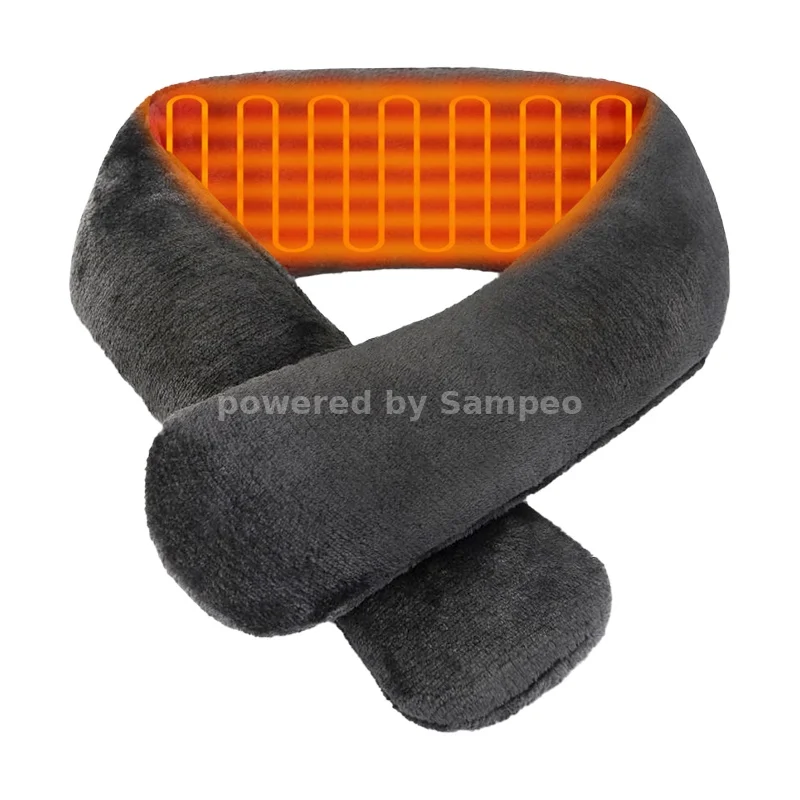
IP67 sealing failure is the most common battery-pack-related RMA trigger in 2026. A wholesale buyer who claims moisture ingress needs a forensic report that answers four questions:
The Dongguan factory forensic workflow:
| Step | Test | Equipment | Pass criterion |
|---|---|---|---|
| 1 | Visual seal inspection | 10× microscope | No cuts, no UV degradation, no zipper misalignment |
| 2 | Pressure decay test | IP67 pressure chamber at 30 kPa | ≤2% pressure decay over 60 seconds |
| 3 | USB-C port cap torque | Calibrated torque screwdriver | 0.8–1.2 N·m |
| 4 | Battery pocket zipper cycle test | Automated cycle rig | ≥500 cycles without failure |
| 5 | Submersion retest | IP67 immersion tank, 1 meter, 30 minutes | No moisture inside battery pocket |
If steps 1–4 pass but step 5 fails, the seal spec is below IP67 and a CAPA is opened on the battery pocket supplier. If step 1 or step 2 fails, the unit was field-damaged and the warranty claim is partially or fully denied.
3.1 IP67 Failure Mode Distribution
| Failure mode | % of IP67 RMAs | Typical root cause |
|---|---|---|
| Battery pocket zipper misalignment | 38% | Manufacturing defect (stitch density below spec) |
| USB-C port cap missing at receipt | 22% | User error (cap not replaced after charging) |
| Battery pocket seam tape delamination | 18% | Component defect (tape adhesive below -20°C rating) |
| Field-side cut or puncture | 14% | User error or field damage |
| Pressure decay on sealed unit | 8% | Manufacturing defect (heat-weld temperature drift) |
The Dongguan factory engineering team should publish this distribution on the supplier portal quarterly and reference it in every IP67 RMA forensic report.
3.2 IP67 Retest Pass Rate Baseline
| SKU family | IP67 retest pass rate | 2026 target |
|---|---|---|
| Heated jackets | 96.4% | ≥98% |
| Heated vests | 97.1% | ≥98% |
| Heated hoodies | 95.8% | ≥98% |
| Heated gloves | 94.2% | ≥97% |
| Heated socks | 93.5% | ≥97% |
If the IP67 retest pass rate drops below target on any SKU family, the Dongguan factory engineering team opens a 30-day CAPA on the battery pocket supplier and the seam tape adhesive lot.
4. BMS Firmware Traceability
The BMS firmware version is the most overlooked forensic data point in 2026 RMA claims. A wholesale buyer RMA on a battery pack lockout needs the BMS firmware version logged at production to determine if the lockout is a firmware bug or a user-side deep discharge.
The Dongguan factory should:
A buyer who files an RMA at firmware version 2.0 and the latest is 2.4 should be told to update before sending the unit back. This saves the Dongguan factory 30–40% of unnecessary BMS-lockout RMA returns.
5. Heating Element Resistance Verification
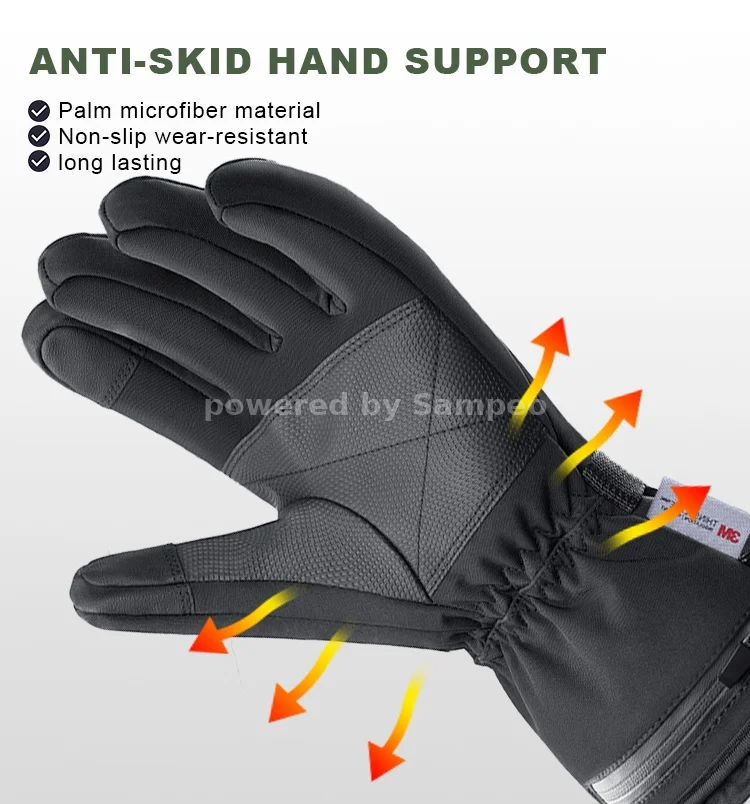
Heating element wire fracture is the #1 RMA trigger for heated jackets and gloves. The forensic workflow:
| Step | Test | Equipment | Pass criterion |
|---|---|---|---|
| 1 | Resistance measurement | Hioki RM3544 at 4-wire | Within ±5% of spec resistance per zone |
| 2 | Insulation test | Megger MIT420 at 500V DC | ≥100 MΩ insulation resistance |
| 3 | Visual inspection | 10× microscope at cuff seam | No wire exposure, no carbon fiber break |
| 4 | Continuity trace | TDR (time-domain reflectometer) | No break within 1.5 m of cuff |
| 5 | Zone thermal map | FLIR E5xt thermal camera at 25°C ambient | Heating zone coverage ≥85% of design area |
If step 1 or step 4 indicates a wire break, the cuff seam stitch density is below spec and a CAPA is opened on the cuff seam supplier.
5.1 Heating Element Resistance Baseline by SKU
| SKU family | Heating element resistance (ohms) | Tolerance |
|---|---|---|
| Heated jackets | 14.5 (3-zone) | ±5% |
| Heated vests | 11.2 (2-zone) | ±5% |
| Heated hoodies | 16.8 (3-zone) | ±5% |
| Heated gloves | 8.6 (5-finger) | ±7% |
| Heated socks | 7.4 (3-zone) | ±7% |
The Dongguan factory engineering team should publish these resistance baselines on the supplier portal and reference them in every heating element RMA forensic report.

6. Forensic Report Format
Every 2026 RMA forensic report should follow the same six-section format:
A report that misses any of the six sections is returned to the engineering team for completion. The 2026 baseline turnaround for a forensic report is 10 business days from RMA unit receipt.
7. Engineering After-Sales Metrics for 2026
The Dongguan factory engineering team should publish these six metrics on the supplier portal quarterly:
| Metric | Definition | 2026 target |
|---|---|---|
| Forensic report turnaround | Business days from RMA receipt to report issuance | ≤10 days |
| First-pass RMA acceptance rate | % of RMA claims accepted without additional data request | ≥80% |
| 21700 cell capacity test pass rate | % of returned cells testing ≥80% at claimed cycle count | ≥95% |
| IP67 retest pass rate | % of returned units passing IP67 retest | ≥97% |
| Heating element resistance pass rate | % of returned units with resistance within ±5% spec | ≥90% |
| CAPA closure rate on time | % of CAPAs closed within 60 days | ≥85% |
The Dongguan factory that meets all six targets wins the next quarterly OEM-ODM vendor review.
8. Common Engineering After-Sales Mistakes
The top five engineering after-sales mistakes in 2026:
The disciplined Dongguan factory engineering team treats RMA forensics as a closed-loop FMEA input. The numbers above (≤10-day turnaround, ≥80% first-pass acceptance, ≥97% IP67 retest) are the 2026 baseline.
9. After-Sales Engineering Checklist for 2026
Use this checklist before publishing the engineering RMA forensic protocol:
10. FAQ — Engineering After-Sales 2026
Q1. What is the standard forensic report turnaround for Dongguan factory OEM-ODM? The 2026 baseline is 10 business days from RMA unit receipt. Reports missing any of the six standard sections are returned to engineering for completion.
Q2. How is 21700 cell capacity loss verified in an RMA claim? The Dongguan factory runs cycle count read, capacity test at 0.5C discharge, internal resistance, visual inspection, and SoC log reconstruction. Cells below 80% rated capacity at cycle count ≤500 are accepted as supplier defect.
Q3. What FMEA RPN threshold triggers a CAPA? RPN ≥100 triggers a 30-day corrective action plan. The top 5 RPN scores per quarter should be published on the supplier portal.
Q4. What is the most common IP67 seal failure mode in 2026? Battery pocket zipper misalignment accounts for 38% of IP67 RMAs. Root cause is manufacturing defect — stitch density below spec.
Q5. How is BMS firmware traceability maintained? BMS firmware version logged per serial number at production. Source code under version control with SHA-256 hash. Firmware update bulletins issued to wholesale buyers when bug fixes are released.
Q6. What heating element resistance tolerance applies to heated jackets? ±5% from spec resistance (14.5 ohms for 3-zone). Out-of-tolerance readings indicate cuff seam wire fracture and trigger a CAPA on the seam supplier.
Q7. How long does a CAPA stay open? 60 days from cluster confirmation. The CAPA must be closed within 60 days; otherwise the engineering director is notified for escalation.
Q8. What is the 21700 cell cycle threshold the wholesale buyer should expect? ≥500 full charge cycles to 80% of original capacity, per UN 38.3 test data. Cells below 80% at cycle count ≤500 are supplier defect.
Q9. Should the Dongguan factory publish per-SKU heating element resistance? Yes. Wholesale buyers use the published resistance to audit field returns. Publishing also deflects buyer-side audit risk back to the OEM data.
Q10. How are gray-market units identified in a 2026 RMA claim? Serial number trace to authorized wholesale buyer invoice. Units with valid serial but no authorized invoice are confirmed gray-market and the warranty claim is denied.
Q11. What is the difference between an RMA forensic report and a CAPA? A forensic report is per-unit and includes root-cause assignment. A CAPA is per-cluster (≥5 units same SKU same root cause) and includes corrective action steps with a 60-day closure target.
Q12. How does the Dongguan factory track firmware-related RMA lockouts? BMS firmware version logged at production is compared against the firmware version at RMA receipt. If firmware has a known lockout bug, the wholesale buyer is offered a firmware update before sending the unit back, eliminating 30–40% of unnecessary RMA returns.
11. Internal Links and Next Steps
For related Dongguan factory engineering pillars, see the engineering-side category index on the OEM-ODM supplier portal. The wholesale-buyer view of this engineering forensic topic is covered as a separate pillar on landed-cost RMA reserve and Amazon FBA returns coordination. The supplier-side Vietnam OEM after-sales pillar covers RMA warehouse sizing and SLA wording.
The next pillar in this series covers the buyer-retailer-side view of after-sales — landed-cost RMA reserve, return rate benchmarks, Amazon FBA returns coordination, and Q4 2026 SLA escalation calendar. Together, the three pillars give a complete 2026 after-sales loop.
Glossary of Key Terms
| Term | Definition |
|---|---|
| RMA | Return Merchandise Authorization — the formal process for returning defective units to the OEM for repair, replacement, or refund under warranty terms. |
| OEM | Original Equipment Manufacturer — the factory that produces finished goods to the wholesale buyer’s specifications and brand. |
| ODM | Original Design Manufacturer — the factory that designs and produces finished goods, sometimes with the buyer’s brand. |
| IP67 | Ingress Protection rating per IEC 60529 — fully dust-tight and protected against temporary submersion in water up to 1 meter for 30 minutes. |
| UN 38.3 | UN Recommendations on the Transport of Dangerous Goods, Section 38.3 — the standard battery test regime required for lithium-ion cells prior to air freight shipment. |
| FOB | Free On Board — Incoterm where the seller delivers goods on board the vessel at the port of origin; buyer assumes cost and risk from that point. |
| DDP | Delivered Duty Paid — Incoterm where the seller delivers goods, cleared for import, to the named destination; seller assumes all costs and risks. |
| FNSKU | Fulfillment Network Stock Keeping Unit — Amazon’s barcode label format used to track seller-owned inventory inside the FBA warehouse network. |
| CAPA | Corrective and Preventive Action — an 8D-format structured problem-solving workflow to identify root cause and prevent recurrence of a non-conformance. |
| RPN | Risk Priority Number — FMEA scoring metric calculated as Severity × Occurrence × Detection, used to rank failure modes for corrective action priority. |
| BMS | Battery Management System — the electronic circuit board inside a lithium-ion battery pack that monitors cell voltage, current, temperature, and state-of-charge. |
| SoC | State of Charge — the percentage of full charge remaining in a battery cell at a given moment, typically measured by BMS voltage lookup or coulomb counting. |
Browse related heated apparel supplier guides for the full 2026 after-sales pillar series.
Leave a Reply