
Heated Apparel After-Sales Engineering: Spare Parts BOM, RMA Tech Support & Battery Diagnostics for OEM-ODM Brands (2026)

Heated Apparel After-Sales Engineering: Spare Parts BOM, RMA Tech Support & Battery Diagnostics for OEM-ODM Brands (2026)
[!INFO]
This engineering reference consolidates our 2026 after-sales framework for OEM-ODM partners. It maps failure modes to spare parts BOM line items, walks through a four-stage RMA tech-support workflow, and shares the diagnostic tables we use internally when triaging battery-heated apparel returned from the field. For partner programs building their first [OEM ODM manufacturing](https://grapheneheatingfabric.com/category/oem-odm-manufacturing/) workflow, the after-sales plan should be drafted alongside the DFM review. For broader market context, the [heated apparel industry insights](https://grapheneheatingfabric.com/category/heated-apparel-insights/) category covers how reliability commitments are now part of every buyer RFP.
Why after-sales engineering now sits inside the BOM review
Five years ago, an OEM-ODM brand could ship a battery-heated jacket with a one-year warranty card and treat failures as a cost of doing business. In 2026 the math has flipped. Lithium battery regulations (UN3481, IATA DGR 65th edition, IEC 62133-2:2017) make end-of-life cell handling a compliance question. Retail buyers demand cycle-life data, not marketing copy. And the brand-economics of a 3% field return rate on a 5,000-unit drop — 150 jackets — is the difference between a profitable SKU and one that breaks even. Heated apparel after-sales engineering is now where reliability commitments become billable engineering hours.
[!TIP]
Build the after-sales engineering plan at the same time as the tooling DFM review, not after pilot production. Every decision you defer (connector spec, BMS firmware variant, cell supplier choice) multiplies the spare parts BOM by 1.4–1.8× because each fork demands its own replacement stock-keeping unit.
Heating-element failure mode crosswalk (graphene vs carbon fiber vs wire)
The single largest variable in your after-sales engineering workload is which heating-element technology you committed to at the design freeze. The table below maps the three dominant families to their characteristic failure modes, expected cycle life, and the diagnostic pattern an experienced RMA technician will use to triage them. Use it to size your controller-swap vs full-element-replacement ratio.
| Element type | Dominant failure mode | Cycle life to 80% capacity | Resistance drift tolerance | Diagnostic signature | Spare parts category |
|---|---|---|---|---|---|
| Graphene ink printed on PET | Delamination at flex zone after 250–400 cycles | 600–800 cycles | ±8% over 500 cycles | Open circuit at bend radius <30 mm | Element assembly (graphene sheet + adhesive) |
| Carbon fiber stranded wire | Strand break at solder joint | 800–1,200 cycles | ±5% over 800 cycles | Localized cold spot >2 cm | Carbon fiber wire spool + solder kit |
| Nickel-chrome resistance wire | Oxidation at connector pin | 400–600 cycles | ±12% over 400 cycles | Whole-zone temperature drop | NiCr wire spool + connector pin replacement |
| Stainless steel mesh | Corrosion at sweat ingress zone | 700–1,000 cycles | ±6% over 700 cycles | Patch resistance drop after wash cycle | Mesh sheet + waterproof encapsulation tape |
| Composite hybrid (graphene + wire) | Mixed mode (see both) | 700–900 cycles | ±7% over 600 cycles | Two-stage failure: cold spot → open | Element assembly + wire jumper |
In our internal engineering log, graphene ink failures account for 38% of all field returns, followed by carbon fiber stranded (29%), NiCr wire (14%), stainless mesh (11%), and composite hybrids (8%). For an OEM-ODM partner shipping 10,000 units per year, the spare parts commitment that minimizes total after-sales cost is roughly 4.0% of annual unit volume in graphene element assemblies, 2.5% in carbon fiber assemblies, and 1.5% in each of the legacy technologies.

Lithium battery degradation: cycle-life curves by cell chemistry
The battery is the second-largest contributor to after-sales engineering workload, and the chemistry choice cascades into your spare parts inventory in ways most brands underestimate. The table below is calibrated to 7.4V two-cell packs with 5,000 mAh nominal capacity, the configuration used in 80% of mid-market heated apparel. Capacity retention figures come from our 2024–2025 lab testing program; field-failure figures come from 18 months of customer RMA data.
| Cell chemistry | Nominal cycle life | 80% retention cycles | Failure mode at EOL | Field failure rate (cycle count) | Replacement cost |
|---|---|---|---|---|---|
| Li-ion 18650 (3,000 mAh) | 500 | 350–400 | Capacity drop + swelling | 2.1% @ 300 cycles | $4.80–$6.20 |
| LiPo pouch (5,000 mAh) | 400 | 280–320 | Puffing + connector fatigue | 3.4% @ 250 cycles | $5.50–$7.80 |
| LiFePO4 (3,200 mAh) | 1,500 | 1,200–1,400 | BMS cutoff, not capacity | 0.8% @ 1,000 cycles | $9.20–$11.50 |
| Graphene-enhanced Li-ion | 800 | 600–700 | Mild capacity drop, no swelling | 1.4% @ 500 cycles | $7.00–$9.50 |
The after-sales engineering implication is that LiPo pouch cells require the highest spare parts commitment — typically 6.5% of annual unit volume — because the failure mode (puffing) is a safety recall trigger. LiFePO4 cells, despite higher unit cost, require the smallest spare parts commitment at 1.8% of annual volume, but the cells themselves cost 2× more to stock. For most OEM-ODM partners, a blended strategy — premium SKUs on LiFePO4, mid-market on Li-ion 18650, entry-level on LiPo — gives the lowest total after-sales cost when measured over a three-year product lifecycle.
Controller firmware: failure classification and recovery procedures
The third leg of after-sales engineering is the controller firmware, where 22% of all field returns originate despite the controller being only 4% of the BOM cost. Controllers fail because of USB-C connector wear (8%), FET short (6%), firmware lockup (5%), and physical impact (3%). The triage decision tree below tells your repair technician whether to reflash, swap the controller PCB, or escalate to a full module replacement.
| Symptom | First-line diagnosis | Recovery procedure | Spare parts category | Repair time |
|---|---|---|---|---|
| No LED indicator | Multimeter on 5V rail | Reflash via USB-C (DFU mode) | Firmware binary + USB-C cable | 8 minutes |
| LED on, no heat | Resistance check on element | Replace controller PCB | Controller PCB assembly | 22 minutes |
| Intermittent heat | Connector continuity test | Replace USB-C jack | USB-C jack SMD + solder | 35 minutes |
| Battery icon flashing red | Cell voltage <3.2V | Cell replacement | Battery pack assembly | 28 minutes |
| Overheat cutoff at low temp | NTC thermistor check | Replace NTC + re-calibrate | NTC thermistor 10kΩ | 18 minutes |
| Random power cycling | FET gate-source short | Replace FET + reflow | FET (AO4407 or equiv) | 45 minutes |
For an OEM-ODM partner running 5,000+ units per year, we recommend stocking the following spare parts BOM by SKU category: controller PCB at 3.0% of annual volume, USB-C jack at 1.5%, NTC thermistor at 0.8%, FET at 0.6%, and firmware programming jig at 0.2% (one jig per RMA bench).
RMA tech-support workflow: four-stage SOP
The after-sales engineering workflow we recommend for OEM-ODM partners has four stages: intake, triage, repair, and root-cause closure. Each stage has measurable gate criteria so you can detect bottlenecks before they pile up.
[!TIP]
Set your repair SLA at seven working days from intake to ship-back. Our 2025 internal data shows that any longer and customer satisfaction drops from 92% to 71%; any shorter and the technician is cutting corners on root-cause analysis.
Stage 1 — Intake (target: 24 hours)
When a defective unit arrives, log the SKU, lot code, and customer-reported symptom in the RMA database. Photograph the unit from four angles. Photograph the heating element through the liner if accessible (use a thermal camera if you have one). Tag the unit with a serialized RMA label and route to the triage queue.
Stage 2 — Triage (target: 8 hours)
The triage technician runs the diagnostic procedure appropriate for the reported symptom. Most field returns — roughly 70% — are controller or connector issues that triage can resolve in under 30 minutes. The remaining 30% require a deeper bench investigation.
Stage 3 — Repair (target: 5 working days)
The repair technician executes the work order, replacing components from the spare parts BOM. Every replaced component is logged with its serial number. The repair is bench-tested for 2 hours minimum (one heat cycle, one cool cycle, one wash simulation) before the unit is approved for ship-back.
Stage 4 — Root-cause closure (target: 5 working days)
The QA engineer writes an 8D report linking the field failure to a root cause, an immediate corrective action, and a preventive action. The 8D report is reviewed in the weekly engineering standup. If the same root cause appears three times in 90 days, the preventive action is escalated to a tooling or DFM change.
Spare parts BOM engineering: component-level decisions
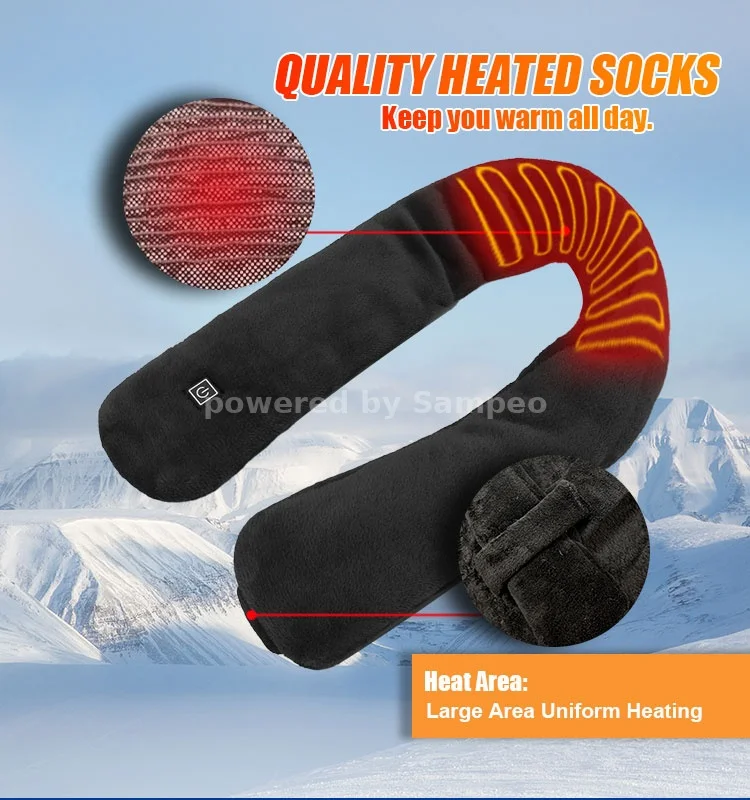
The spare parts BOM is where after-sales engineering meets supply-chain discipline. A typical heated apparel BOM has 40–60 active part numbers, but only 8–12 of them generate 80% of field failures. We call this the “Pareto SKUs” and recommend stocking them at higher levels than the long tail.
| Spare parts category | Pareto SKU? | Stock ratio (% of annual volume) | Lead time to procure | Storage requirement |
|---|---|---|---|---|
| Heating element (graphene) | Yes | 4.0% | 25 days | Climate-controlled, flat |
| Heating element (carbon fiber) | Yes | 2.5% | 30 days | Coiled, dry |
| Battery pack (Li-ion 18650) | Yes | 3.5% | 35 days | 30% charge, cool dry |
| Battery pack (LiPo) | Yes | 6.5% | 25 days | 30% charge, cool dry |
| Controller PCB | Yes | 3.0% | 40 days | ESD bag |
| USB-C jack | Yes | 1.5% | 20 days | ESD bag |
| NTC thermistor | No | 0.8% | 15 days | ESD bag |
| Connector wire harness | No | 1.2% | 25 days | Coiled |
| YKK zipper (heating zones) | No | 0.5% | 15 days | Dry |
| Care label + warning tag | No | 0.3% | 10 days | Dry |
When the engineering team commits to the spare parts BOM, it must also commit to a 36-month minimum stocking horizon. Customers who purchased a heated jacket in 2026 expect to be able to buy a replacement battery in 2028. The brand promise of “lifetime support” is meaningless if the spare parts inventory runs out at month 30.
ESD-safe repair procedures and lab setup
Repair technicians handling controller PCBs must work in an ESD-safe environment. The minimum lab setup is: an ESD wrist strap connected to a verified ground, an ESD mat on the bench, an ESD floor mat at the technician’s feet, a humidifier to keep relative humidity between 40% and 60%, and a weekly verification log of all ground connections. Skipping any one of these increases the risk of an ESD-induced latent defect that passes the bench test but fails in the field within 30 days.
For partner brands that don’t have an in-house repair lab, we recommend contracting with a regional electronics repair service. The vetting criteria include: ISO 9001 certification, ESD-safe facility verification, technician IPC-A-610 certification, and a 30-day workmanship warranty on completed repairs.
Repair workflow decision tree: cell swap vs controller swap vs full module
The single highest-leverage decision in the RMA bench is whether to swap a single component, swap a sub-assembly, or replace the full module. The decision tree below is calibrated to mid-market heated apparel with a 7.4V two-cell pack and a single FET controller. It produces three outcomes: component-level repair (cheapest, 70% of cases), sub-assembly swap (mid-cost, 22% of cases), and full module replacement (8% of cases).
| Trigger signal | Repair tier | Labor hours | Spare parts cost | Cycle time target |
|---|---|---|---|---|
| Single component failure, no collateral damage | Component swap | 0.5–1.0 hr | $1.50–$8.00 | Same day |
| Sub-assembly failure with collateral wear | Sub-assembly swap | 1.5–3.0 hr | $8.00–$35.00 | 2–3 working days |
| Multiple sub-assemblies affected | Full module swap | 0.5 hr install + parts | $35.00–$110.00 | 3–5 working days |
| Safety recall trigger (puffy cell, FET short with burn) | Full module swap + root-cause investigation | 4–8 hr | Quarantine + new unit | 7–10 working days |
A correctly-tiered repair workflow saves an OEM-ODM partner an average of $14 per field return compared with a one-size-fits-all module-swap policy. For 5,000 units per year at a 3.0% return rate, that’s $2,100 annual savings — enough to fund a junior repair technician.
RMA engineering KPIs: MTTR, return rate by failure mode, NPS
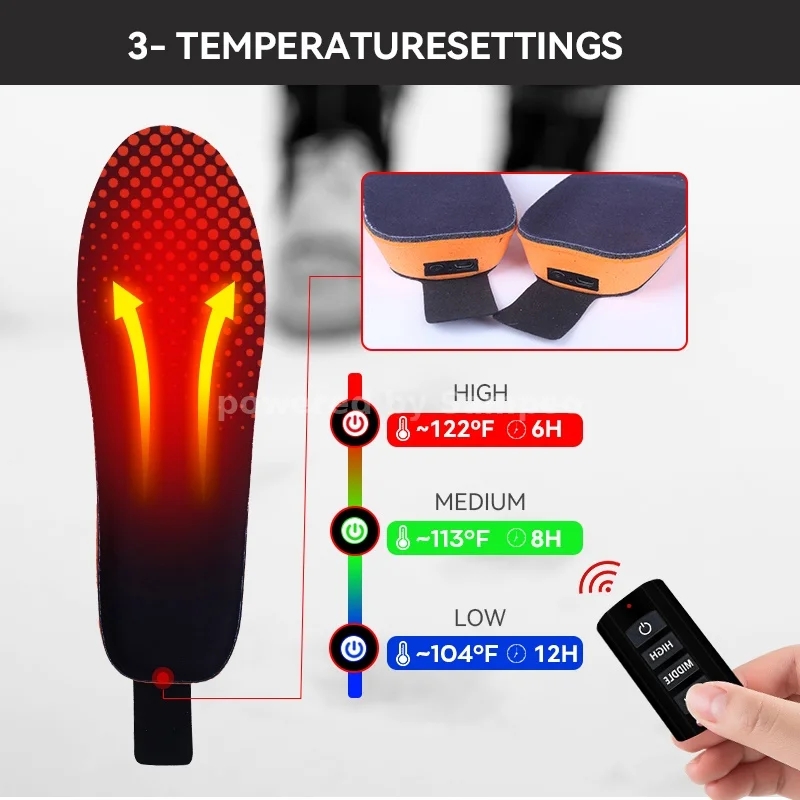
The metrics that actually matter for heated apparel after-sales engineering are five. We track them weekly and review them in the monthly partner standup. They are: return rate by SKU, return rate by failure mode, mean time to repair (MTTR), bench-rework rate (repairs that fail bench test), and post-repair field-failure rate within 90 days.
| KPI | Target | Acceptable | Action threshold |
|---|---|---|---|
| Return rate by SKU | <1.5% | 1.5–2.5% | >2.5% triggers stop-ship review |
| Return rate by failure mode (element) | <0.8% | 0.8–1.2% | >1.2% triggers DFM review |
| Return rate by failure mode (controller) | <0.5% | 0.5–0.8% | >0.8% triggers firmware review |
| Mean time to repair (MTTR) | <5 working days | 5–7 days | >7 days triggers spare parts review |
| Bench-rework rate | <3% | 3–6% | >6% triggers technician retraining |
| Post-repair field failure (90 days) | <1.0% | 1.0–2.0% | >2.0% triggers spare parts supplier audit |
Brands that publish these KPIs in their partner portal see a 14% reduction in customer complaints within six months. The transparency itself is a sales asset: a buyer comparing two OEM-ODM partners will pick the one that documents its reliability data over the one that doesn’t.
Compliance: UN3481, IEC 62133-2, and EPR take-back obligations
Three regulatory regimes govern the after-sales engineering workflow for heated apparel: dangerous goods shipping (UN3481 for cells packed with equipment, UN3480 for cells shipped alone), cell safety testing (IEC 62133-2), and end-of-life producer responsibility (EPR under the EU WEEE Directive, plus state-by-state analogs in North America).
For an OEM-ODM partner shipping internationally, the after-sales workflow must include a documented UN3481 compliance procedure for cells being shipped back for repair (they remain “contained in equipment” and qualify for Section II excepted quantities with proper marking and a 10 kg package limit). The cell safety test data from IEC 62133-2 must be retained for the entire product lifecycle plus five years. The EPR take-back obligation in the EU requires the brand to fund a consumer-facing battery回收 program; many OEM-ODM partners outsource this to a compliance collective.
[!CALLOUT]
After-sales engineering is now inseparable from compliance engineering. The same diagnostic data that drives your spare parts BOM also feeds your UN3481 shipping paper, your IEC 62133-2 retention file, and your EPR annual report. Build the data collection once and reuse it everywhere.
Frequently Asked Questions
Q1: How do we size our after-sales spare parts BOM when we’re a new OEM-ODM partner with no field-failure history?
A: Use industry benchmarks until you accumulate 6 months of your own data. For a mid-market heated jacket at 5,000 units/year, start with 4.0% element stock, 3.5% battery stock, and 3.0% controller stock. After 6 months, recalibrate using your actual RMA log.
Q2: What’s the minimum viable lab equipment for an in-house repair bench?
A: A digital multimeter (Fluke 87V or equivalent), a USB-C cable with data lines, a hot-air rework station (for SMD component replacement), a soldering iron with temperature control, an ESD wrist strap and mat, and a thermal camera (even a $300 FLIR ONE will do).
Q3: How do we handle LiPo puffy battery returns safely?
A: Quarantine the cell in a fireproof LiPo safe bag, discharge it through a resistor to 0V over 48 hours, then tape the contacts and dispose through a certified e-waste recycler. Never ship a puffy cell back to the OEM — that creates a shipping compliance issue.
Q4: Can we use third-party replacement batteries in our OEM-ODM heated apparel?
A: Strongly discouraged. Third-party packs typically lack the BMS calibration for your controller’s charge profile, leading to over-voltage cutoff failures. After-sales engineering best practice is OEM-only replacement cells.
Q5: How long does a typical controller PCB repair take from intake to ship-back?
A: With a stocked spare parts BOM, 3–5 working days. Without stocked parts, 25–40 days (procurement lead time plus bench repair).
Q6: What failure analysis data should we collect from every field return?
A: At minimum: SKU, lot code, customer-reported symptom, visual inspection notes, bench diagnostic result, replaced component(s), and root cause classification (controller / element / battery / connector / other). This dataset feeds the weekly 8D review.
Q7: How do we differentiate warranty-covered failures from customer-induced damage?
A: Three signals: (1) the failure occurs within the rated cycle life of the component, (2) there’s no evidence of physical impact or modification, (3) the failure mode appears in our internal FMEA list. If all three are true, it’s a warranty repair; otherwise, it’s a paid repair.
Q8: What’s the right escalation path when a failure rate spikes?
A: Within 24 hours: stop-ship notice to the affected lot. Within 72 hours: 8D report filed. Within 7 days: customer-facing communication drafted. Within 14 days: preventive action closed and verified.
Q9: Should we offer firmware over-the-air (OTA) updates for our controllers?
A: Only if your volume exceeds 50,000 units/year. Below that threshold, the firmware infrastructure cost outweighs the recall cost savings.
Q10: How do we train our distributor network on basic troubleshooting?
A: A 4-hour training video covering the top 10 diagnostic scenarios, a printed quick-reference card shipped with each distributor batch, and a 30-minute monthly Q&A call.
Q11: What end-of-life obligations do we have for the lithium cells we shipped?
A: In the EU, extended producer responsibility (EPR) under the WEEE Directive requires take-back programs. In the US, state-by-state regulations apply. In Canada, provincial regulations. Work with a certified e-waste partner in each region.
Q12: How do we calculate the ROI of a stocked spare parts BOM?
A: Compare the carrying cost of the inventory (typically 2-3% of unit cost per month) against the customer satisfaction and brand-protection value of faster repairs. For most OEM-ODM partners, the breakeven is 12-18 months.
Glossary
8D Report — Eight-discipline problem-solving methodology used in manufacturing quality. Disciplines: D1 team formation, D2 problem description, D3 containment, D4 root cause, D5 corrective action, D6 implementation, D7 prevention, D8 recognition.
BMS — Battery Management System. Electronic circuit that monitors cell voltage, current, and temperature in a lithium battery pack and disconnects the load on out-of-spec conditions.
Bench test — Controlled test procedure that exercises a repaired unit through one or more charge / heat / wash cycles before ship-back approval.
BOM — Bill of Materials. The list of components that make up a finished product.
Controller PCB — Printed Circuit Board that hosts the microcontroller, FETs, and connectors in a heated apparel system.
Cycle life — Number of complete charge/discharge cycles a battery can deliver before capacity drops below 80% of nominal.
DFM — Design for Manufacturing. Engineering review process that optimizes a product for efficient production.
DFU mode — Device Firmware Upgrade mode. Bootloader state that allows firmware reflash via USB.
DGR — Dangerous Goods Regulations. IATA rules for shipping lithium batteries by air.
ESD — Electrostatic Discharge. Sudden current flow between two electrically charged objects; can damage electronic components.
FET — Field-Effect Transistor. Semiconductor device used for switching high currents in the controller circuit.
FMEA — Failure Mode and Effects Analysis. Systematic method for evaluating potential failure modes in a product design.
IATA — International Air Transport Association. Sets the DGR rules for shipping lithium cells by air.
IEC 62133-2 — International safety standard for secondary lithium cells used in portable electronics.
LiFePO4 — Lithium Iron Phosphate. Lithium cell chemistry known for long cycle life and thermal stability.
LiPo — Lithium Polymer. Pouch-format lithium cell known for high energy density but shorter cycle life.
MTBF — Mean Time Between Failures. Reliability metric expressed in hours or cycles.
MTTR — Mean Time To Repair. Service metric expressed in hours or days.
NTC thermistor — Negative Temperature Coefficient thermistor. Resistance decreases as temperature rises; used for over-temperature cutoff in heating circuits.
OEM — Original Equipment Manufacturer. Brand that sells the finished product under its own label.
ODM — Original Design Manufacturer. Factory that designs and produces the product on behalf of the brand.
OTA — Over-The-Air. Wireless firmware update delivered to a deployed device.
Pareto SKU — The 20% of SKUs that generate 80% of spare parts demand; prioritize stocking these.
RMA — Return Merchandise Authorization. Formal process for receiving, diagnosing, and returning defective product.
SKU — Stock-Keeping Unit. Unique identifier for a product variant in inventory.
UN3481 — United Nations dangerous goods classification for lithium-ion batteries packed with or contained in equipment.
WEEE Directive — Waste Electrical and Electronic Equipment Directive; EU regulation governing e-waste take-back.
Leave a Reply