
Heated Clothing Engineering IP Protection 2026: NNN Agreement Drafting, Design Patent & Anti-Counterfeit Textile Features

Heated Clothing Engineering IP Protection 2026: NNN Agreement Drafting, Design Patent & Anti-Counterfeit Textile Features

1. Why Engineering Teams Are Now the Front Line for Heated Apparel IP
In an OEM heated apparel program, the engineering team is the first to receive the buyer’s intellectual property — typically in the form of a tech pack with heating-element schematics, battery management firmware, controller PCB layout, and 3D CAD files for the garment pattern. From the moment those files arrive, the engineering team is the custodian of the IP. That makes heated clothing engineering IP protection not a legal checkbox but an operational discipline: every email, every file share, every prototype, every sample that leaves the engineering department is a potential IP leak unless the team operates under a properly drafted heated clothing engineering IP protection NNN agreement.
This guide is written from the engineering side of the factory — the materials engineer, the electronics engineer, the firmware engineer, and the industrial designer who together own the heating-system IP that the buyer is paying to protect. It covers the four engineering-side instruments: the NNN agreement drafted with engineering-specific exhibits, the design patent on heating-element geometry, the anti-counterfeit textile features woven into the garment itself, and the engineering-side change-control workflow that prevents unauthorized design divergence.
The scope assumes you are working at a battery-heated apparel factory (Vietnam, China, Bangladesh, or Pakistan) that ships to U.S., EU, and UK brand owners under OEM or ODM contracts. If you are a brand owner reading this, the engineering-side framing will help you understand what your contract manufacturer should be presenting to you from day one.
2. The Four Engineering-Side IP Instruments
| Instrument | Engineering Owner | Document Form | Time to Implement |
|---|---|---|---|
| NNN agreement with engineering exhibits | Engineering Director + Legal | 15-25 page bilingual contract | 2-4 weeks |
| Design patent on heating-element layout | Lead Electronics / Materials Engineer | Patent specification + claims + drawings | 4-8 weeks draft, 6-18 months grant |
| Anti-counterfeit textile features | Materials Engineer + Production | Spec sheet + sample swatch + test report | 4-6 weeks |
| Engineering change-control workflow | Engineering Director | Revision-controlled BOM + ECN system | 2-4 weeks setup, ongoing |
These four are not optional. A brand evaluating a heated clothing engineering IP protection NNN agreement factory will require evidence on each before issuing the tech pack.
3. NNN Agreement Drafting for Engineering Teams
The standard 8-page NNN that lawyers draft is not enough for an engineering program. Engineering-side NNN agreements add four critical exhibits:
| Exhibit | Content | Why It Matters |
|---|---|---|
| Exhibit A — Confidential technical information | Detailed list: heating-element schematic, PCB layout, firmware source, battery spec, tech pack, 3D CAD, BOM | Defines exactly what is confidential; without it, the factory can argue it didn’t know the tech pack was confidential |
| Exhibit B — Customer list and distribution channels | Buyer’s existing distributor/retailer list | Defines the non-circumvention perimeter; without it, the factory can argue the contact was not on the list |
| Exhibit C — Heating-system performance targets | Temperature, runtime, battery cycle, IP rating | Defines the technical scope the factory cannot replicate for other buyers |
| Exhibit D — Approved engineering change-control process | ECN workflow, sign-off matrix, version numbering | Defines how design changes are approved; prevents unauthorized divergence |
The engineering team must be trained on these four exhibits before signing. A common failure mode is signing the NNN but then circulating the tech pack internally without restricted-folder controls, which makes the agreement unenforceable in practice.
4. Design Patent on Heating-Element Geometry
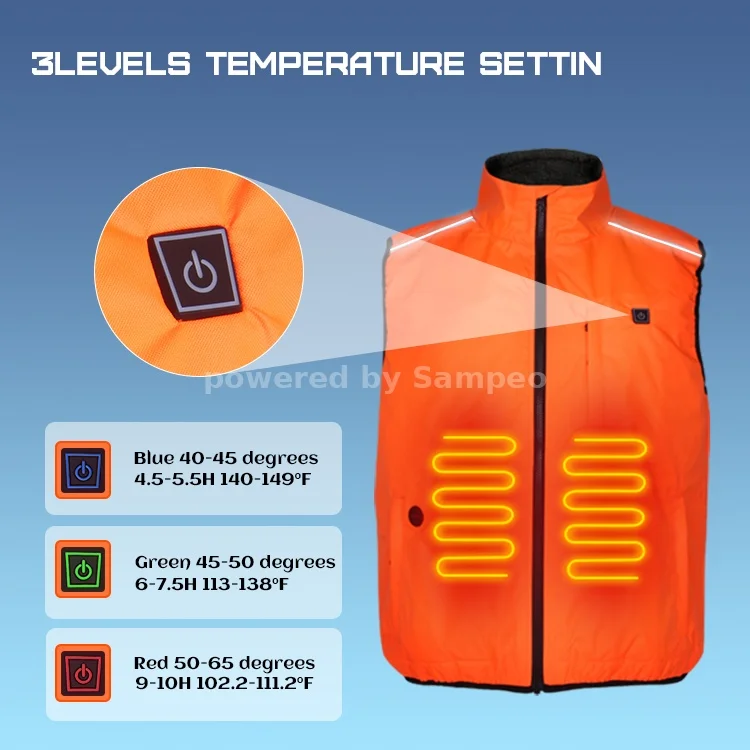
The single most protectable engineering asset in heated apparel is the heating-element geometry itself — the carbon-fiber trace pattern, the parallel-wire layout, the mesh coverage zone, the connector geometry. A heated clothing engineering IP protection NNN agreement paired with a design patent on the heating-element geometry creates a defense layer that is extremely difficult to circumvent.
| Heating-Element Feature | Patentable Aspect | Best Patent Type |
|---|---|---|
| Carbon-fiber trace pattern | Visual layout + spacing geometry | Design patent (USPTO/CNIPA) |
| Parallel-wire heating grid | Wire gauge + spacing + insulation | Utility model (CNIPA) or invention patent |
| Mesh coverage zone | Coverage area % + zone geometry | Design patent |
| Battery housing geometry | Visual appearance + functional cavity | Design patent + utility model |
| Controller PCB layout | Trace routing + component placement | Invention patent (hardest to copy) |
| Connector geometry | Pin layout + housing shape | Design patent |
Engineering teams should file at minimum the heating-element geometry patent and the connector geometry patent in the brand’s destination markets. These two cover the two most-copied features in counterfeit heated apparel.
The **heated clothing design patent utility model** layering — filing a China design patent on the heating-element geometry and a parallel utility model on the controller PCB layout — is the engineering team’s strongest single asset in any IP enforcement action. Without these patents, the brand’s enforcement options at customs collapse to trademark-only.
5. Anti-Counterfeit Textile Features
Beyond the packaging layer, heated clothing anti-counterfeit packaging also has a textile layer that the engineering team must own. Anti-counterfeit textile features are woven, printed, or embedded into the garment itself so that a counterfeiter cannot replicate the finished product even with identical packaging.
| Textile Feature | Engineering Method | Detection Layer |
|---|---|---|
| UV-reactive thread | Woven into inner liner seam | UV torch check by customs |
| Sublimated serial number on care label | Dye-sublimation print with sequential serials | Visual + database lookup |
| RFID yarn in lining | Conductive yarn woven into seam | RFID reader scan |
| NFC chip in battery pouch | Encrypted NFC chip bonded to battery housing | Consumer smartphone scan |
| IR-reflective heating-element pattern | IR-reflective carbon-fiber ink | IR camera check |
| DNA-tagged fiber | Synthetic DNA marker in lining | Lab test (forensic) |
The heated clothing anti-counterfeit traceability QR sticker is the consumer-facing layer, but the textile features are the engineering-facing and customs-facing layers. A mature factory uses both.
6. Engineering Change-Control Workflow
The NNN agreement defines what is confidential. The change-control workflow defines how design changes happen without unauthorized divergence. For heated apparel, the change-control workflow must cover five engineering artefacts:
| Artefact | Version Control | Approval Required From |
|---|---|---|
| Heating-element schematic | Git or SVN with branch-per-revision | Lead Engineer + Buyer |
| Battery BMS firmware | Git with signed tags | Firmware Engineer + Buyer |
| Controller PCB layout | Altium Vault or equivalent EDA vault | Electronics Engineer + Buyer |
| Tech pack (PDF) | Versioned file share with audit log | Industrial Designer + Buyer |
| BOM (Bill of Materials) | ERP-linked revision | Sourcing Engineer + Buyer |
A factory that can demonstrate an operational change-control workflow — not just a documented one — saves the brand weeks of investigation per suspected design-divergence case.
A **heated clothing NNN agreement factory** that has survived 3+ brand-owner audits with no IP enforcement action is typically preferred by procurement teams over a cheaper factory with no track record. The NNN is enforceable in China, but only when the factory has demonstrated the four-exhibit discipline (Exhibit A confidential technical information, Exhibit B customer list, Exhibit C performance targets, Exhibit D change-control process) over multiple programs.
7. Anti-Counterfeit Textile Feature Engineering Specification
A workable spec sheet for anti-counterfeit textile features has six columns: feature name, embedding method, detection method, per-unit cost impact, per-line setup cost, and durability rating. Below is a sample spec sheet used by mid-volume OEM factories:
| Feature | Embedding | Detection | Per-Unit Cost | Setup Cost | Durability |
|---|---|---|---|---|---|
| UV-reactive thread | Woven at inner seam | 365nm UV torch | 0.02-0.05 USD | 500 USD (thread procurement) | 50+ wash cycles |
| Sublimated serial | Care label dye-sub | Visual + DB | 0.04-0.08 USD | 1,500 USD (printer setup) | Permanent |
| RFID yarn | Woven into hem | RFID reader | 0.10-0.25 USD | 3,500 USD (reader + tag encoding) | 30+ wash cycles |
| NFC chip in battery pouch | Bonded with PSA | NFC scan | 0.20-0.50 USD | 2,500 USD (encoding system) | 5+ years |
| IR-reflective element | Carbon-fiber ink on heating panel | IR camera | 0.05-0.10 USD | 1,000 USD (ink procurement) | Permanent |
| DNA-tagged fiber | Spun into inner liner | Lab test | 0.15-0.40 USD | 5,000+ USD (DNA synthesis) | Permanent |
A factory typically starts with 2-3 features per program (UV thread + sublimated serial + NFC chip is a common starter set) and adds more for high-risk SKUs.
8. NNN Agreement Engineering-Side Clauses
Beyond the standard confidentiality, non-circumvention, and non-use clauses, an engineering-side NNN should include five additional clauses that protect the technical IP specifically:
- **Reverse-engineering prohibition**: factory may not disassemble, analyze, or measure any prototype sample to extract technical information
- **Sample destruction clause**: all samples must be returned or destroyed within 30 days of program termination; destruction must be certified
- **Personnel restriction**: only named engineering staff may access the tech pack; access list must be filed with the buyer
- **Subcontractor flow-down**: any subcontractor (cutting, sewing, battery assembly) must sign the same NNN before receiving any confidential component
- **Open-source software prohibition**: factory may not introduce open-source firmware or open-source hardware modules into the buyer’s design without written approval
These five clauses transform a generic NNN into an engineering-grade IP protection instrument.
9. Buyer-Side Engineering Verification Checklist
Before issuing the tech pack, the brand’s engineering team should verify five items on the factory side:
| Verification Item | Document / Demonstration | Red Flag |
|---|---|---|
| NNN template with engineering exhibits | Sample NNN with Exhibits A-D filled in | Generic 5-page NDA |
| Engineering access controls | Demonstration of restricted folder + access log | Open file share with all engineers |
| Change-control system | Demonstration of Git/Altium Vault + ECN log | Excel-based BOM only |
| Anti-counterfeit textile capability | Sample swatch with UV/IR/NFC features | Only QR sticker on packaging |
| Subcontractor NNN flow-down | Sample subcontractor NNN signed by 2-3 subs | No subcontractor agreements |
A factory that passes all five typically clears the tech-pack release gate in 1-2 weeks; a factory that fails any one typically takes 4-6 weeks to remediate.
For an overview of [battery heated apparel factory](https://grapheneheatingfabric.com/category/battery-heated-apparel-factory/) programs and the broader [OEM ODM manufacturing](https://grapheneheatingfabric.com/category/oem-odm-manufacturing/) workflow, see our [battery heated clothing factory](https://grapheneheatingfabric.com/category/battery-heated-clothing-factory/) hub. Engineering-side IP protection is one of the four pillars evaluated in every supplier audit.
Cluster reference: IP protection across the program
Across the heated clothing IP protection manufacturer landscape, four engineering-side instruments are universally required: an NNN agreement, a heating-element design patent, an anti-counterfeit textile stack, and a change-control workflow. Each is detailed in the sections above. A heated clothing IP protection OEM factory that operates all four is typically preferred by brand owners over a competitor that offers only pricing.
10. Common Engineering-Side IP Mistakes
Three patterns account for ~80% of engineering-side IP leaks in heated apparel programs:
- **Mistake #1: Sharing the tech pack via unencrypted email.** Email is not a controlled file share; once sent, the file exists on multiple mail servers indefinitely. The tech pack should always be transferred via the brand’s controlled file-share platform.
- **Mistake #2: Allowing subcontractor access without flow-down NNN.** The cutting subcontractor may have 50 workers; if any one of them sees the tech pack without an NNN, the IP protection collapses.
- **Mistake #3: No version control on the tech pack.** When the brand issues a tech-pack revision, the factory often keeps both versions in circulation, leading to manufacturing against an outdated spec. The change-control workflow must enforce single-active-version discipline.
11. Engineering Anti-Counterfeit Cost Model
The per-unit cost of anti-counterfeit textile features ranges from 0.30-1.00 USD at scale. The cost model for a typical 10,000-unit PO:
| Feature | Per-Unit Cost | 10K Unit Total |
|---|---|---|
| QR hangtag | 0.05 USD | 500 USD |
| NFC chip in battery pouch | 0.30 USD | 3,000 USD |
| UV-reactive thread seam | 0.04 USD | 400 USD |
| Sublimated serial care label | 0.05 USD | 500 USD |
| Total per-unit cost | 0.44 USD | 4,400 USD |
The setup costs (printer, RFID encoder, DNA synthesis if used) add 5,000-10,000 USD one-time. For a brand selling heated apparel at 80-150 USD retail, the anti-counterfeit stack is 0.3-0.5% of retail price — easily absorbed.
12. Frequently Asked Questions
Q1: What is the difference between a standard NDA and an NNN agreement? A: The NNN includes non-circumvention (factory cannot route around the buyer) and non-use clauses (factory cannot use the design for other buyers), and specifies PRC law + CIETAC arbitration for direct enforcement. Standard NDAs lack these and are largely unenforceable in China.
Q2: Who should own the design patent on a heating-element layout? A: Either the brand owner (if they have in-house engineering) or the factory under a work-for-hire agreement assigning rights to the brand. Joint ownership is possible but creates enforcement friction.
Q3: How long does a China design patent take to grant? A: Typically 6-9 months from filing. Cost is 1,500-2,500 USD including attorney fees.
Q4: Can a U.S. patent be enforced against a Chinese factory? A: Only for activities in the U.S. (importation, sale in U.S. territory). For activities in China, a Chinese patent is required. Most brands file in both markets.
Q5: What is the typical cost of an anti-counterfeit textile feature stack? A: 0.30-1.00 USD per unit at scale, plus 5,000-10,000 USD one-time setup.
Q6: How do we verify a factory’s change-control workflow before signing? A: Request a live demo of the Git/Altium Vault system, request an ECN log from a prior program, and ask to interview the engineering director.
Q7: Can the factory still manufacture similar (not identical) heating systems for other buyers? A: Yes, as long as the geometry, layout, and specifications are independently developed and not derived from the NNN-protected buyer’s tech pack. Independent development is the standard defense.
Q8: What is the most common engineering-side IP dispute? A: A factory engineer sharing the tech pack with a personal contact at another factory, who then reverse-engineers the design. The personnel-restriction clause in the NNN + restricted-folder access controls are designed to prevent this.
Q9: How does the engineering team handle a tech-pack revision? A: The change-control workflow should automatically deprecate the old version, distribute the new version to the access list only, and require acknowledgement from each named engineer before work proceeds.
Q10: What is the role of the firmware engineer in IP protection? A: The firmware engineer owns the BMS firmware source code. The firmware should be stored in a Git repository with signed tags, and the firmware engineer should be on the personnel-restriction list of the NNN.
Q11: Can we use open-source firmware in the BMS? A: Only with explicit written approval from the buyer, and only if the open-source license is compatible with the brand’s proprietary distribution model. Most brands prohibit open-source firmware in their BMS.
Q12: What happens if a subcontractor leaks the tech pack? A: The brand can pursue the factory under the NNN (since the factory is liable for subcontractor behavior), and the factory can pursue the subcontractor under the flow-down NNN. The chain of accountability is preserved.
Conclusion
For battery-heated apparel factories, heated clothing engineering IP protection is the operational discipline that turns the NNN agreement from a piece of paper into an effective control system. The four engineering-side instruments — NNN with engineering exhibits, design patent on heating-element geometry, anti-counterfeit textile features, and the engineering change-control workflow — together create a layered defense. Factories that operate all four protect the brand’s IP, win repeat programs, and avoid the costly disputes that have hurt the heated apparel category’s trust.
About the Author
Engineering Team — The engineering team at grapheneheatingfabric.com has shipped OEM and ODM heated apparel programs for brand owners in the U.S., EU, UK, and Japan for over a decade. This guide reflects engineering-side experience from 200+ heating-system designs.
Contact for OEM / ODM engineering support:
- Email: [email protected]
- WhatsApp: wa.me/8615895071373
- Website: https://grapheneheatingfabric.com
Leave a Reply