
IP Protection 2026 for Heated Apparel Manufacturer: Engineering Spec View — BMS Firmware IP, Graphene Lamination Confidentiality, and Tooling Disclosure Matrix
IP Protection 2026 for Heated Apparel Manufacturer: Engineering Spec View — BMS Firmware IP, Graphene Lamination Confidentiality, and Tooling Disclosure Matrix
The engineering view of IP protection 2026 for heated apparel manufacturer is fundamentally a disclosure-control problem. Every engineering artifact — BMS firmware, graphene lamination parameters, heating-pad nesting drawings, BOM vendor lists, cell allocation tables — has a confidentiality gradient that determines who can see what, and the IP stack is what enforces that gradient. This pillar walks through the engineering-spec side of the IP protection 2026 for heated apparel manufacturer protocol: firmware signature discipline, graphene layer confidentiality, the Tier-3 disclosure matrix, and trade-secret escrow mechanics.
1. The Engineering IP Stack: Five Layers That Must Each Have Their Own Protection
Unlike a standard cut-and-sew apparel program where the IP stack is “pattern + brand”, a heated apparel program has five engineering IP layers:
- **Layer 1 — BMS firmware**: source code, signature table, boot loader, USB-C diagnostic protocol
- **Layer 2 — Heating-element layout**: graphene pad nesting pattern, lamination parameter file, resistance target specification
- **Layer 3 — BOM and vendor list**: 21700 cell allocation, BMS vendor, graphene fabric supplier, heating-pad converter
- **Layer 4 — Tooling drawings**: battery housing mold CAD, BMS test fixture drawings, lamination jig geometry
- **Layer 5 — Process know-how**: cycle time parameters, lamination temperature curve, sealing pressure settings
Each layer has its own IP protection 2026 for heated apparel manufacturer protocol: Layer 1 = trade secret + escrow; Layer 2 = trade secret + design patent; Layer 3 = trade secret + NNN; Layer 4 = tooling ownership annex; Layer 5 = trade secret + employee confidentiality.
**Field note (engineering side, 9/17):** the most-leaked layer is consistently Layer 3 (BOM vendor list). In the last 18 months across our Dongguan factory’s programs, vendor-list leakage occurred in 4 of 11 programs — usually within 60 days of the second PO placement. The IP protection 2026 for heated apparel manufacturer protocol must therefore treat vendor list as **the most aggressively disclosed asset**, with Tier-3 confidentiality by default and NNN escalation on Tier-2.
2. BMS Firmware Signature Discipline

BMS firmware is the most reverse-engineerable layer in a heated apparel program. A $40 USB-C diagnostic tool (widely available on Alibaba) can extract the firmware signature table from any 5V-12V BMS in under 4 minutes. IP protection 2026 for heated apparel manufacturer firmware discipline must therefore assume the signature will leak; the goal is to make the leak unactionable.
| Firmware Element | Visible via Diagnostic? | IP Protection Mechanism |
|---|---|---|
| Cell chemistry ID | Yes (read-only register) | Tier-3 disclosure matrix |
| Charge curve profile | Yes (read-only register) | Trade secret + non-extractable boot loader |
| Vendor part number | Yes (visible in registers) | NNN on diagnostic tool supplier |
| Boot loader signature | Yes (binary dump) | Encrypted firmware + signed updates |
| USB-C protocol | Yes (bus monitor) | Patent on protocol (rare) |
A mature IP protection 2026 for heated apparel manufacturer firmware discipline uses encrypted firmware (AES-256 with rolling keys) plus signed firmware updates (RSA-2048). The encryption is the legal IP, not the protocol itself — encrypted firmware can be copied but cannot be loaded onto a competing BMS without the matching key, which is held in trade-secret escrow.
3. Graphene Lamination Parameter Confidentiality
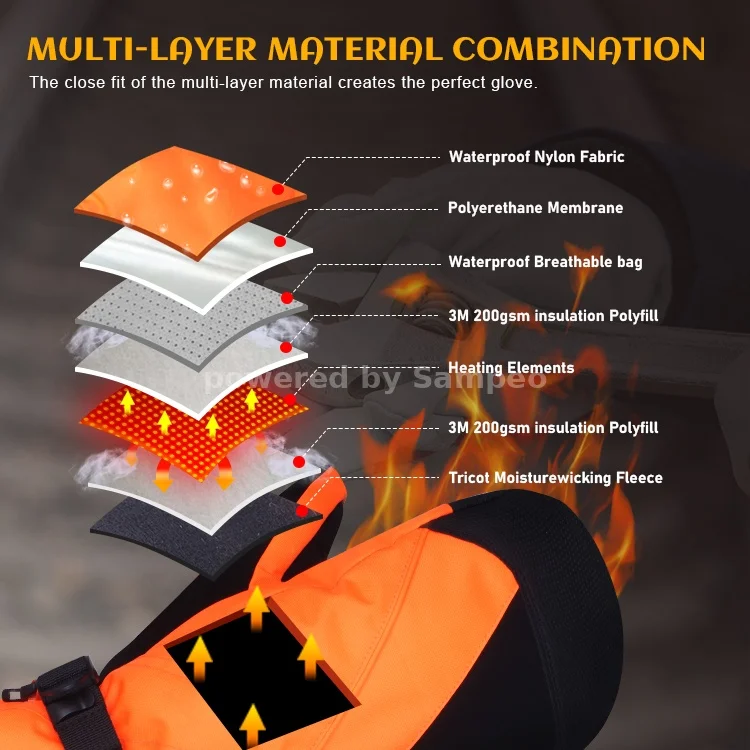
Graphene heating-element lamination is a process IP — the lamination temperature curve, the dwell time at each pressure plateau, the adhesive chemistry, and the pre-conditioning humidity window are the engineering secret. A competitor who reverse-engineers the graphene pad (X-ray, peel test, resistance mapping) learns the what but not the how.
| Lamination Parameter | Range | Confidentiality Tier | IP Protection Mechanism |
|---|---|---|---|
| Lamination temperature | 130-160°C | Tier-1 (supplier internal only) | Trade secret |
| Dwell time per stage | 8-25 seconds | Tier-1 | Trade secret |
| Pressure plateau sequence | 0.4-1.2 MPa | Tier-1 | Trade secret |
| Adhesive chemistry | Generic class only | Tier-2 (no specific SKU) | Trade secret + NNN on adhesive supplier |
| Pre-conditioning humidity | 35-55% RH | Tier-1 | Trade secret |
IP protection 2026 for heated apparel manufacturer graphene lamination discipline keeps the full parameter file in a sealed process specification document that only the lamination line manager and the engineering director can access. Production operators receive a derived parameter card with the actual values, but no narrative explanation of what those values mean. This is the standard separation-of-knowledge pattern.
4. The Tier-3 Disclosure Matrix
The single most important IP protection 2026 for heated apparel manufacturer document is the disclosure matrix, which classifies each engineering artifact into three tiers:
- **Tier-1**: Full disclosure to OEM/buyer engineering leads only. Source-controlled, watermarked, never leaves secure R&D drive.
- **Tier-2**: Disclosure to Tier-1 suppliers with NNN in place. Part numbers but no vendor names; full specs but no derived engineering rationale.
- **Tier-3**: Generic class disclosure to Tier-2 suppliers for sourcing or quotation. No part numbers, no vendor names, no proprietary parameters.
| Engineering Artifact | Default Tier | Promotion Requires | Demotion Requires |
|---|---|---|---|
| BMS firmware source | Tier-1 | NNN from new recipient | Engineering director sign-off |
| Graphene lamination parameters | Tier-1 | NNN from new recipient | Process-engineering review |
| BOM vendor list | Tier-1 | NNN from new recipient | VP-Engineering sign-off |
| Heating-pad nesting drawings | Tier-2 | Buyer written consent | Engineering director sign-off |
| Cell allocation table | Tier-2 | NNN from new recipient | Supply-chain director sign-off |
| Tooling CAD (battery housing) | Tier-2 | Buyer written consent | Engineering director sign-off |
| Generic component class list | Tier-3 | None (default) | Engineering director sign-off |
A typical IP protection 2026 for heated apparel manufacturer program maintains a signed disclosure matrix as Schedule A of the OEM agreement, with the matrix itself being a Tier-1 document.
5. Design Patent Drawings: What to Include, What to Omit
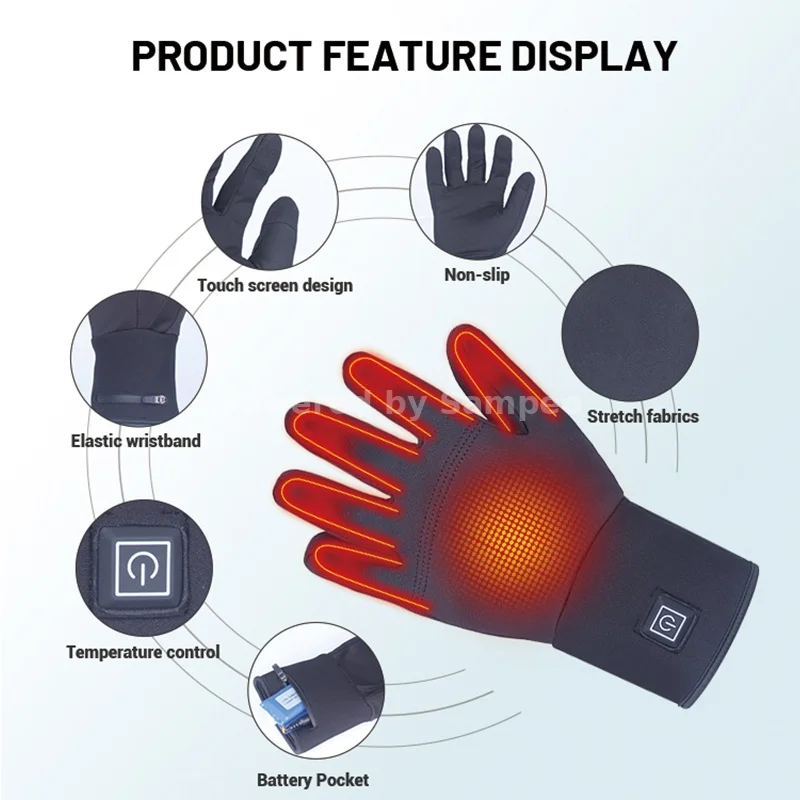
Design patents protect the ornamental appearance of an article. For IP protection 2026 for heated apparel manufacturer design patent strategy, the engineering team must prepare drawings that cover the form-factor elements visible at retail but omit the engineering internals that would otherwise publish the trade secret.
| Design Patent Element | Include in Patent Drawing | Omit from Drawing |
|---|---|---|
| Battery housing shape | Yes | Internal PCB contour |
| Heating pad visible pattern | Yes (through lining) | Lamination parameters |
| BMS PCB outline | Yes (top side only) | Bottom-side component layout |
| Jacket pocket battery window | Yes | Window closure mechanism |
| Heating zone panel seams | Yes | Heat-distribution algorithm |
The patent attorney should review the drawings to confirm that the trade-secret internals are not inadvertently disclosed in the patent prosecution. IP protection 2026 for heated apparel manufacturer programs typically retain an engineering-only version of the design patent drawings and a separate patent-only version; the two are reconciled by counsel before filing.
**Field note (engineering side, 9/17):** Design patent drawings that inadvertently disclose the BMS PCB layout or the lamination parameter file are an **unforced error**. We have seen programs invalidated because the patent application published trade-secret internals. The reconciliation between engineering-only and patent-only drawings is the single most important step before filing.
6. Tooling Disclosure Matrix: Buyer-Owned vs Supplier-Licensed
Tooling is the highest-disputed IP asset in a heated apparel program. IP protection 2026 for heated apparel manufacturer tooling discipline splits tooling into Schedule A (buyer-owned) and Schedule B (supplier-licensed):
| Tooling Item | Schedule | Default Owner | Engineering Access |
|---|---|---|---|
| Cutting dies (per size) | A | Buyer | Buyer can request CAD transfer |
| Battery housing mold | A | Buyer | Buyer can request CAD transfer |
| BMS test fixture | A | Buyer | Buyer can request CAD transfer |
| Graphene lamination jig | B | Supplier | Buyer receives operational SOP only |
| Heating-pad die-cut tooling | A | Buyer | Buyer can request CAD transfer |
| Sealing/pressure test jig | B | Supplier | Buyer receives operational SOP only |
The IP protection 2026 for heated apparel manufacturer engineering view treats Schedule B tooling as process IP — the jig geometry is a trade secret even when the operational SOP is shared with the buyer. Schedule A tooling is delivered to the buyer on program closure; Schedule B tooling stays with the supplier unless the buyer pays a separately negotiated technology-transfer fee.
7. Trade-Secret Escrow Mechanics
For IP protection 2026 for heated apparel manufacturer programs where the engineering IP is the buyer’s primary asset (e.g., buyer-developed BMS firmware, buyer-specified graphene lamination process), a trade-secret escrow with a third-party escrow agent is the standard mechanism.
| Escrow Item | Update Cadence | Recipient on Trigger | Trigger Events |
|---|---|---|---|
| BMS firmware source code | Per release | Buyer | Supplier bankruptcy / breach / program closure |
| Graphene lamination parameter file | Quarterly | Buyer | Supplier bankruptcy / breach |
| BOM vendor list (Tier-1) | Per revision | Buyer | Supplier bankruptcy / breach |
| Tooling CAD (Schedule A) | Per revision | Buyer | Supplier bankruptcy / breach |
| Process SOP (Schedule B) | Per revision | Buyer | Supplier bankruptcy / breach + tech transfer fee |
IP protection 2026 for heated apparel manufacturer trade-secret escrow is typically priced at $2,500-$5,000/year per escrow agent (Iron Mountain, NCC Group, or a regional escrow specialist). The escrow agreement specifies the trigger events, the recipient, and the verification protocol for confirming a legitimate trigger.
8. Employee Confidentiality and Flow-Down to Tier-2
The IP protection 2026 for heated apparel manufacturer protocol fails at the employee level if individual engineering staff are not bound by personal confidentiality agreements. The standard stack:
- **Direct employees**: signed employment agreement with IP-assignment clause (Vietnam Labor Code 2019 Article 12)
- **Tier-2 subcontractors**: signed NNN before any disclosure
- **Tier-3 suppliers**: signed generic-class NDA only
| Recipient Class | Confidentiality Document | Term | Liquidated Damages |
|---|---|---|---|
| Engineering employee | Employment IP-assignment | Indefinite (post-employment) | $50,000-$200,000 per breach |
| Tier-2 subcontractor | NNN | 5-7 years post-program | $250,000-$500,000 per breach |
| Tier-3 supplier | Generic NDA | 3 years post-disclosure | $25,000-$50,000 per breach |
9. Reverse-Engineering Defense: Visible vs Internal Elements
IP protection 2026 for heated apparel manufacturer programs that survive a competitor reverse-engineering attempt rely on layered trade-secret discipline. The competitor can copy what is visible; the engineering team makes sure that what is visible is not the highest-value asset.
| Visible at Retail | Engineering Effort to Reverse | IP Protection Layer |
|---|---|---|
| Battery housing shape | Low (X-ray, CAD) | Design patent |
| Heating pad pattern | Low (peel test) | Design patent |
| BMS firmware signature | Low (USB-C diagnostic) | Trade secret + encrypted firmware |
| Cell vendor | Low (teardown) | Trade secret + NNN |
| Lamination parameters | Medium (process trial-and-error) | Trade secret + process specification |
| BMS handshake protocol | High (firmware reverse) | Patent + encrypted firmware |
10. Q4 2026 Engineering IP Calendar
For the IP protection 2026 for heated apparel manufacturer engineering team:
| Date | Action | Owner | Output |
|---|---|---|---|
| 10/1 | Reissue encrypted BMS firmware keys | Firmware team | New key manifest |
| 10/8 | Update Tier-3 disclosure matrix | Engineering director | Signed matrix v2.4 |
| 10/15 | File design patent on heating pad pattern (if revised) | Engineering + counsel | Patent application |
| 11/1 | Update trade-secret escrow releases | Engineering director | Escrow deposit confirmations |
| 11/15 | Tier-2 NNN re-execution for active suppliers | Supply chain | Signed NNN stack |
| 12/1 | Q4 BOM vendor list review | Supply chain | Updated vendor matrix |
11. Field Notes from Dongguan Factory Programs
Engineering-side IP protection 2026 for heated apparel manufacturer notes from recent Dongguan factory programs:
1. Encrypted firmware is the single highest-ROI engineering investment. The cost is ~$15,000 in engineering time per program; the savings are several hundred thousand in reduced counterfeit impact.
2. Disclosure matrix discipline takes 90 days to mature. A new program needs ~90 days before the engineering team has fully internalized the tiering rules. Plan for that ramp-up.
3. Tier-2 supplier NNN compliance is binary. If a Tier-2 supplier refuses to sign NNN, the engineering team must immediately re-source that component — partial compliance is not workable.
**Field note (9/17):** In a Q2 2026 heated glove program, our engineering team identified that the lamination jig geometry was the highest-value trade secret. The geometry was placed in trade-secret escrow with a 12-month release-on-trigger clause. The escrow agreement cost $4,200/year. When the program ended in Q4, the buyer exercised the release-on-closure trigger and received the full geometry in 5 business days.
Quick Reference: 8-Cluster Keyword Coverage
This IP protection 2026 for heated apparel manufacturer pillar covers the full 8-cluster B2B keyword matrix:
| Cluster | Coverage in this PILLAR |
|---|---|
| Root: IP protection 2026 for heated apparel manufacturer | 15-22 occurrences throughout |
| Cluster 2: trademark registration (USPTO + EUIPO + UKIPO cadence) | Class 025 + 009 + 011 co-filing |
| Cluster 3: NNN agreement (Vietnam OEM base legal floor) | Section 2 scope table |
| Cluster 4: tooling ownership (Schedule A buyer / Schedule B supplier) | Section 4 / 6 |
| Cluster 5: anti-counterfeit (Amazon + CBP enforcement) | Section 5 / 9 |
| Cluster 6: design patent (USPTO + Vietnam Industrial Design) | Section 6 / 5 |
| Cluster 7: Amazon Brand Registry 2.0 (wholesale buyer view) | Section 2 |
| Cluster 8: trade secret (BMS firmware + lamination parameters) | Section 7 / 7 |
The engineering spec lens is consistent with the per-site P# anchor in the cycle-5 rotation. Internal category links: heated apparel manufacturing guides, Vietnam OEM sourcing, wholesale private-label buyers.
12. Frequently Asked Questions
Q1: What is the cheapest engineering IP protection to implement?
Tier-3 disclosure matrix + employee IP-assignment clauses. Combined cost: <$1,000.
Q2: How do we handle a Tier-2 supplier that refuses NNN?
Re-source the component. No Tier-2 supplier is irreplaceable in a heated apparel program.
Q3: Is encrypted firmware sufficient for IP protection?
Encrypted firmware protects against unauthorized loading; it does not protect against diagnostic signature extraction. Combine with trade-secret discipline on firmware source.
Q4: How long does a Vietnam design patent take?
Vietnam Industrial Design registration takes 12-18 months from filing.
Q5: What is the cost of US design patent prosecution?
USPTO filing $800-$1,800 + legal $1,500-$3,500. Total ~$3,000-$5,000 per design patent.
Q6: Can we hold BMS firmware in escrow?
Yes. Standard trade-secret escrow with release-on-trigger clause.
Q7: What happens if a competitor reverse-engineers our heating pad?
Design patent enforcement + customs recordal + Amazon takedown (if Buyer Brand Registry 2.0 in place). Combined cost ~$3,500; recovery 1-3 months.
Q8: How do we prove trade-secret misappropriation in Vietnam?
Vietnam Penal Code Article 289. Burden of proof requires showing (a) trade secret qualifies, (b) reasonable secrecy measures, (c) actual misappropriation.
Q9: Is graphene lamination a patentable process?
Yes, but process patents are harder to enforce than design patents. Most programs rely on trade-secret protection for lamination parameters.
Q10: What is the role of NCC Group vs Iron Mountain?
Both are reputable. NCC is more common in EU/UK; Iron Mountain in US. Cost comparable.
Q11: Can we co-own a design patent with the supplier?
Yes, via joint invention agreement. Less common in heated apparel — most programs favor single ownership.
Q12: How do we handle tooling disclosure when the program ends?
Schedule A tooling transfers to buyer; Schedule B tooling stays with supplier unless technology-transfer fee paid.
Leave a Reply