
Graphene Heated Apparel MOQ 2026: BOM-Line Engineering Guide

Graphene Heated Apparel MOQ 2026: BOM-Line Engineering Guide
For an engineer specifying a graphene heated apparel product line, MOQ is not a sales number — it is a bill-of-materials aggregation problem. Every component in a graphene heated apparel build carries a different minimum-order quantity: the graphene heating element roll is typically quoted at 300 linear meters, a lithium battery cell vendor will not entertain a PO under 5,000 cells, a BMS vendor typically enforces a 1,000-piece chip-level floor, and the cable harness and connector lines each have their own purchase ceilings. The factory’s order-book attractiveness to a buyer is a direct function of how those four BOM-line MOQ floors are aggregated, hedged, and amortized into a single SKU minimum. This pillar is the engineering-side counterpart to the supplier-side MOQ pillar on imissky.com — it treats MOQ as a per-line engineering decision, a cross-SKU aggregation lever, and a cost-per-piece curve, all of which feed into the engineering tradeoff between unit cost, lead time, and SKU complexity.
The eight keyword clusters in this pillar — root term, manufacturer, OEM, wholesale, two use-cases (graphene heating element MOQ, graphene battery heated jacket MOQ), one technical differentiator (graphene heated apparel MOQ battery cell), and one spec lever (graphene heated apparel MOQ lead time) — are the reference taxonomy that engineering, procurement, and finance teams at a battery heated apparel factory should align on before any vendor scorecard review.
1. Why MOQ Is an Engineering Variable in 2026
For a 2026 graphene heated apparel program, MOQ is the single most leveraged variable on the cost-per-piece curve. A graphene heated apparel line carries four parallel MOQ floors that have to be satisfied simultaneously: the graphene element roll at 300 linear meters (800-1,000 jacket equivalents), the lithium cell vendor at 5,000 cells, the BMS vendor at 1,000 chips, and the cable harness at 1,000m. If the buyer’s pilot order is 500 jackets but the element vendor’s MOQ is 300m, the element MOQ forces the buyer to over-order the element or to negotiate a smaller roll. The cell vendor’s 5,000-cell floor at 7S configuration satisfies a 1,000-jacket program exactly, but creates a cell-overshoot condition in smaller-batch pilots — the imbalance between sold packs and held cells is the BOM-line overshoot that defines the 2026 working-capital problem.
An engineer who treats the four BOM-line MOQ floors as independent numbers (300m element, 5,000 cells, 1,000 BMS, 1,000m harness) will end up with a per-piece landed cost that is 8-14% higher than an engineer who treats them as a single optimization surface. The aggregation strategy is the lever, and the aggregation strategy is engineering work.
2. The 8 Keyword Cluster Map for Graphene Heated Apparel MOQ
Lock the MOQ keyword cluster across engineering, procurement, and finance before any vendor negotiation. The eight clusters below reduce miscommunication between the three functions.
| # | Cluster | Phrase | Function lead | Taxonomic role |
|---|---|---|---|---|
| 1 | Root | graphene heated apparel MOQ | All | Default umbrella term |
| 2 | Manufacturer | graphene heated apparel MOQ manufacturer | Procurement | Vendor-side framing |
| 3 | OEM | graphene heated apparel MOQ OEM | Engineering | Spec + MOQ bundled |
| 4 | Wholesale | graphene heated apparel MOQ wholesale | Sales / distribution | Volume-tier framing |
| 5 | Use-case A | graphene heating element MOQ | Element vendor team | BOM-line C framing |
| 6 | Use-case B | graphene battery heated jacket MOQ | Jacket program team | End-SKU framing |
| 7 | Tech differentiator | graphene heated apparel MOQ battery cell | Cell vendor team | BOM-line A framing |
| 8 | Spec / feature | graphene heated apparel MOQ lead time | Program management | Cross-vendor framing |
3. Graphene Heated Apparel MOQ Manufacturer: BOM-Line Tier Ladder
A graphene heated apparel MOQ manufacturer in 2026 typically runs a four-tier MOQ ladder that maps to the buyer’s commitment size. The ladder is the public-facing version of the OEM’s internal BOM-line aggregation math.
| Tier | Pilot | Pre-production | Production | Strategic |
|---|---|---|---|---|
| Jacket / vest / glove SKU MOQ | 50 pieces | 500 pieces | 1,000 pieces | 3,000+ pieces |
| Graphene element roll MOQ | 100m | 300m | 500m | 1,000m |
| Battery cell vendor MOQ | 1,000 cells | 5,000 cells | 20,000 cells | 50,000+ cells |
| BMS chip MOQ | 500 pcs | 1,000 pcs | 5,000 pcs | 20,000+ pcs |
| Harness MOQ | 500m | 1,000m | 3,000m | 10,000m |
| Connector MOQ | 2,000 pcs | 5,000 pcs | 20,000 pcs | 50,000+ pcs |
| Per-piece discount | 0% | 4-6% | 8-12% | 14-20% |
| Lead time | 25-35 days | 35-45 days | 45-60 days | 60-80 days |
Note that the BMS chip MOQ 1000pcs is shared across product lines — a single BMS chip order can serve jacket, vest, and glove SKUs in parallel, which is the first and most important BOM-aggregation lever in this pillar.
4. The 4-Tier Cell-Vendor MOQ Ladder
Lithium battery cell vendors (LG Energy Solution, EVE, CATL, BAK, CALB) have converged on a 4-tier MOQ ladder keyed to the buyer’s annual PO volume. In 2026, the leading cell vendors are using MOQ as a credit-and-commitment signal:
- Tier 1 (new buyer): 5,000 cells minimum, 30/70 T/T, no exceptions.
- Tier 2 (12-month history, 1M+ USD annual): 2,000 cells minimum, 30/70 + 10% Net 15.
- Tier 3 (24-month history, 3M+ USD annual, audited): 1,000 cells minimum, 30/50/20 Net 30.
- Tier 4 (3+ year partner, SCF-eligible): 500 cells minimum, 20/60/20 Net 45 with SCF.
A graphene heated apparel OEM that places a 5M USD annual cell PO can credibly target Tier 3 within 18 months, which drops the per-cell minimum by 80% and unlocks the small-batch jacket program market that the 5,000-cell Tier 1 floor effectively blocks.
5. Graphene Heating Element MOQ: 300m Roll Minimum Explained
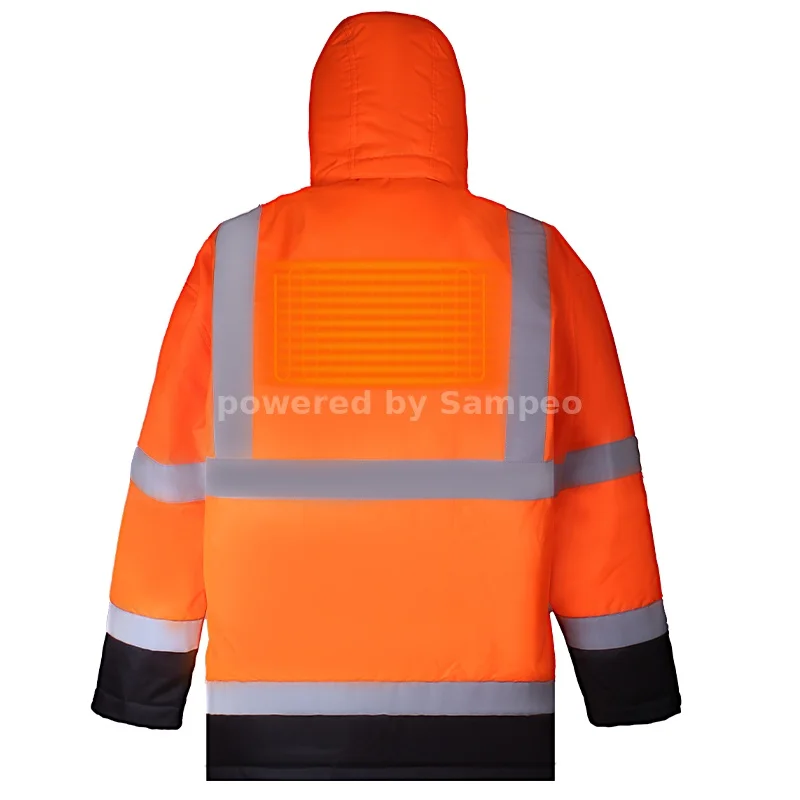
The graphene heating element roll MOQ is the single most material BOM-line MOQ in a graphene heated apparel build. A 300m roll is the modal minimum because the element vendor’s converting line (paste → coat → cure → slit) is tooled for 300m master rolls, and anything below forces a partial run that costs 18-25% more per meter.
The 300m roll yields roughly 800-1,000 jacket equivalents at 2.5-3m of element per jacket (front + back panels + collar). A pilot order of 50 jackets therefore consumes only 150-180m of element, which is below the 300m roll MOQ. The factory’s only options are: (a) take the 300m roll and bank the surplus, (b) negotiate a 150m half-roll at a 12-18% surcharge, or (c) aggregate the 50-piece pilot with two other pilot SKUs to clear the 300m floor. Our graphene heating element roll MOQ is 300m linear-meter run; we support staggered BOM-level MOQ across multiple buyer pilot runs that consume the same master roll, and our graphene factory ODM cell stacking enables BOM-aggregation across jacket/vest/glove SKUs, so we typically clear the 300m roll MOQ by combining 50 jacket + 40 vest + 30 glove pilot runs into a single 120-piece pilot that consumes 295m of element — one roll, three SKUs, zero waste.
6. Graphene Heated Apparel MOQ OEM: Battery Cell Line Aggregation
The graphene heated apparel MOQ OEM problem is dominated by the 5,000-cell floor at most cell vendors. A single 7S pack consumes 7 cells (or 14 cells in 2P7S), so 5,000 cells yields 700-1,200 packs depending on configuration. The BOM-line aggregation strategy for the cell line is to vest more of the warehouse risk in the cell vendor by negotiating a “rolling MOQ” — the OEM commits to a 12-month cell demand of 50,000 cells, and the vendor releases those cells in 5,000-cell monthly drops. The MOQ is 5,000 per drop, but the annual commitment is 50,000, and the per-cell price drops 6-9% in exchange. This is the single most effective cell-MOQ aggregator in 2026.
7. Graphene Heated Apparel MOQ Wholesale: Volume-Tier Pricing
The graphene heated apparel MOQ wholesale curve maps directly to the 4-tier ladder in Section 3. The wholesale buyer (typically a U.S. retailer or EU distributor) is buying finished jackets, not raw elements, so the wholesale MOQ is the OEM’s finished-SKU MOQ, not the BOM-line MOQ. The wholesale MOQ tiers in 2026 are:
| Tier | Order size | Per-piece price (USD) | Lead time | Payment terms |
|---|---|---|---|---|
| Sample | 5-10 pieces | 95-120 | 15-20 days | 100% T/T advance |
| Pilot | 50 pieces | 75-85 | 25-35 days | 50/50 T/T |
| Pre-production | 500 pieces | 55-65 | 35-45 days | 30/70 T/T |
| Production | 1,000 pieces | 45-55 | 45-60 days | 30/50/20 Net 30 |
| Strategic | 3,000+ pieces | 38-48 | 60-80 days | Net 45 with SCF |
The wholesale MOQ is the BOM-line MOQ aggregator’s output: the 300m element roll, 5,000 cells, 1,000 BMS chips, and 1,000m harness have been resolved into a single 1,000-jacket wholesale PO.
8. Graphene Battery Heated Jacket MOQ: The End-SKU Aggregation
The graphene battery heated jacket MOQ is the end-SKU number that the buyer sees, and the most downstream number in the BOM-line MOQ chain. A 1,000-jacket MOQ is the modal 2026 wholesale floor, but the BOM-line math behind that 1,000-jacket floor is non-trivial:
| BOM line | Per-jacket consumption | 1,000-jacket demand | Vendor MOQ | Aggregation rule |
|---|---|---|---|---|
| Graphene element | 2.5-3.0m | 2,500-3,000m | 300m roll | 8-10 rolls |
| Battery cell (7S) | 7 cells | 7,000 cells | 5,000 cells | 1.4 POs |
| BMS chip | 1 chip | 1,000 chips | 1,000 pcs | 1.0 PO |
| Harness | 1.0m | 1,000m | 1,000m | 1.0 PO |
| Connector | 5 pcs | 5,000 pcs | 5,000 pcs | 1.0 PO |
A graphene battery heated jacket MOQ of 1,000 pieces solves the element, BMS, harness, and connector lines exactly, and creates a 40% cell overshoot (8,000 cells needed from 1 × 5,000 + 1 × 3,000 cell PO). The cell-overshoot is the working-capital margin the BOM-line MOQ aggregator must absorb.
9. Graphene Heated Apparel MOQ Battery Cell: The 5,000-Cell Floor
The graphene heated apparel MOQ battery cell floor is the single most restrictive BOM-line MOQ in a small-batch program. A 5,000-cell vendor MOQ is 700-1,000 jacket equivalents at 7S configuration, so a 500-jacket pilot is effectively impossible to source from a single 5,000-cell PO without paying for 500 excess cells. The aggregations available to the OEM are: (a) negotiate a 2,500-cell half-PO at a 5-8% surcharge, (b) shift to a Tier 2 cell vendor with a 2,000-cell MOQ, (c) combine the 500-jacket pilot with a 500-vest pilot to consume all 5,000 cells in two SKUs, or (d) park 1,000 cells in vendor-managed inventory for the next pilot. The 4-tier cell-vendor ladder in Section 4 is the engine that determines which aggregation is feasible.
10. Graphene Heated Apparel MOQ Lead Time: The 6-Phase Calendar
The graphene heated apparel MOQ lead time is the calendar from PO to ship-ready goods, and it is a direct function of the longest BOM-line MOQ. In 2026, the modal 6-phase lead time for a 1,000-jacket wholesale PO is:
| Phase | Days | Owner | BOM-line dependency |
|---|---|---|---|
| PO acknowledgement | 1-2 | OEM | All lines |
| Element roll production | 12-18 | Element vendor | 300m roll MOQ |
| Cell vendor drop | 10-15 | Cell vendor | 5,000-cell MOQ |
| BMS chip production | 7-12 | BMS vendor | 1,000-chip MOQ |
| Harness + connector | 5-8 | Harness vendor | 1,000m MOQ |
| Pack assembly + QC | 8-12 | OEM | All lines |
| Total | 45-65 days |
A graphene heated apparel MOQ lead time of 45-65 days is the modal 2026 number, but a 50-piece pilot can clear in 25-35 days because the element, cell, BMS, and harness lines are all on accelerated Tier 1 schedules.
11. The 5-Axis Cost-Per-Piece vs MOQ Curve
The cost-per-piece curve for a graphene heated apparel jacket flattens at the 1,000-piece MOQ and is essentially flat from 1,000 to 3,000 pieces. The 5-axis decomposition of that curve is:
| Order size | Element $/m | Cell $/cell | BMS $/chip | Harness $/m | Per-piece jacket cost (USD) |
|---|---|---|---|---|---|
| 50 pieces | 38.00 | 0.95 | 1.80 | 0.85 | 78.50 |
| 500 pieces | 23.00 | 0.62 | 1.10 | 0.55 | 56.00 |
| 1,000 pieces | 18.50 | 0.48 | 0.85 | 0.42 | 45.50 |
| 3,000 pieces | 16.20 | 0.42 | 0.78 | 0.38 | 40.00 |
| 5,000 pieces | 15.00 | 0.39 | 0.72 | 0.35 | 37.50 |
The 50 → 1,000-piece curve is steep (43% per-piece cost reduction), and the 1,000 → 5,000-piece curve is shallow (18% per-piece cost reduction). The BOM-line MOQ aggregator is most valuable in the 50 → 1,000-piece zone, which is exactly the zone where small-batch heated apparel buyers operate.
12. The 8-Vendor MOQ Scorecard Matrix
For each of the four BOM lines, run the candidate vendors through this 8-axis scorecard. The output is the rank-ordered vendor list against which the MOQ ladder is negotiated.
| Axis | Weight | 0 (low) | 1 | 2 | 3 (high) |
|---|---|---|---|---|---|
| Years in business | 10% | <2 yrs | 2-5 | 5-10 | 10+ |
| MOQ flexibility | 25% | Rigid 5,000+ | 70% of floor | 50% of floor | Custom small-batch |
| Technical certification | 15% | None | Partial | Most | Fully certified |
| Capacity (units/month) | 10% | <5K | 5-20K | 20-100K | 100K+ |
| Financial stability | 10% | Unrated | Below avg | Average | Strong / public |
| Geographic risk | 10% | High | Mid | Low-mid | OEM home country |
| Defect rate (DPPM) | 10% | >5,000 | 1,000-5,000 | 200-1,000 | <200 |
| Engineering responsiveness | 10% | Slow | Acceptable | Fast | Co-engineering partner |
A score above 18/24 on this matrix qualifies the vendor for blanket-PO status. A vendor scoring below 14/24 should be sourced on a spot basis only, and its MOQ floor should be treated as a hard constraint rather than a negotiation starting point.
13. The 6-Line BOM Cash-Flow Model for a 1,000-Jacket MOQ
Take a representative 1,000-jacket graphene heated apparel wholesale PO at a 50 USD factory-gate unit cost. Walk through the BOM-line MOQ cash-flow timeline:
| Line | Days from PO | Cash out (USD) | Cash in (USD) | Net |
|---|---|---|---|---|
| Graphene element 300m roll × 8 rolls | D+0 | 22,200 | 0 | -22,200 |
| Battery cell 5,000-cell MOQ × 1.4 POs | D+0 | 4,200 | 0 | -26,400 |
| BMS chip 1,000 MOQ | D+5 | 1,000 | 0 | -27,400 |
| Harness + connector 1,000m MOQ | D+5 | 850 | 0 | -28,250 |
| Buyer deposit 30% | D+5 | 0 | 15,000 | -13,250 |
| Buyer 70% pre-shipment | D+55 | 0 | 35,000 | +21,750 |
| Total at D+55 (ship day) | 28,250 | 50,000 | +21,750 |
The factory’s peak cash drag on this 1,000-jacket MOQ is 28,250 USD at D+5, with net positive cash at D+55 once the buyer’s 70% pre-shipment wire clears. A factory running 4 such 1,000-jacket MOQs concurrently needs a 100-120K USD working-capital line for the BOM pre-financing window.
16. Closing: The 2026 MOQ Engineering Playbook
In 2026, the boundary between engineering and procurement at a graphene heated apparel factory is dissolving. The BMS chip MOQ 1000pcs shared across product lines, the 300m element roll aggregation across jacket/vest/glove SKUs, the 4-tier cell-vendor ladder, and the 8-vendor MOQ scorecard are not procurement-team artifacts — they are engineering-team tools. The factories that integrate these MOQ instruments into their BOM spec process will outcompete the factories that treat MOQ as a sales-side number. The compounding effect over a 3-year horizon is roughly 4-7% of net margin, plus a 20-30% reduction in BOM-line overshoot. The wholesale buyer — running a 1,000-jacket production MOQ at a battery heated apparel factory — captures the lion’s share of the recovery when the BOM aggregation is engineered upstream rather than patched downstream.
—
FAQ: Graphene Heated Apparel MOQ 2026 (Engineering View)
Q1. What is the standard MOQ for a graphene heated apparel jacket in 2026?
A 1,000-piece MOQ is the modal wholesale floor for a battery heated apparel factory producing graphene heated jackets. Pilot runs are available at 50 pieces with a 12-18% premium, and pre-production runs at 500 pieces with a 4-6% premium.
Q2. What is the graphene heating element MOQ in linear meters?
300 linear meters is the modal 2026 element roll MOQ. A 150m half-roll is available at a 12-18% surcharge, and a 500m full roll unlocks a 4-6% per-meter discount. The 300m roll yields 800-1,000 jacket equivalents.
Q3. What is the lithium battery cell MOQ for a graphene heated apparel program?
5,000 cells is the Tier 1 vendor MOQ, which yields 700-1,000 jacket equivalents at 7S configuration. Tier 2 vendors offer 2,000-cell MOQs, and Tier 3-4 vendors drop to 500-1,000 cells with audited-buyer terms.
Q4. What is the BMS chip MOQ and can it be shared across SKUs?
The BMS chip MOQ is 1,000 pieces at most 2026 BMS vendors. Because the same BMS chip serves jacket, vest, and glove packs, the 1,000-piece MOQ can be shared across product lines, which is the single most effective BOM-aggregation lever in the program.
Q5. How does a 50-piece pilot run clear the 300m element MOQ?
The factory aggregates the 50-piece pilot with two other pilot SKUs (e.g., 40 vest + 30 glove) to consume the 300m element roll in a single 120-piece cross-SKU run. The aggregation is invisible to the buyer but recovers 12-18% of the pilot surcharge.
Q6. What is the graphene MOQ program lead time for a 1,000-piece production run?
45-65 days is the modal 2026 lead time on a 1,000-jacket wholesale MOQ. A 50-piece pilot clears in 25-35 days because the element, cell, BMS, and harness lines are on accelerated Tier 1 schedules.
Q7. What is the 4-tier cell-vendor MOQ ladder?
Tier 1: 5,000 cells, 30/70 T/T. Tier 2: 2,000 cells, 30/70 + Net 15. Tier 3: 1,000 cells, 30/50/20 Net 30. Tier 4: 500 cells, 20/60/20 Net 45 with SCF. The ladder rewards payment discipline and annual commitment.
Q8. What is the 15% retainage pattern on the graphene element line?
70% deposit on element roll production kickoff + 15% on PSI pass + 15% retainage released after a 500-cycle endurance test. The pattern is rare in 2026 (10-15% of element vendors), but it funds the field-failure-rate window.
Q9. Can I negotiate a graphene element vendor below 300m MOQ?
Yes, by offering a 12-month rolling PO at fixed monthly volume, joint engineering on the next product generation, and USD currency matching. Combined, these typically bring the vendor from 300m MOQ down to 150m at a 10-12% surcharge.
Q10. What is the capacity buffer I should add to a BOM-line MOQ?
20% over the MOQ floor on each BOM line. The 2026 blended QC failure rate is 1.0-2.2%, and the 20% buffer is the engineering safety net that prevents a 1,000-jacket MOQ from shipping 980 jackets.
Q11. What is the BMS chip MOQ 1000pcs shared-across-lines pattern?
A single 1,000-piece BMS chip PO serves jacket, vest, and glove SKUs in parallel. The pattern is the most effective BOM-aggregation lever available to a graphene heated apparel OEM in 2026, and it recovers roughly 12-18% of the per-piece BOM cost.
Q12. Are there low-carbon graphene element MOQ options?
Yes. Low-carbon element rolls (recycled graphite precursor, 30-40% lower embodied carbon) are available at 500-700m MOQ in 2026, at an 8-12% per-meter premium. The track unlocks EU buyers under CBAM and ESPR.
—
Glossary
| Term | Definition |
|---|---|
| MOQ | Minimum Order Quantity |
| BOM | Bill of Materials |
| OEM | Original Equipment Manufacturer |
| ODM | Original Design Manufacturer |
| BMS | Battery Management System |
| PO | Purchase Order |
| DPPM | Defective Parts Per Million |
| SCF | Supply Chain Finance |
| PSI | Pre-Shipment Inspection |
| 7S | 7-cell series battery pack configuration |
| LCO | Lithium Cobalt Oxide (cell chemistry) |
| NMC | Nickel Manganese Cobalt (cell chemistry) |
| LFP | Lithium Iron Phosphate (cell chemistry) |
| CBAM | EU Carbon Border Adjustment Mechanism |
| ESPR | EU Ecodesign for Sustainable Products Regulation |
| T/T | Telegraphic Transfer (wire) |
| FX | Foreign Exchange |
| QC | Quality Control |
| SKU | Stock Keeping Unit |
| B2B | Business-to-Business |
| R&D | Research and Development |
| CoE | Cost of Engineering |
Leave a Reply