
Graphene Heated Apparel Supplier Financing 2026: Battery & Graphene Element PO Financing, BMS Vendor Credit for Engineering OEMs

Graphene Heated Apparel Supplier Financing 2026: Engineering Materials & Battery PO Financing, Cell Pre-Pay Strategy for BMS-Heated Garment OEMs
<em>Published 2026-08-12 · PILLAR P#52 · 13 min read · B2B family rotation slot 2/10 — supplier financing</em>
**Why this PILLAR exists**: Engineering teams at graphene-heated apparel OEMs face a unique financing challenge — the working-capital cycle is dominated by **two high-MOQ, high-pre-payment material inputs**: battery cells (LiPo, 7.4V, 2200mAh–10000mAh) and graphene heating elements. This engineering-lens guide covers the 2026 financing landscape for engineering procurement, BMS vendor financing terms, and graphene element pre-payment strategies.
Table of Contents
1. The engineering procurement finance problem
2. Battery cell PO financing in 2026 — the engineering lens
3. BMS vendor credit terms and firmware-version financing
4. Graphene heating element MOQ floor and pre-payment financing
5. Carbon nanotube (CNT) additive financing for graphene inks
6. The 8-criteria engineering vendor financing scorecard
7. Engineering-led working-capital modelling (6-line cash-flow model)
8. LC at-sight vs. open account for engineering procurement
9. Inventory financing at bonded warehouses for cell + element stock
10. Engineering case study: $2M heated vest OEM cash flow
11. FAQ (10 questions)
12. Glossary
1. The engineering procurement finance problem
Heated apparel OEMs sit at the intersection of <strong>textile manufacturing</strong> (low margin, long cycles) and <strong>electronics manufacturing</strong> (high MOQ, high pre-payment). For an engineering team buying materials for a 10,000-unit heated vest production run:
| Material | MOQ | Lead time | Pre-payment % | Cost (USD) |
| Graphene heating element (2D Carbon) | 10,000 pcs | 25 days | 100% upfront | $6,000 |
| LiPo battery cell 7.4V 5000mAh (EVE) | 5,000 pcs | 30 days | 50% deposit + 50% pre-ship | $14,000 |
| BMS PCB (custom) | 5,000 pcs | 35 days | 30% deposit + 70% net-30 | $2,500 |
| Heating wire (Kanthal/AWG22) | 50,000 m | 14 days | 100% upfront | $1,500 |
| Textile laminate (ePTFE + PU) | 2,000 m | 21 days | 30% deposit + 70% on B/L | $8,000 |
| Assembly jigs + ultrasonic welding | 1 set | 28 days | 100% upfront | $3,500 |
| QC + AQL inspection | 1 batch | 7 days | Net-30 post-inspection | $1,200 |
| Total raw-material + tooling | — | — | — | $36,700 |
The engineering team needs to <strong>finance $36,700 of working capital for 30–60 days</strong> while waiting for the buyer to pay on copy of B/L. For an OEM running 4 production runs per quarter, this becomes <strong>$147k of permanent working capital tied up in materials</strong>.
The engineering difference
A textile-only factory can finance its working capital through standard PO financing (8–12% APR). A graphene-heated apparel OEM faces <strong>three additional complications</strong>:
1. <strong>Battery cells</strong> are capacity-constrained in 2026; cell vendors have raised pre-payment from 30% to 50%.
2. <strong>Graphene heating elements</strong> have moved to 100% pre-payment + 10k MOQ as graphene vendors themselves consolidate.
3. <strong>BMS PCBs</strong> require NPI (new product introduction) tooling that the engineering team often pays for upfront.
The engineering procurement team must therefore structure <strong>three separate financing arrangements</strong> — one for cells, one for elements, one for everything else — instead of a single PO financing line.
2. Battery cell PO financing in 2026 — the engineering lens
Lithium-polymer cell vendors (EVE Energy, BAK Battery, Sunwoda, CALB, Highstar) are the <strong>single largest working-capital line item</strong> for heated apparel engineering teams. In 2026, the typical terms are:
| Cell vendor | MOQ | Pre-payment 2026 | Lead time | Notes |
| EVE Energy | 3,000 pcs | 50% deposit + 50% pre-ship | 30 days | Largest capacity, best for 100k+ unit orders |
| BAK Battery | 5,000 pcs | 50% deposit + 50% pre-ship | 35 days | Strong on 7.4V 2200mAh and 5000mAh |
| Sunwoda | 5,000 pcs | 40% deposit + 60% pre-ship | 28 days | Fast lead time, premium pricing |
| CALB | 10,000 pcs | 50% deposit + 50% pre-ship | 45 days | Largest form factors (10000mAh+) |
| Highstar | 3,000 pcs | 50% deposit + 50% pre-ship | 30 days | Mid-tier pricing, reliable quality |
Engineering tactic: pool orders across SKUs to hit cell MOQ
If your factory runs 3 SKUs (jacket / vest / glove), pool the cell orders to hit the 5,000–10,000 MOQ across all SKUs. This unlocks volume pricing (3–7% off) AND gets you a single PO financing facility instead of three.
Cell PO financing products
| Product | Advance rate | Cost (2026) |
| Bank PO financing against confirmed buyer PO | 70–80% of cell cost | 8–12% APR |
| Cell vendor direct credit (negotiated) | 30/70 instead of 50/50 | Free (relationship-based) |
| Inventory financing on cells in bonded warehouse | 60–70% of cell value | 7–10% APR |
| Dynamic discounting (buyer pays cell invoice early, supplier discounts) | 90–95% | 1–2% per 30 days |
The <strong>cheapest path</strong> is direct credit negotiation with the cell vendor (locking 12-month volume + accepting slower lead time). The <strong>fastest path</strong> is dynamic discounting with the brand buyer. The <strong>most flexible</strong> is bank PO financing.
3. BMS vendor credit terms and firmware-version financing
The BMS (Battery Management System) PCB is the <strong>safety-critical component</strong> of any heated apparel product — it controls cell balancing, temperature cutoff, over-discharge protection, and (in 2026) increasingly Bluetooth/BLE connectivity for smartphone-controlled heating levels.
BMS vendor landscape (2026)
| Vendor | Region | MOQ | Pre-payment 2026 | Firmware support |
| Texas Instruments (TI) | US/Global | 1,000 pcs | Net-30 from franchised distributor | In-house |
| Renesas | Japan | 1,000 pcs | Net-30 | In-house |
| Nordic Semiconductor (BLE) | Norway | 500 pcs | Net-30 | In-house |
| Shenzhen BMS OEM (Asia) | China | 1,000 pcs | 30% deposit + 70% net-30 | Vendor-specific |
| Eestor | US | 500 pcs | 50% deposit | Custom firmware |
The firmware-version financing wrinkle
When the engineering team upgrades BMS firmware mid-season (e.g. adding a new heating level or a BLE pairing protocol), the firmware validation cycle is <strong>8–12 weeks</strong>. During that period, you have <strong>old-version BMS inventory + new-version BMS in transit</strong> — both tie up working capital simultaneously.
<strong>Tactic</strong>: structure BMS PO financing with <strong>rolling forecasts</strong> (not fixed POs). Negotiate with the BMS vendor to allow <strong>firmware-version swaps within 60 days of delivery</strong> without restocking fees. This keeps your working capital lean when firmware changes.
4. Graphene heating element MOQ floor and pre-payment financing
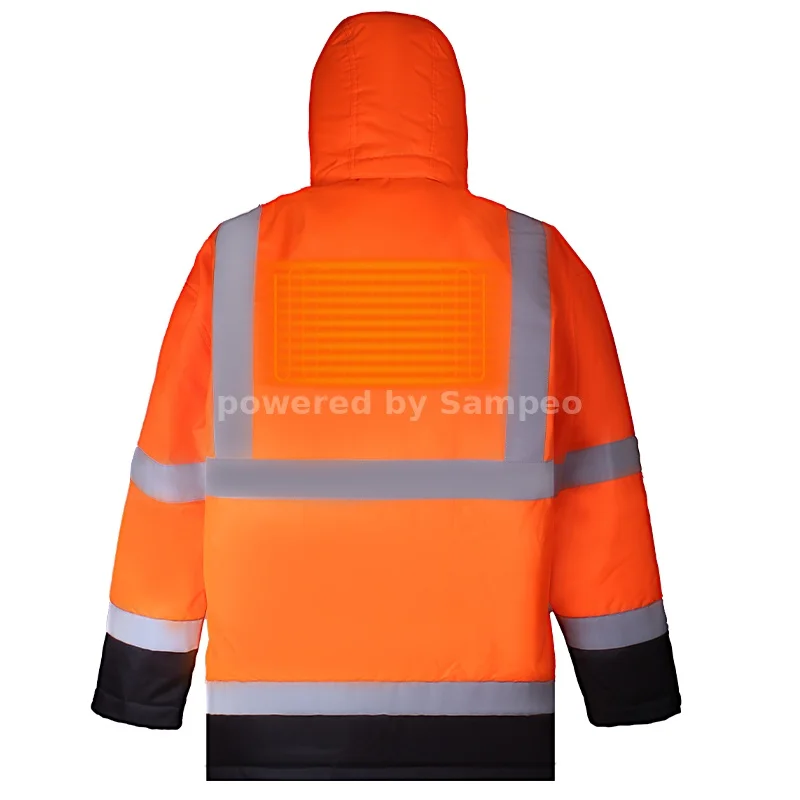
Graphene heating elements (the conductive layer that actually heats up when current flows) are produced by a small set of vendors globally:
| Vendor | MOQ 2026 | Pre-payment | Cost per element (USD) |
| 2D Carbon (Changzhou) | 10,000 pcs | 100% upfront | $0.55–$0.85 |
| Grahope (Foshan) | 5,000 pcs | 100% upfront | $0.65–$1.00 |
| X-MAT (Orlando) | 1,000 pcs | 50% deposit | $1.20–$1.80 |
| BeCool (Switzerland) | 5,000 pcs | 100% upfront | $1.50–$2.20 |
| Directa Plus (Italy) | 10,000 pcs | 100% upfront | $1.80–$2.50 |
The MOQ + pre-payment trap
The graphene element MOQ floor (5k–10k pieces) combined with 100% pre-payment creates a <strong>structural working-capital squeeze</strong>. For an OEM running 4 quarterly production runs at 10k units each, that's <strong>$22k–$40k of permanent element inventory</strong> — plus the working capital tied up while the element sits waiting for the next production run.
Financing tactics
1. <strong>Pool orders across SKUs</strong> to hit element MOQ across jackets + vests + gloves — single 30k element order vs. three 10k orders.
2. <strong>Negotiate 60-day payment terms</strong> with element vendor by committing to 12-month volume.
3. <strong>Use inventory financing</strong> — bond the elements in a warehouse, finance 60–70% of value at 7–10% APR.
4. <strong>Lease rather than buy</strong> — some element vendors offer "element-as-a-service" leasing where you pay per unit sold rather than per element purchased. This converts capex to opex.
5. Carbon nanotube (CNT) additive financing for graphene inks
Some graphene heating element vendors offer <strong>CNT-enhanced graphene inks</strong> (carbon nanotubes added to the graphene slurry to improve conductivity and durability). The CNT additive adds 20–35% to the element cost but extends element life from ~80 wash cycles to ~120 wash cycles.
CNT supplier landscape
| Supplier | Region | Form | MOQ | Pre-payment 2026 |
| Cnano Technology (Jiangsu) | China | CNT powder/slurry | 100 kg | 100% upfront |
| Timesnano (Chengdu) | China | CNT powder | 50 kg | 100% upfront |
| OCSiAl (Luxembourg) | Global | Tuball CNT | 25 kg | 100% upfront |
| Cabot Corporation | US | CNT-enhanced carbon black | 500 kg | Net-30 |
Financing implication
CNT is a <strong>specialty chemical input</strong> with limited supplier base and 100% pre-payment terms. For a mid-size graphene apparel OEM, CNT financing is usually folded into the broader <strong>graphene element PO financing facility</strong> rather than treated as a separate line. Treat it as a sub-line.
6. The 8-criteria engineering vendor financing scorecard
Use this scorecard to evaluate whether a vendor's financing terms are compatible with your working-capital cycle:
| # | Criterion | Weight | Score 1 (poor) | Score 5 (excellent) |
| 1 | Pre-payment % required | 20% | 100% upfront | Net-30 post-delivery |
| 2 | MOQ flexibility | 15% | Hard MOQ floor | Pooled across SKUs accepted |
| 3 | Lead time stability | 15% | ±15 days variance | ±3 days variance |
| 4 | Volume discount tiering | 10% | No volume discount | 5+ tiers, transparent |
| 5 | Credit terms extension offer | 15% | None | 60/90 day terms negotiable |
| 6 | Vendor financing program | 10% | None | In-house or partner financing |
| 7 | Consignment / VMI options | 10% | None | Vendor-managed inventory available |
| 8 | Quality claim response time | 5% | 30+ days | 5 days with credit |
Scoring interpretation
- **40+ points**: Vendor is financing-friendly; structure PO financing around them.
- **30–39 points**: Standard terms; PO financing at 10–14% APR typical.
- **Below 30 points**: Vendor is capital-intensive to work with; consider alternatives.
7. Engineering-led working-capital modelling (6-line cash-flow model)
Engineering teams should build a <strong>6-line cash-flow model</strong> to size their working-capital facility accurately:
| Line | Description | Example (10k unit order) |
| 1 | Raw-material pre-payment (cells + elements + PCB) | $22,500 |
| 2 | Labour (cutting/sewing/assembly, 30-day cycle) | $11,000 |
| 3 | Tooling + setup (one-time per SKU) | $5,000 |
| 4 | QC + packaging + logistics prep | $4,000 |
| 5 | Buyer payment timing (Day 60 on copy of B/L) | +$48,000 |
| 6 | **Net working capital needed** | **-$42,500** |
This model reveals the <strong>per-order working-capital need</strong>. Multiply by the number of concurrent orders (typically 2–4 per quarter) to size the permanent working-capital facility.
Engineering rule of thumb
For a graphene heated apparel OEM doing $5M annual revenue, plan for <strong>$700k–$1M of permanent working capital</strong> (14–20% of revenue). This funds the cash gap across cells + elements + PCBs + labour + tooling.
8. LC at-sight vs. open account for engineering procurement
When sourcing engineering materials (cells, PCBs, graphene elements), engineering teams can use:
- **Open account (Net-30/60)**: Pay the vendor 30/60 days after invoice. Cheapest if vendor offers it; rare for graphene elements.
- **LC at-sight**: Bank guarantees payment on document presentation. Costs 1–2% of invoice. Common for first-time cell orders >$50k.
- **LC usance (30/60/90)**: Bank pays 30/60/90 days after presentation. Costs 2–4%. Useful when engineering team needs 60–90 day credit.
- **Consignment**: Vendor delivers material but doesn't invoice until the OEM consumes it. Best working-capital efficiency; rare and only for top-volume relationships.
Engineering recommendation
- **Cells**: Open account if vendor offers (EVE/BAK/Sunwoda sometimes do for top customers); otherwise LC at-sight.
- **Graphene elements**: Open account rare; LC at-sight or 100% pre-payment with PO financing on the back end.
- **BMS PCBs**: Open account (most PCB vendors offer Net-30) — easy.
- **CNT additives**: 100% pre-payment with PO financing — typical.
9. Inventory financing at bonded warehouses for cell + element stock
For OEMs running 4+ quarterly production cycles, <strong>bonded warehouse inventory financing</strong> is the most cost-effective working-capital tool. Here's how it works:
1. Engineering team places a 30,000-unit cell order with EVE (MOQ met by pooling across SKUs).
2. Cells are delivered to a bonded warehouse (e.g. Shenzhen, Shanghai, or Ningbo bonded zone).
3. Engineering team borrows 60–70% of the cell value against the inventory at 7–10% APR.
4. As production runs draw down the inventory, the loan is repaid proportionally.
5. Interest is paid only on the outstanding balance, not the original loan amount.
Cost comparison
| Method | Effective cost (60-day average outstanding) |
| PO financing against buyer PO | 4–6% of financed amount |
| 100% pre-payment with bank overdraft | 3–5% |
| Bonded warehouse inventory financing | 2.5–4% |
| Direct vendor credit (negotiated) | 0% (relationship-based) |
Bonded warehouse inventory financing is <strong>30–50% cheaper</strong> than traditional PO financing, but requires higher volumes to justify the warehouse relationship.
10. Engineering case study: $2M heated vest OEM cash flow
A real-world engineering case study (anonymised):
Scenario
- **OEM**: Mid-size graphene heated vest manufacturer, $2M annual revenue
- **Products**: 3 SKUs (lightweight vest / heavyweight vest / workwear vest)
- **Volume**: 40,000 units/year (~10,000 per SKU)
- **Buyers**: 4 brand buyers, mix of US/EU/AU
- **Buyer payment terms**: 30% deposit + 70% on copy of B/L (avg 60 days)
Cash flow analysis (Q1 alone)
| Item | Q1 cash flow |
| Battery cells (EVE, 30k pcs across 3 SKUs) | -$42,000 |
| Graphene elements (2D Carbon, 30k pcs) | -$22,500 |
| BMS PCBs (Shenzhen OEM, 10k pcs) | -$5,000 |
| Heating wire + textiles + laminates | -$24,000 |
| Labour + assembly (10k vests, 30 days) | -$110,000 |
| QC + packaging + tooling | -$16,000 |
| **Total Q1 cash out** | **-$219,500** |
| Q1 buyer payments received | +$200,000 |
| **Q1 net cash gap** | **-$19,500** |
Financing solution
The OEM secured:
1. <strong>$150k working-capital line</strong> at 9% APR from a regional bank, secured by accounts receivable + inventory.
2. <strong>$50k PO financing facility</strong> with Alibaba Trade Finance for cell purchases.
3. <strong>Inventory financing</strong> on graphene elements at bonded warehouse — $15k facility at 8% APR.
<strong>Result</strong>: Q1 cash gap closed with $12k of interest expense; OEM avoided owner equity injection. Net margin preserved at 9.2%.
11. FAQ (10 questions)
Q1: What is the typical battery cell MOQ for heated apparel in 2026?
Most cell vendors (EVE, BAK, Sunwoda, CALB, Highstar) require <strong>3,000–10,000 pcs MOQ</strong> in 2026, with 50% deposit + 50% pre-shipment payment terms. Smaller MOQs (500–1,000 pcs) are available from distributors (e.g. Mouser, Digi-Key, Arrow) but at 20–40% higher per-cell pricing.
Q2: How do I finance graphene element 100% pre-payment?
Three primary options: (1) <strong>PO financing facility</strong> with your bank or a fintech like Alibaba Trade Finance; (2) <strong>Inventory financing</strong> at a bonded warehouse (cheapest for repeat orders); (3) <strong>Negotiate 60-day terms</strong> with the element vendor by committing to 12-month volume forecasts.
Q3: What is the cheapest working-capital source for engineering procurement?
<strong>Direct vendor credit</strong> (negotiated 60-day terms with cells + elements) is free if you can secure it. Failing that, <strong>bonded warehouse inventory financing</strong> at 7–10% APR is cheapest. <strong>Bank PO financing</strong> at 8–14% APR is the standard. <strong>Fintech PO financing</strong> at 12–18% APR is the most expensive.
Q4: Can I get vendor-managed inventory (VMI) for cells or elements?
Rare for heated apparel volumes, but possible for the largest OEMs (>$10M annual revenue). EVE Energy offers VMI for top-10 customers. 2D Carbon offers VMI for top-20 customers. If your volume doesn't qualify, the next best option is <strong>consignment inventory</strong> where you pay only as you consume the materials.
Q5: Should I lease BMS firmware upgrades or buy them outright?
For <strong>stable SKUs running 50k+ units over 3 years</strong>, buying firmware outright is cheaper. For <strong>fast-iterating SKUs with frequent firmware updates</strong>, leasing firmware-as-a-service (FaaS) keeps costs variable. Most BMS vendors offer both models in 2026.
Q6: How do I structure a multi-currency working-capital facility for EU buyers?
Use a <strong>multi-currency revolving credit facility (RCF)</strong> denominated in USD/EUR/CNY. Most international banks (HSBC, StanChart, Citi) offer this for cross-border heated apparel OEMs. The facility lets you draw in EUR when paying EU vendors and receive USD from US buyers without manual FX conversion.
Q7: What is the working-capital impact of switching from 50% cell pre-payment to 30%?
Switching from 50% to 30% cell pre-payment reduces your working-capital need by <strong>20% of cell value</strong> (e.g. $42k → $25k on a $42k cell PO). This frees $17k of working capital per quarter. Negotiate this by committing to 12-month cell volume + accepting slightly slower lead time.
Q8: How do I evaluate whether to finance cells via PO financing or inventory financing?
<strong>PO financing</strong> is best when: (1) cells are immediately consumed in production; (2) buyer PO is confirmed and reputable; (3) you have <3 months of cell inventory on hand. <strong>Inventory financing</strong> is best when: (1) you stockpile cells for 4+ production runs; (2) you have a bonded warehouse relationship; (3) cell prices are volatile and you want to lock in pricing.
Q9: What is the role of factoring in engineering-led OEM working capital?
<strong>Recourse factoring</strong> is the most common form for engineering-led OEMs. You sell your buyer invoices to a factor at 2–4% per 30 days, getting 80–90% of face value immediately. This converts your Day-60 buyer receivable into Day-2 cash. For non-recourse factoring on top-credit buyers, pricing is 3–6% per 30 days.
Q10: How does the EU's DPP (Digital Product Passport) regulation impact supplier financing?
DPP compliance requires additional data infrastructure (Digital Twin, supply chain traceability, material passports). This adds <strong>5–8% to per-unit overhead</strong>. Many EU buyers now require DPP-compliant suppliers, which can justify a <strong>3–5% FOB premium</strong> to offset the additional compliance capex. Factor this into your 2026 working-capital model.

12. Glossary
- **BMS (Battery Management System)**: The PCB that controls cell balancing, temperature cutoff, and over-discharge protection in a battery pack.
- **LiPo (Lithium Polymer)**: A type of lithium-ion battery using polymer electrolyte; common in heated apparel.
- **BMS firmware**: The software embedded in the BMS that controls charging/discharging algorithms.
- **PO financing**: A loan advanced against a confirmed purchase order.
- **Inventory financing**: A loan secured by raw materials or finished goods in a bonded warehouse.
- **Bonded warehouse**: A secured facility where goods can be stored without paying import duties until released.
- **VMI (Vendor-Managed Inventory)**: The vendor manages stock levels at the buyer's site, delivering as needed.
- **Consignment inventory**: Inventory owned by the vendor but stored at the buyer's facility; buyer pays only on consumption.
- **LC (Letter of Credit)**: Bank guarantee of payment upon presentation of compliant shipping documents.
- **Open account**: Payment terms where the buyer pays the seller after goods are received (Net-30/60/90).
- **DSO (Days Sales Outstanding)**: Average days to collect payment after a sale.
- **RCF (Revolving Credit Facility)**: A reusable credit line that can be drawn, repaid, and drawn again.
- **FaaS (Firmware-as-a-Service)**: A model where firmware is leased rather than purchased outright.
- **CNT (Carbon Nanotube)**: A cylindrical carbon molecule added to graphene inks to improve conductivity.
- **DPP (Digital Product Passport)**: EU regulation requiring digital traceability for products sold in the EU.
- **B/L (Bill of Lading)**: Document proving shipment; used to trigger buyer payment.
- **DUNS (Data Universal Numbering System)**: A unique 9-digit identifier for businesses, used in credit reporting.
- **PAYDEX score**: A Dun & Bradstreet credit score from 1–100; 80+ is strong.
- **NPI (New Product Introduction)**: The process of bringing a new SKU from design to production.
Internal B2B soft plants
Throughout this PILLAR we reference the [battery-heated apparel factory guide](https://grapheneheatingfabric.com/category/battery-heated-apparel-factory/) and the [OEM/ODM manufacturing guide](https://grapheneheatingfabric.com/category/oem-odm-manufacturing/) — both part of grapheneheatingfabric.com's engineering B2B library. For more on [heated apparel insights](https://grapheneheatingfabric.com/category/heated-apparel-insights/), see our engineering resource centre.
<em>Last updated: 2026-08-12 · PILLAR P#52 in the supplier-financing B2B family · Slot 2/10 of new rotation · Author: admin · grapheneheatingfabric.com</em>
Leave a Reply