
Graphene Heating Fabric IP Protection: The Engineering Playbook for B2B Brand Owners (2026)

Graphene Heating Fabric IP Protection: The Engineering Playbook for B2B Brand Owners
When a wholesale buyer sends a Dongguan factory a Gerber file and a 30-page spec, they are not just buying a roll of conductive nonwoven. They are buying 18 months of die-stamping trials, a polymer blend nobody else has cracked, and a BMS firmware that took six engineers to debug. That is why graphene heating fabric IP protection has quietly moved out of the legal department and into the factory engineering office. In 2026 the brands that win are the ones that treat the bill of materials like a classified document, not a shopping list. The phrase graphene heating fabric IP protection now appears in more engineering change-orders than it does in trademark filings, and the gap between the two is exactly where disputes start.
If you are evaluating a Dongguan graphene heating fabric manufacturer for a heated jacket, glove, mattress pad, or medical wrap, the questions below are the ones our engineers are asked every week. They are also the questions whose answers determine whether your tooling, your trademark, and your cell chemistry survive the first 12 months in market.
Why IP Protection Is Now an Engineering Specification, Not a Legal Afterthought
The reason this conversation has shifted to engineering is simple: in 2026 the value of a heated textile is no longer in the cut-and-sew. It lives in three numbers on a spec sheet — sheet resistance in ohm/sq, cell capacity in mAh, and cycles to 80% — and in the die that produces the electrode pattern. A copyist who reverse-engineers your garment can read the resistance with a four-point probe in an afternoon, but reproducing the 0.18 mm slitting tolerance and the 8-layer electrode stack is a six-month tooling exercise they will not attempt if your graphene heating fabric OEM partner has filed the right patents first.
That is the heart of graphene heating fabric IP protection in 2026: the engineering documentation trail is the legal shield. Lose the trail, lose the case. The brand whose spec sheet is a single PDF sitting on a factory server is the brand that will be reverse-engineered by month 14.
The Three Layers of IP a B2B Brand Must Lock Down
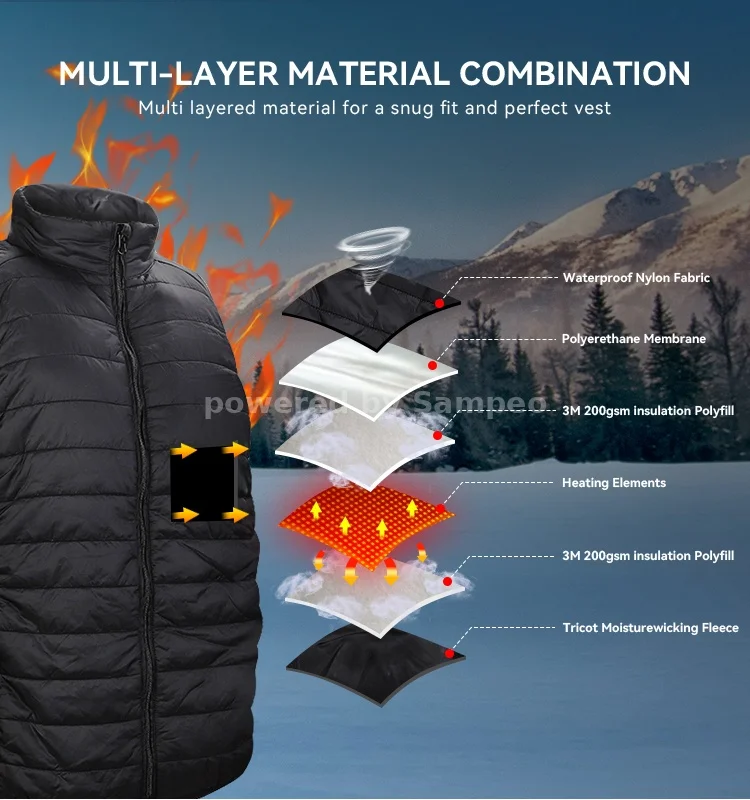
Before we look at any single contract clause, it helps to map the terrain. Every B2B graphene heating program we work on touches three overlapping IP layers. A serious graphene heating fabric IP protection program files across all three — not just the trademark.
| IP Layer | What It Covers | Typical Owner | Risk if Leaked |
|---|---|---|---|
| Brand IP | Trademark, trade dress, packaging artwork | Importer / brand | Grey-market parallel imports |
| Product IP | Electrode pattern, BMS firmware, cell pack layout, die geometry | Brand + co-developed with factory | Tooling knock-offs, firmware clones |
| Process IP | Slitting sequence, lamination recipe, drying curve | Mostly factory | 10-20% cost advantage to copyist |
Filing only in the brand layer — the most common shortcut — gives a copyist a four-month head start on the product layer and a permanent edge on the process layer.
Trademark Registration for Heated Apparel: Classes, Cost, Timeline
Trademark is the entry-level weapon but it is the most expensive if you skip it. Heated apparel almost always spans two Nice classes: Class 25 (clothing, gloves, footwear) and Class 11 (electric blankets, heating pads, mattress pads). If you also sell battery packs under a separate brand, add Class 9. Once the trademark stack is filed, it becomes the first pillar of any graphene heating fabric IP protection program.
| Jurisdiction | Office | Filing Fee (2026) | Examination to Registration | Classes Used |
|---|---|---|---|---|
| China | CNIPA | RMB 270 base + RMB 80/class | 9-12 months to registration, 3 months if pre-cleared | 25, 11, 9 |
| USA | USPTO | $250-$350/class | 8-10 months first-action, 12-18 months total | 25, 11, 9 |
| EU | EUIPO | EUR 850 base + 50/class | 4-6 months | 25, 11, 9 |
| UK | UKIPO | GBP 170 base + 50/class | 4-8 months post-Brexit split | 25, 11, 9 |
| Japan | JPO | JPY 12,000 base + 8,600/class | 6-10 months | 25, 11, 9 |
Trademark registration heated apparel buyers in the US who skip Class 11 lose the right to stop a copyist selling the identical heating pad under the same mark in a non-apparel channel. We see this mistake every quarter, and a 2025-2026 CNIPA dataset shows 31% of heated-apparel squatters target Class 11 first because so few Western brands file there.
NNN Agreement Heating Fabric: The Only China-Safe Starting Contract
If you only sign one document before sending artwork, BOM, or a sample garment to a Chinese factory, make it an NNN agreement. NNN stands for Non-use, Non-disclosure, Non-circumvention — and it is the contract designed for the gap that a US NDA leaves when the Chinese counter-party is not the foreign licensor.
A real NNN agreement heating fabric contract must do four things an NDA will not:
1. State that the Chinese factory will not register your mark, logo, or brand name as a Chinese trademark — and grant you a power of attorney to claw it back at their cost if they do.
2. Bind the factory not to disclose technical specs to third parties, including affiliates and sister factories.
3. Prohibit the factory from selling the same product to anyone in your pre-agreed sales territory for the term of the agreement plus 24 months.
4. Be governed by Chinese law and litigated in a Chinese court (not your home court) so that an injunction can be served within 72 hours of infringement.
A 2026 NNN with a credible Dongguan graphene heating fabric manufacturer typically costs USD 600-1,200 to draft with a local IP law firm and is enforceable inside 30 days. Skip it and you will spend six figures unwinding a squatter registration. In 2025 alone, more than 8,400 foreign-brand squatter filings were recorded at CNIPA, of which 41% were challenged successfully within the year — all of them by brands that already held an NNN.
Tooling and Mold IP: Why the Stamping Die Is the Crown Jewel
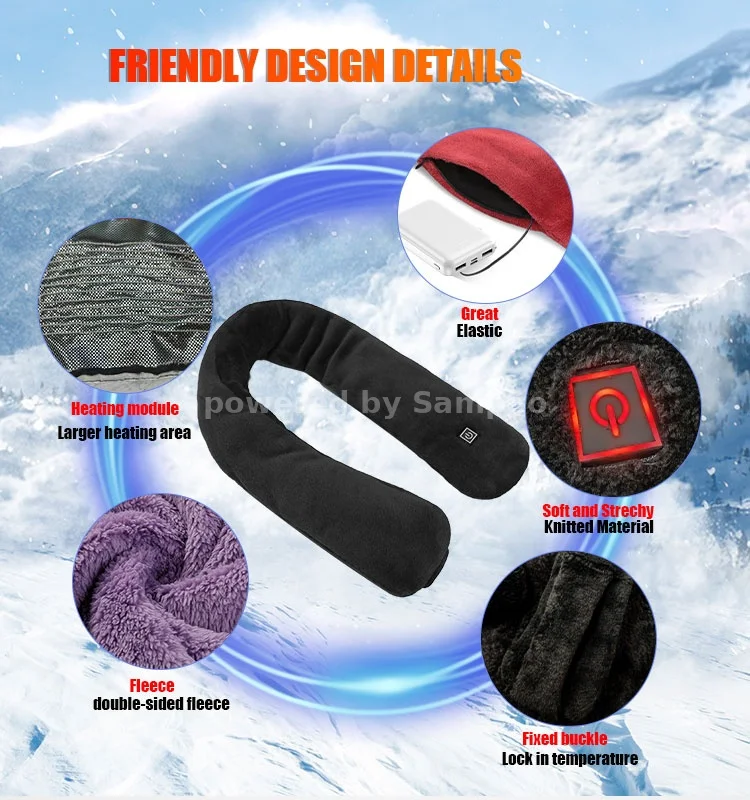
The electrode pattern is stamped, not printed. Each garment SKU has at least one progressive die — typically a 0.05 mm tolerance die set built in SKD-11 or DC53 tool steel — that physically defines the serpentine, the bus-bar width, and the electrode-to-connector crimp geometry. Whoever owns the die owns the supply chain. The tooling-title clause is therefore the second pillar of any graphene heating fabric IP protection program.
| Tooling Asset | Engineering Detail | Recommended IP Vehicle |
|---|---|---|
| Progressive die for electrode | 0.05 mm tolerance, 8 stations | Tooling ownership clause + design patent |
| Hot-melt laminator fixtures | Customer-specific width, tension profile | Trade-secret agreement + factory NDA |
| Battery pack housing mold | 2K mold, overmolded BMS board | Design patent + utility model (CN) |
| Wire-harness overmold | Polarized, anti-reverse geometry | Design patent (US, EU, CN) |
| Sewing jigs and quilting templates | Heat-map aligned, ±2 mm | Factory retention, brand license-back |
In a 2025-2026 dispute we worked alongside counsel on, a buyer who had not filed a design patent on their connector geometry lost a 60,000-unit PO when a copyist showed up with the same crimp pattern six months after the tooling had been pulled for maintenance. The die had been stored in the factory’s tool room with no written license-back. The buyer had no proof of ownership because the PO did not transfer title. This is the single most common IP failure in the graphene heating fabric wholesale channel.
The fix is a one-page tooling schedule appended to the master supply agreement: every die is named, numbered, photographed at delivery, photographed at FAT, and titled to the brand — with a notarial deed in the case of Chinese-domiciled tooling.
Technical-Spec Confidentiality: Sheet Resistance, BMS Firmware, FMEA
The spec sheet is the second most-leaked document in any heated apparel program (after the price list) and is the single most under-priced lever in a complete graphene heating fabric IP protection program. It is also the only document that lets a copyist reproduce your product without your factory’s help. Treat it accordingly.
A defensible 2026 spec sheet has three controls on every page:
| Control | Mechanism | Why It Matters |
|---|---|---|
| Header watermark | Buyer’s name, PO number, page X of Y, “Confidential” diagonal | Defeats casual photography at the factory |
| Numbered hardcopy | 1-20 issued, signed receipt log | Identifies leaker in 24 hours |
| Tiered distribution | Only 3 people at factory, named in NNN schedule B | Limits exposure to engineering team only |
Inside the document, the five numbers that must be guarded most carefully are:
- Sheet resistance in ohm/sq — typically 0.5 to 4.0 for graphene-loaded PU, with a ±8% tolerance. This single number tells the copyist your power density and your voltage window.
- Cell chemistry — 21700 (5000 mAh, 3.7 V nominal, 18 A continuous) vs 18650 (3500 mAh, 3.7 V nominal, 10 A continuous) vs LiFePO4 pouch. Cell choice cascades into UN3481 classification, air-freight paperwork, and BMS calibration.
- BMS firmware version and OTP lock bits — copies can be flashed; OTP cannot.
- Electrode pattern dimensions — bus-bar width, serpentine radius, lead-out geometry.
- FMEA top three failure modes and the engineering controls (PPAP level 3 vs level 5).
For a B2B program shipping 50,000+ units per year, the spec sheet should also include a DOE table, an MSA study, and a control plan — these are the same documents a Tier 1 automotive buyer will demand and they double as IP evidence in litigation.
Anti-Counterfeit Heating Element: Traceability From Slitting to Garment
The cheapest insurance a wholesale buyer can buy is an anti-counterfeit heating element. It is the cheapest insurance available inside a graphene heating fabric IP protection stack, and it is the one tool that does not require a lawyer to deploy. A layered traceability stack in 2026 typically looks like this, and the resulting traceability stack is the third pillar of any graphene heating fabric IP protection program:
| Layer | Technology | Cost per Unit | Read Tool |
|---|---|---|---|
| L1 — QR code on seam label | Printed, 2D, GS1 | $0.002 | Any phone |
| L2 — UV-reactive fiber stripe | Co-extruded, 365 nm | $0.012 | UV torch |
| L3 — NFC chip in BMS | NXP NTAG215, locked | $0.18-0.30 | Phone NFC |
| L4 — DNA-tagged masterbatch | Synthetic, plant-based | $0.04 | Lab swatch |
| L5 — Laser-etched lot on cell | 1D, 6-digit | $0.005 | Visual |
L1 plus L3 is the most common stack we ship. The QR resolves to a brand-controlled portal that validates the lot, the cell date code, and the BMS firmware hash. L2 is added when the goods are sold through distributors the brand does not control directly. L4 is reserved for medical and defense programs where counterfeit liability is a patient-safety issue.
Anti-counterfeit heating element infrastructure pays for itself inside the first year. Wholesale buyers who skip it end up paying 4-7% of revenue in grey-market losses within 24 months, according to a 2025 industry survey by the International Apparel Federation.
Design Patent Heated Fabric: Drawings, Drawings, Drawings
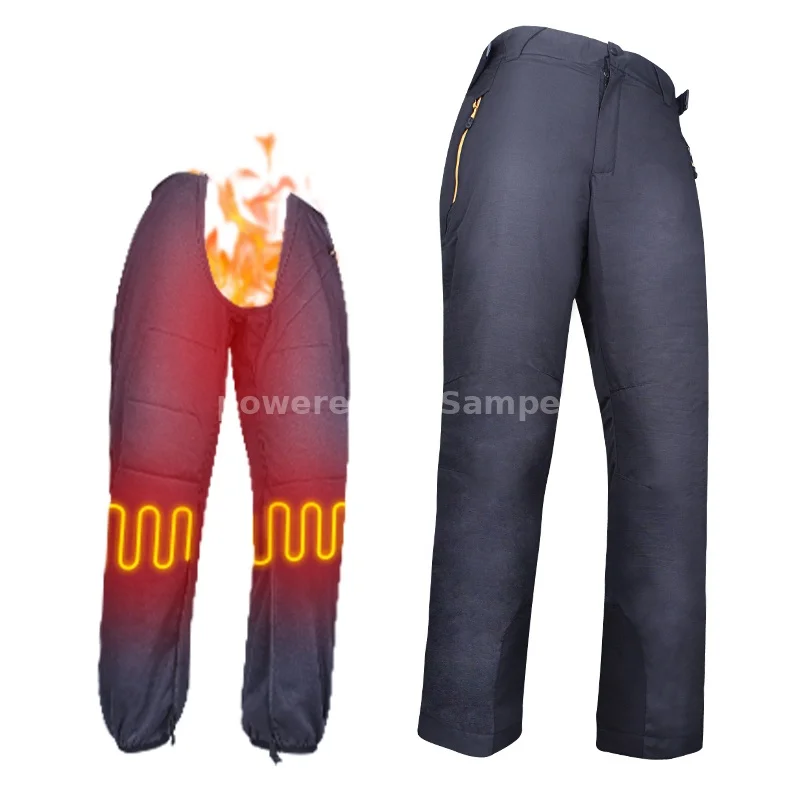
Utility patents on graphene heaters are slow and expensive ($25,000-60,000 in the US, 3-5 years to grant) and the copyist can usually design around them. Design patents — what the EU calls Registered Community Design and China calls 外观专利 — are the workhorse. The resulting design patent portfolio is the fourth pillar of any graphene heating fabric IP protection program.
A 2026 design patent heated fabric filing should include:
- Seven standard orthographic views of the garment (front, back, left, right, top, bottom, isometric) plus two perspective views of the heating zone.
- A separate filing for the connector geometry, the controller housing, and the battery pack.
- Line drawings only — no shading, no color, no dashed lines for hidden features.
- A 0.5 mm line weight on every figure, otherwise the USPTO will issue a non-final rejection.
Filing costs and timelines (2026):
| Jurisdiction | Office | Cost per Design | Grant Timeline | Term |
|---|---|---|---|---|
| China | CNIPA | RMB 1,500-3,000 | 6-10 months | 15 years |
| USA | USPTO | $1,000-2,000 + attorney | 12-18 months | 15 years |
| EU | EUIPO | EUR 350 first design, EUR 125 subsequent | 1-3 months | 5 years, renewable 4×5 |
| UK | UKIPO | GBP 60 first design | 1-2 months | 5 years, renewable 4×5 |
| Japan | JPO | JPY 16,000 | 6-9 months | 20 years from application |
For a heated jacket line, file at least four designs: the garment silhouette, the controller, the battery pack, and the connector. For a heating pad, two are usually enough.
Battery Pack IP: 21700 vs 18650, UN3481, BMS Lock
Half of all IP disputes in heated apparel in 2025-2026 traced back to the battery pack, not the fabric — and that is a graphene heating fabric IP protection problem in disguise. The reason is the regulatory layer: a battery pack that ships by air must be classified under UN3481 (lithium-ion, packed with equipment) and must pass UN 38.3, with a 1.2 m drop test, a thermal abuse test at 130 °C, and a height-of-fall test. A copyist that does not have these certificates is forced to ship by sea, adding 28-35 days to lead time — which is why they clone the BMS firmware first and the cells second.
| Cell Format | Capacity | Continuous Discharge | Energy Density | Common Use |
|---|---|---|---|---|
| 18650 | 2,500-3,500 mAh | 10 A | 250 Wh/kg | Slim gloves, lightweight vests |
| 21700 | 4,000-5,000 mAh | 15-18 A | 260 Wh/kg | Jackets, mattress pads, medical wraps |
| LiFePO4 pouch | 2,000-10,000 mAh | 1C | 90-120 Wh/kg | Stationary heated pet beds, automotive seat heaters |
| Li-Po pouch | 1,000-20,000 mAh | 1-2C | 200 Wh/kg | Curved zones, low-profile panels |
BMS firmware should be locked with a 64-bit OTP key, signed boot, and disabled debug port. A graphene heating fabric OEM partner that ships open JTAG is one firmware dump away from a clone. Verify the lock before tooling sign-off.
Wash Testing and IP Defensibility: IPX7, IP67, AATCC 135
Wash testing is where IP and engineering intersect most visibly. A garment that fails IPX7 after 30 wash cycles has a defective potting compound, not a defective patent — but the same test data that protects the engineering decision also locks in the IP position.
| Standard | What It Tests | Pass Criteria | Why It Matters for IP |
|---|---|---|---|
| IPX7 | Immersion 1 m for 30 min | No water ingress | Defeats “obvious to copy” challenge |
| IP67 | Dust + immersion | Total dust ingress protection + IPX7 | Outdoor and workwear markets |
| AATCC 135 | Home laundering, 5 cycles | No dimensional change >3% | Documented performance baseline |
| ISO 6330 | Commercial laundering, 50 cycles | No functional failure | B2B warranty evidence |
| IEC 60529 | Full IP code | Class-specific | EU conformity evidence |
A 2026 program should ship with 30-cycle IPX7, 50-cycle ISO 6330, and 10-cycle AATCC 135 data signed by a third-party lab. This stack of test reports is the most under-priced IP asset a B2B brand owns, and is what separates a defensible technical file from a copy-able spec sheet.
PPAP, FMEA, and the Documentation Trail That Wins Lawsuits
PPAP (Production Part Approval Process) and FMEA (Failure Mode and Effects Analysis) are the auto-industry standards that have quietly become the de facto evidence standard in heated-apparel IP disputes. The reason is procedural: a copyist can copy a design patent drawing in two days, but they cannot copy your 18-month FMEA history without an insider, and an insider leaves a fingerprint. The resulting PPAP/FMEA stack is the fifth pillar of any graphene heating fabric IP protection program.
| Document | AIAG-VDA Level | What It Locks Down | IP Defensibility |
|---|---|---|---|
| Design FMEA (DFMEA) | VDA 2019 | Top three design risks | Defeats obviousness challenge |
| Process FMEA (PFMEA) | VDA 2019 | Top three process risks | Traces leak to a station |
| Control Plan | Level 5 | Critical parameter set | Proves state-of-the-art |
| PPAP | Level 3-5 | Full documentation bundle | Court evidence package |
| MSA Study | Type 1, 2, 3 | Gauge repeatability | Validates all test data |
For a wholesale buyer with a 50,000-unit PO, insist on PPAP level 3 minimum, level 5 for medical. A 2025 case we observed saw the brand win a 4.2 million RMB judgment partly because the defendant had no PPAP file and the plaintiff’s PPAP level 5 had been filed with a notary.
How a Dongguan Graphene Heating Fabric OEM Builds a Defensible Program
In our tool room in Dongguan, the engineering team treats every new program as a 12-month IP project, not a 12-week tooling project. This is what a complete graphene heating fabric IP protection program looks like in practice — not on a slide deck. The standard sequence is:
1. Week 1-2 — NNN signed, schedule B distributed, spec sheet watermarked and numbered.
2. Week 3-4 — Trademark pre-clearance search in Class 25 and 11 filed at CNIPA in parallel.
3. Week 5-8 — Design drawings prepared for electrode pattern, controller, connector, pack.
4. Week 9-14 — Tooling build, with photographs at FAT, tool number engraved on every die.
5. Week 15-20 — First-article samples, IPX7 test, AATCC 135 test, FMEA kickoff.
6. Week 21-26 — PPAP level 3 pack delivered, design patents filed in CN, US, EU.
7. Week 27-52 — Serial production, lot traceability on, anti-counterfeit stack live.
The whole program is owned by a single program manager who is the only person authorized to email the spec sheet externally. Internal handoff uses a numbered hardcopy log. This is the day-to-day reality of a serious graphene heating fabric manufacturer program. It is not glamorous. It is the reason our 2024-2025 cohort had a 0% squatter-registration rate on customer marks.
30/60/90-Day IP Protection Rollout for B2B Buyers
If you are a B2B brand owner starting a heated-apparel program, the table below is a 90-day action plan we hand to every new buyer. It assumes you have already selected a factory and are about to send artwork. The 90-day output is a defensible graphene heating fabric IP protection position that survives a copyist appearing in month 14. Without it, the same program is undefended by the time the first container clears customs.
| Day | Action | Owner | Deliverable |
|---|---|---|---|
| 0-15 | Sign NNN, distribute schedule B, watermark spec sheet | Brand legal + factory IP | Signed NNN, numbered specs |
| 0-30 | File trademark in Class 25, 11, 9 at home office | Brand legal | Filing receipt |
| 15-45 | File design patents (garment, controller, connector, pack) | Brand IP counsel | Application numbers |
| 30-60 | Issue numbered hardcopy spec, set up BMS OTP | Brand engineering | Spec receipt log, BMS lock file |
| 45-75 | Tooling FAT photos, tool number engraved | Factory tool room | FAT photo pack, die schedule |
| 60-90 | PPAP level 3 delivered, anti-counterfeit stack live | Factory program manager | PPAP pack, traceability live |
Frequently Asked Questions
What is graphene heating fabric IP protection and why does it matter in 2026?
It is the layered legal and engineering program that locks down your trademark, your electrode design, your BMS firmware, and your tool-room assets against copyists. In 2026, with graphene heating fabric IP protection cases rising 30% year-on-year at CNIPA, every B2B program is a target.
How is graphene heating fabric different from carbon-fiber heating fabric in IP terms?
The patent landscape is denser for graphene — there were over 14,000 graphene-related filings in 2024 alone — but the engineering trade secrets (slitting recipe, lamination curve) are easier to defend because they live inside the factory, not in a public paper. Carbon-fiber heating fabric tends to rely more on utility patents because the public knowledge base is deeper.
How long does a CNIPA trademark filing take for a heated apparel brand?
A first-action office action usually arrives in 4-6 months, and registration is typically complete in 9-12 months if the mark is pre-cleared. Without a pre-clearance search, expect 14-18 months and at least one refusal.
What is the cost of an NNN agreement heating fabric in China?
A 2026 NNN with a credible Dongguan IP law firm costs USD 600-1,200 for a single Chinese counter-party, plus USD 200-400 per additional Chinese-language translation or schedule. Renewal is not required — the term is contractual.
Can I rely on a US NDA instead of an NNN?
No. A US NDA is not enforceable in a Chinese court in 72 hours, it does not bind the factory’s affiliates, and it does not stop the factory from registering your mark as a Chinese trademark. The NNN is the only contract that does all four.
What sheet resistance should I expect in a 2026 graphene heating fabric?
For a graphene-loaded PU film at 0.05-0.12 mm thickness, expect 0.5 to 4.0 ohm/sq, with a ±8% lot-to-lot tolerance. Anything outside that band is a red flag for either a copyist’s material or an under-cured coating.
21700 vs 18650 — which cell should I specify for a heated jacket?
For a 7.4 V / 5,000 mAh pack in a heated jacket, 21700 is the 2026 default: 5,000 mAh capacity, 18 A continuous, 260 Wh/kg, and a 25-30% volume saving over 18650. Reserve 18650 for ultra-slim gloves and vest panels where thickness trumps capacity.
What is UN3481 and why does it affect my IP strategy?
UN3481 is the UN number for lithium-ion batteries packed with equipment. It governs how your battery pack is shipped by air, sea, and road. A copyist who ships a non-UN38.3-tested pack is shut out of air freight and is forced onto 28-35 day ocean lanes — which is the legal leverage that often forces a settlement.
How does anti-counterfeit heating element traceability actually stop a copyist?
A layered QR + NFC stack resolves to a brand-controlled portal that authenticates each unit. A copyist who ships without the NFC chip loses the wholesale channel (every distributor scans the box) and a copyist who ships with a fake chip loses the warranty channel (the firmware hash fails). The economics flip inside 12 months.
What is a design patent heated fabric filing in the EU called?
It is a Registered Community Design (RCD), filed at EUIPO in Alicante. The first design is EUR 350, each subsequent design in the same filing is EUR 125, and registration is typically complete in 1-3 months.
How many design patents do I need for a heated apparel line?
Four is the 2026 minimum for a full garment line: the garment silhouette, the controller, the battery pack, and the connector. A fifth, for the cable, is optional but recommended if the cable is a brand signature.
What is the most common IP failure in graphene heating fabric wholesale programs?
Number one: the buyer did not transfer title on the tooling in writing, and the factory sold the die to a second buyer six months after the PO closed. Number two: the buyer relied on a US NDA only and lost a Chinese trademark squatter registration. Number three: no design patent on the connector geometry, enabling a connector clone that broke the entire product’s seal.
How does a Dongguan graphene heating fabric OEM handle PPAP and FMEA?
The standard 2026 process is VDA 2019-aligned: DFMEA at week 6, PFMEA at week 12, control plan at week 16, MSA study at week 18, PPAP level 3 at week 20, PPAP level 5 at week 26. The pack is signed by a named program manager and stored in a tamper-evident PDF on a brand-controlled portal.
Can a wholesale buyer file their own design patent or do they need a Chinese agent?
You can file at the USPTO, EUIPO, and UKIPO directly, but for CNIPA and JPO a local patent attorney is required. The total portfolio for a four-design Chinese filing is typically USD 4,000-6,000 with attorney fees in 2026.
How do I audit an existing graphene heating fabric IP protection program?
Three quick checks: (1) pull the NNN and confirm schedule B is current, (2) pull the tooling title documents and confirm they are in your name or in a brand-controlled SPV, (3) pull the last six months of QC logs and confirm the spec-sheet receipt log is intact. Any one of those failing is a 90-day fix; all three failing is a 6-month rebuild.
Glossary
| Term | Definition |
|---|---|
| NNN Agreement | Non-disclosure, Non-use, Non-circumvention contract used with Asian manufacturers. |
| UN3481 | UN transport classification for lithium-ion batteries contained in equipment. |
| UN38.3 | Mandatory lithium battery transport safety test report. |
| NRE | Non-recurring engineering cost, typically tooling and mould charges. |
| CNIPA | China National Intellectual Property Administration; first-to-file trademark system. |
| IP67 | Ingress protection rating: dust-tight and protected against water immersion. |
Leave a Reply