
Quality Inspection for Battery Heated Apparel: Engineering Lab & AQL Testing Guide 2026
Quality Inspection for Battery Heated Apparel: Engineering Lab & AQL Testing Guide 2026
For an engineering buyer sourcing a QC partner for heated apparel, the conversation quickly moves past marketing brochures and onto test fixtures, AQL tables, climate chamber profiles, and PPAP binders. This pillar gives R&D managers, sourcing engineers, and brand quality leads a single technical reference for the quality inspection programs that protect a heated-apparel line from graphene-pad delamination, BMS mis-wiring, and connector pin wear. It is written from a working OEM/ODM lab perspective, and every recommendation ties to a published standard, a documented test method, or a measurement instrument a competent quality inspection manufacturer should already have on the bench.
The framework below mirrors how a serious OEM QC program operates: incoming material verification, in-process functional tests, AQL-based pre-shipment inspection, third-party witness testing for safety-critical claims, and PPAP-level documentation for wholesale programs. If your current supplier answers “yes, we inspect” without naming standards, sampling plans, or instruments, you are looking at a trading company — not a quality inspection manufacturer.
Why Battery Heated Apparel Demands Engineering-Grade Quality Inspection
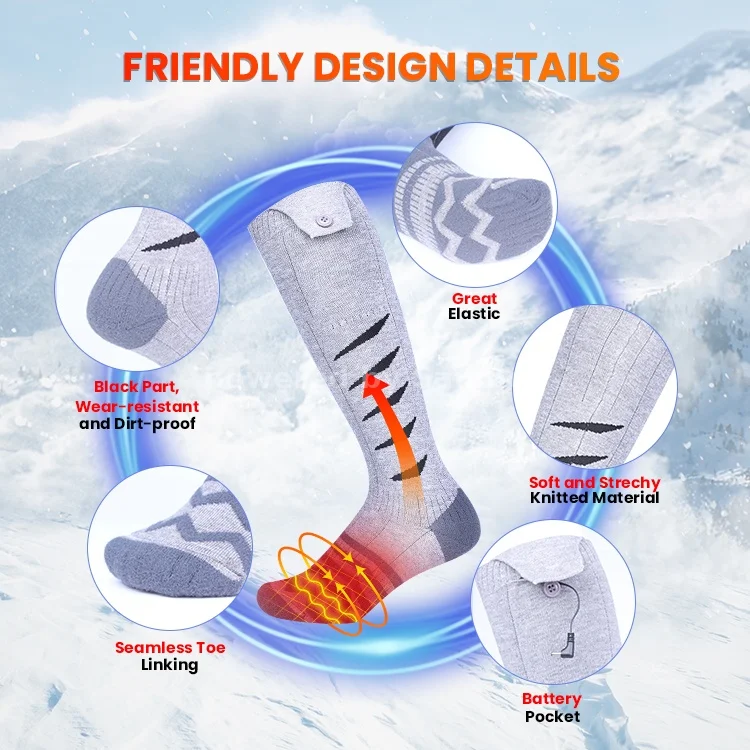
Heated apparel is a multi-domain product. A single garment may integrate a graphene heating fabric, a lithium-ion battery pack with BMS, a sealed connector, a switch pod, and an outer shell with stretch and wash requirements. A weak link anywhere — a 0.5 Ω drift on a graphene pad, a defective BMS cell, a connector that loses contact after 800 cycles — produces a return, a safety complaint, or a recall. A quality inspection OEM that demonstrates IEC 62133, UN 38.3, and ISO 2859-1 sampling is pre-paying for your warranty budget.
Quality Inspection Manufacturer: In-House Lab Capability for Battery Heated Jackets
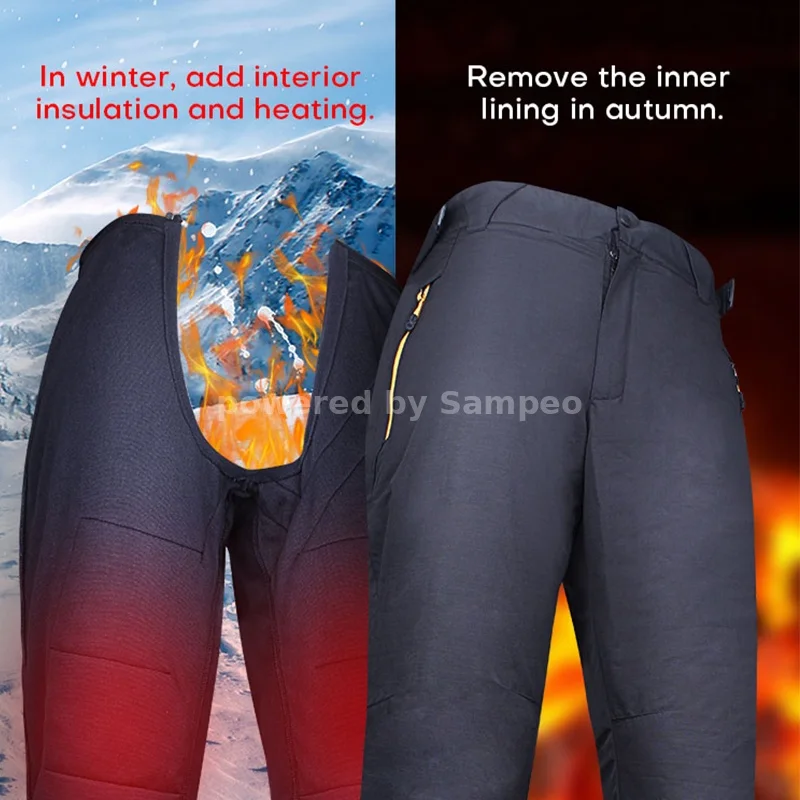
A credible QC manufacturer for a quality inspection battery heated jacket program runs the four-quadrant tests below on-site so engineers can debug a graphene pad the same day it fails thermal uniformity.
| Lab Station | Instrument | Typical Spec | What It Catches |
|---|---|---|---|
| Thermal Mapping | FLIR T-series or equivalent IR camera, 320×240 min | ΔT ≤ 4 °C across active zone | Cold spots, hot spots, broken traces |
| Resistance Stability | 4-wire ohmmeter / Keithley DMM | ±5 % over 24 h @ 25 °C | Pad degradation, solder joint fatigue |
| Climate Chamber | Programmable -40 °C to +85 °C chamber | IEC 60068-2-1/2 profile | Low-temp resistance drift, BMS cutoff accuracy |
| Tensile / Peel | Universal tester, 1 kN or 5 kN frame | ISO 13934-1 seam, ASTM D903 pad bond | Delamination of graphene laminate from substrate |
If an OEM QC program cannot show this list, the next call should be a third-party lab. Otherwise you are paying for a logo on a test report.
Quality Inspection Manufacturer Checklist
– In-house climate chamber sized for garments (not just PCBA)
– Calibrated thermal camera with documented emissivity for graphene-coated fabrics
– A SQL/Excel-tracked AQL register with 12 months of lot history
– ISO 17025-accredited partner for IEC 62133 and UN 38.3 (TÜV Rheinland, TÜV SÜD, SGS, or Bureau Veritas)
– Engineering sign-off chain on every PPAP submission
AQL 2.5 Inspection Protocol for OEM Heated Apparel Production
AQL 2.5 inspection is the workhorse sampling plan for most heated-apparel OEM QC programs, referenced in ISO 2859-1 and ANSI/ASQ Z1.4. Most buyers specify “normal inspection level II, AQL 2.5 for major, 4.0 for minor.”
For a heated jacket, the AQL lot is typically a finished-goods batch of 500 to 2,000 garments. The inspector randomly samples units from the lot, then runs attribute checks against an agreed defect classification.
| Defect Class | Example on Heated Jacket | AQL Limit (Level II) |
|---|---|---|
| Critical | Battery does not power on, BMS shorts, exposed conductor | 0 (zero acceptance) |
| Major | Heating zone dead, switch pod inoperative, seam open > 25 mm | 2.5 |
| Minor | Cosmetic thread tail, label misalignment, slight shade variation | 4.0 |
How AQL 2.5 Sampling Translates to Lot Size
| Lot Size | Sample Size (Level II) | Accept (Maj) | Reject (Maj) |
|---|---|---|---|
| 501–1,200 | 80 | 5 | 6 |
| 1,201–3,200 | 125 | 7 | 8 |
| 3,201–10,000 | 200 | 10 | 11 |
A serious OEM applies the table above with a printed copy on the inspection bench and a clear reject pathway. A weak program hides behind “we found some defects, but it’s fine.”
Quality Inspection Wholesale: What Brand Buyers Should Audit Before a PO
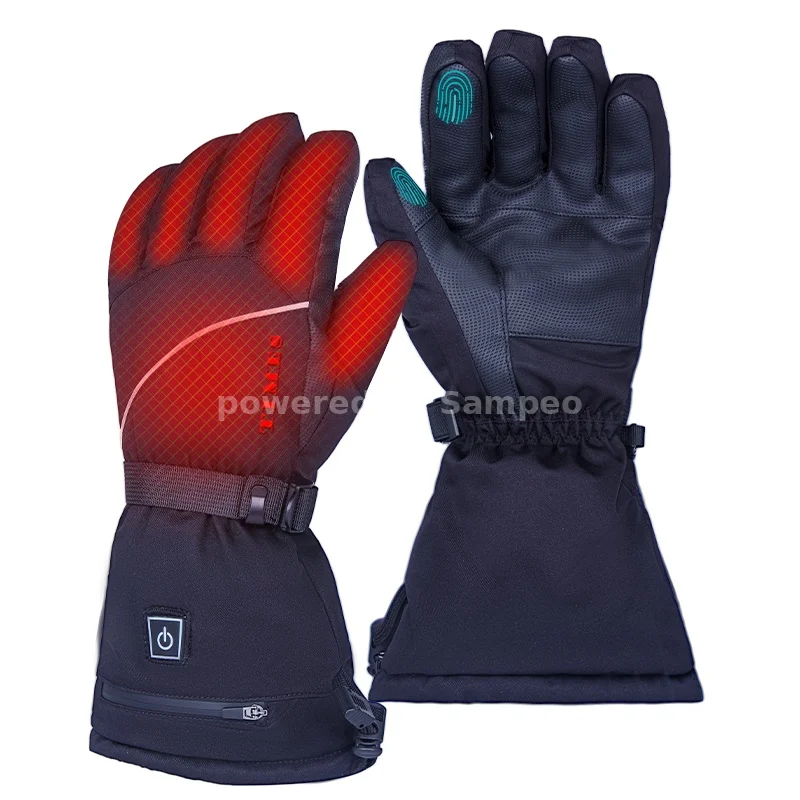
A wholesale QC program lives or dies on what happens before the first production run. Brand buyers should expect the following pre-PO audits as minimum qualification:
| Audit Step | Owner | Deliverable |
|---|---|---|
| Factory Capability Audit | Buyer QA + OEM | Audit report, photo set, instrument list |
| Pre-Production Sample (PPS) | OEM Lab | Golden sample, dimensional report, AQL-grade functional pass |
| Pilot Run | OEM Line + Lab | 50–100 units, full AQL plan, lessons-learned memo |
| PPAP / First Article | OEM Lab + Buyer Engineering | Level 3 PPAP binder (see below) |
| Pre-Shipment Inspection | Third-party (SGS / Bureau Veritas / TÜV) | Sealed inspection report, photo set, lot traceability |
A wholesale QC program without a pre-shipment third-party check is a claim, not a control.
Quality Inspection Graphene Heating: Validating Pad Uniformity, Resistance, and Bond Integrity
Graphene-pad QC work is its own discipline because graphene-based conductive coatings behave differently from nickel-chromium wire or carbon-fiber printed traces. Sheet resistance is low, the active layer is thin (10–50 µm), and the pad must survive flex and wash cycles. The minimum graphene-pad inspection battery is:
| Test | Method | Acceptance | Standard |
|---|---|---|---|
| Sheet Resistance | 4-point probe on flat pad | ±10 % of nominal (e.g., 8–12 Ω/sq) | ASTM D4496 |
| Uniformity Mapping | IR camera at 5 V / 10 V input, 30 s steady state | ΔT ≤ 4 °C across active zone | Internal + FLIR analysis |
| Pad-to-Fabric Bond | 90° peel at 100 mm/min | ≥ 1.5 N/mm | ASTM D903 |
| Flex Endurance | Mandrel bend, 5,000 cycles @ R = 10 mm | ΔR ≤ 15 % post-test | Internal |
| Wash Durability | Domestic wash cycles | ΔR ≤ 20 % after 50 cycles | ISO 6330 procedure 4N |
A graphene-pad QC program that cannot quote resistance stability after flex or wash is running visual checks, not engineering tests.
Common Field Failures and Root Cause for Graphene Pads
| Field Failure | Likely Root Cause | Detection Test |
|---|---|---|
| Cold patch on one zone | Broken copper busbar trace | Thermal map + continuity |
| Pad hot-spot > 60 °C | Localized resistance drop (damage) | IR camera, ΔT map |
| Pad stops working after 5 washes | Delamination at bond line | Wash test + post-wash thermal map |
| Intermittent power | Connector pin wear | Connector cycle test |
| Battery shuts off early | BMS cell imbalance | IEC 62133 cycle + capacity check |
Battery Safety Testing: IEC 62133 and UN 38.3 in a Quality Inspection Program
A QC program for heated apparel must include the two battery standards that customs, retailers, and air-freight auditors ask for. They are non-negotiable for any quality inspection OEM shipping lithium packs internationally.
| Standard | Scope | Key Tests |
|---|---|---|
| IEC 62133-2:2017 | Safety of portable lithium cells | Continuous low-rate charge, vibration, shock, thermal abuse, over-charge, short-circuit |
| UN 38.3 (Rev. 7) | Transport of lithium batteries | T1 altitude simulation, T2 thermal, T3 vibration, T4 shock, T5 external short, T6 impact, T7 overcharge, T8 forced discharge |
How the Tests Are Run
– Drop test (UN 38.3.4.3): 1.5 m onto concrete, 6 orientations, no fire, no leak, no rupture
– Thermal abuse (UN 38.3.4.5): 150 °C for 10 minutes — no fire, no explosion
– Vibration (UN 38.3.4.2): 7 Hz → 200 Hz → 7 Hz log sweep, 12 cycles per axis
– Shock: 150 g acceleration, 6 ms half-sine, 3 shocks per axis
– Battery cycle (IEC 62133): 500 cycles at 0.2 C charge / 0.5 C discharge to 80 % of rated capacity minimum
An OEM running its own IEC 62133 chamber cuts new-product cycle time from 8 weeks to 2. Out-of-house labs handle the witness certificate; in-house screening is the engineering advantage.
PPAP Documentation Packet Required for Wholesale Heated Apparel Programs
PPAP heated apparel documentation is the deliverable that signals the OEM understands automotive-grade rigor. The automotive industry defined PPAP in AIAG PPAP 4th Edition; the same level structure applies to a PPAP heated apparel program when the buyer wants defensible records.
What PPAP Level 3 Includes
| Element | Purpose | Owner |
|---|---|---|
| Design Records | Drawings, BOM, spec tree | OEM Engineering |
| Material Certifications | Graphene pad, fabric, battery cell | Supplier + OEM |
| Initial Process Studies | Cpk / Ppk on critical dimensions | OEM Quality |
| Sample Production Parts | Golden sample, dimensional layout | OEM Lab |
| Measurement System Analysis | Gage R&R on critical features | OEM Quality |
| Control Plan | Inspection points, AQL, instruments | OEM + Buyer |
| OEE / First Time Through | Yield evidence | OEM Production |
A serious PPAP heated apparel binder runs 60–120 pages and includes signed Cpk values, not placeholders.
Connector Cycle Testing and Switch Pod Reliability
Connectors and switch pods are the most common mechanical wear point on heated apparel. A connector that loses contact after 800 insertion cycles is fine for a development kit but unacceptable for a retail SKU.
| Component | Test | Cycles | Acceptance |
|---|---|---|---|
| DC barrel / USB-C | Insertion/extraction | 1,500 cycles | ΔR ≤ 50 mΩ, no mechanical damage |
| Snap-style garment connector | Mate / unmate | 5,000 cycles | No loss of continuity, IP rating preserved |
| Push-button switch pod | Actuation | 30,000 cycles | Force ±15 %, tactile feedback retained |
| Heated apparel controller PCB | Thermal cycling | 500 cycles, -20 °C ↔ +60 °C | No solder joint failure |
A QC program that tests the connector once and never cycles it again is going to ship a field failure in the first quarter.
Environmental and Wash Testing: ISO 6330, IEC 60068, and Real-World Conditioning
Wash durability is where many graphene pad programs fail silently. A pad can survive one wash and then drift 25 % in resistance by wash twenty, leading to either under-performance or BMS cutoff trips. The QC program must include the following:
| Test | Standard | Profile |
|---|---|---|
| Domestic Wash | ISO 6330 procedure 4N | 50 cycles minimum, 40 °C, mild detergent |
| Dry Clean | ISO 3175 (optional) | Per care label claim |
| Cold Soak | IEC 60068-2-1 | -20 °C, 72 h |
| Heat Soak | IEC 60068-2-2 | +60 °C, 96 h, 95 % RH |
| Thermal Cycling | Internal / IEC 60068-2-14 | -20 °C ↔ +60 °C, 100 cycles |
| Salt Spray (optional) | ISO 9227 | For marine / workwear SKUs |
After each block, re-run thermal mapping and sheet resistance. A pad that drifts > 20 % is a field-failure candidate.
Third-Party QC: TÜV Rheinland, TÜV SÜD, SGS, Bureau Veritas
A QC program gains legal and commercial weight when a third-party lab witnesses or co-runs the critical tests. The four labs below are the most common references on a heated apparel certificate.
| Lab | Common Scope | Typical Turnaround |
|---|---|---|
| TÜV Rheinland | IEC 62133, UN 38.3, CE, UKCA | 4–8 weeks |
| TÜV SÜD | Same plus UL 2054 (US packs) | 4–8 weeks |
| SGS | Pre-shipment AQL, social audits, IEC 62133 | 2–6 weeks |
| Bureau Veritas | Pre-shipment AQL, CB scheme, IEC 62133 | 2–6 weeks |
For a wholesale program, a buyer-side third-party pre-shipment inspection (PSI) is the single highest-ROI check. It catches the carton of mixed-size jackets and the dead-graphene-pad batch that internal QC signed off because the inspector was rushing.
Engineering Validation Tests Behind Quality Inspection for Graphene Heating Pads
The test bench below runs on every new graphene pad SKU before serial production. Each row is also a row in the PPAP Level 3 control plan. If the OEM cannot show a populated plan, you are buying on trust.
| Test Bench | Purpose | Pass Criterion |
|---|---|---|
| 4-wire resistance scanner (multiplexed) | Pad-to-pad resistance variance | σ ≤ 5 % of mean |
| IR thermal map (steady state) | Uniformity of heat distribution | ΔT ≤ 4 °C |
| In-rush current capture | BMS startup behavior | ≤ spec, no nuisance trip |
| Connector mate / unmate rig | Mechanical wear | ΔR ≤ 50 mΩ post 1,500 cycles |
| Wash-cycle rig + post-wash retest | Real-world durability | ΔR ≤ 20 % post 50 washes |
| Battery cycler (0.2 C / 0.5 C) | Capacity and BMS accuracy | ≥ 80 % rated capacity after 500 cycles |
| Climate chamber (-40 °C ↔ +85 °C) | Operating range | Functional at all set points |
| Drop test rig (1.5 m) | Transport durability | No fire, no rupture, functional after |
| Vibration table (UN 38.3 T3) | Shipping and use vibration | No fire, no rupture, capacity within spec |
Frequently Asked Questions About Quality Inspection for Heated Apparel
1. What lab equipment should an OEM QC partner for heated apparel have on-site?
A 4-wire ohmmeter or multiplexed resistance scanner, a calibrated IR thermal camera (≥ 320×240), a programmable climate chamber (-40 °C to +85 °C), a universal tensile/peel tester, a battery cycler for IEC 62133, a connector mate/unmate rig, a wash-cycle rig per ISO 6330, and a vibration/shock table for UN 38.3. A tracked AQL register is expected.
2. How do we choose between AQL 1.0 and AQL 2.5?
AQL 1.0 fits safety-critical defects (BMS fault, exposed conductor); many buyers set critical at AQL 0 (zero acceptance). AQL 2.5 is normal for major functional defects (dead heating zone, failed switch, open seam > 25 mm) at Level II. AQL 4.0 covers cosmetic defects.
3. What is the standard thermal mapping test method for graphene heating pads?
Mount the pad flat on an insulated fixture, apply rated voltage for 30 s to steady state, capture an IR image at fixed working distance, and compute ΔT between hottest and coldest pixel inside the active zone. Acceptance is typically ΔT ≤ 4 °C.
4. How long does a battery cycle test take per IEC 62133?
A full 500-cycle 0.2 C/0.5 C protocol takes 6–8 weeks including capacity checks and post-cycle inspection. Screening cycles (50–100) can be run in 1–2 weeks for engineering qualification.
5. How many wash cycles should a graphene pad survive?
For a retail SKU, 50 domestic wash cycles per ISO 6330 procedure 4N with ΔR ≤ 20 % post-wash is the working minimum. Premium programs target 100 cycles.
6. How many connector cycles should a DC connector survive?
A USB-C or DC barrel should withstand at least 1,500 insertion cycles with ΔR ≤ 50 mΩ and no mechanical damage. Snap-style garment connectors should be rated to 5,000 cycles.
7. What does PPAP Level 3 include for heated apparel?
Design records, authorized engineering changes, material certifications, initial process studies (Cpk/Ppk), sample production parts, measurement system analysis (Gage R&R), qualified lab documentation, control plan, and first-time-through evidence. Typically 60–120 pages, signed by OEM and buyer.
8. How do we validate graphene heating fabric uniformity without an IR camera?
Use a multiplexed 4-wire resistance scan across a grid (e.g., 10×10 points), then cross-check with surface thermocouples at corners and center. IR is faster and more defensible.
9. What are the most common field failures on heated jackets and their root causes?
Cold patch from broken copper busbar trace (thermal map + continuity); hot-spot from localized resistance drop (IR ΔT map); pad failure after wash (delamination — wash test); intermittent power (connector wear — cycle test); battery early shutoff (cell imbalance — IEC 62133 cycle).
10. What climate chamber profile should we run for cold-weather heated apparel?
-20 °C soak for 2 h, functional test, ramp to +60 °C / 95 % RH for 2 h, functional test, cycled 5–10 times per IEC 60068-2-14. For arctic programs, add a -40 °C step.
11. How often should third-party pre-shipment inspections happen?
For a wholesale program, run a third-party PSI (SGS, Bureau Veritas, TÜV) on the first three production lots, then drop to every other lot once the OEM’s Cpk evidence is consistent.
12. What documents should an OEM QC partner deliver with every shipment?
Inspection report (AQL table filled), dimensional report, functional test record, batch traceability, battery IEC 62133 / UN 38.3 certificate, carton markings photo, and any deviation / concession approvals.
Closing Notes for Engineering Buyers
A defensible QC program for heated apparel is not a single document. It is the layered combination of incoming material tests, in-process functional screening, AQL-based pre-shipment inspection, third-party witnessed battery certification, and a PPAP-level control plan that travels with the SKU. Each layer catches a different failure mode, and removing any one tends to surface in the warranty data six to nine months later.
If you are scoping a new program, start with the lab capability audit, agree the defect classification, lock the AQL plan and battery certificate scope, then move to PPAP. The sequence is the cheapest path to a defensible product.
Leave a Reply