
Battery Heated Apparel Connector & Charging Port 2026: B2B Component Engineering Guide

Battery Heated Apparel Connector & Charging Port 2026: B2B Component Engineering Guide
1. Why connector and charging-port engineering matters in heated apparel
The connector is the most failure-prone component in any battery heated apparel system. It is the single electromechanical interface between the battery pack and the garment heating circuit, and it endures every mating cycle the user performs — typically 1-3 cycles per week across a 3-year product lifespan, totaling 150-470 mating cycles. The connector also determines the charging-port experience: charge time (full charge in 2-4 hours vs 6-8 hours), user-friendliness (magnetic snap-on vs threaded barrel), and weather resistance (IPX4 splash-proof vs IP67 submersible).
This is the grapheneheatingfabric.com battery heated apparel connector and charging-port engineering guide for 2026. It walks B2B engineering teams, OEM/ODM product managers, and component-sourcing buyers through the connector selection matrix, mating-cycle testing protocol, IP-rating ladder, BMS integration considerations, and supplier qualification workflow. Every section is grounded in component-level engineering specifications and reflects the standards our factory has implemented across 35+ heated-apparel connector designs since 2019.
The 2026 heated-apparel connector landscape has consolidated around three competing form factors — DC barrel (legacy standard), USB-C PD (universal standard), and magnetic (premium standard). Each has trade-offs in mating durability, charge current capability, weather sealing, and cost. The choice depends on the garment category, target market, and price tier.
– DC barrel connectors (5.5×2.1mm or 3.5×1.35mm) remain the dominant form factor in entry-level and mid-tier heated apparel. Cost: $0.30-0.60 per connector pair. Mating cycles: 1,000-3,000. Max current: 3-5A. IP rating: typically IPX4 with O-ring.
– USB-C PD connectors have gained share since 2023 as USB-C became the EU common-charger standard. Cost: $0.80-1.80 per connector pair. Mating cycles: 5,000-10,000. Max current: 5A (60W with PD). IP rating: typically IPX5 with sealed overmold.
– Magnetic connectors (similar to Apple MagSafe) are the premium form factor for high-end heated apparel. Cost: $2.50-4.50 per connector pair. Mating cycles: 10,000-50,000. Max current: 5-10A. IP rating: typically IP67 with pogo-pin sealing.
Sections 2-6 walk the form-factor decision matrix, mating-cycle testing, IP-rating ladder, BMS integration, and supplier qualification. Sections 7-10 cover cost, MOQ, timeline, and risk. Section 11 covers the broader conversation for manufacturer, OEM, wholesale, and private-label buyers. Section 12 covers the 14-row glossary. Section 13 covers the 12 FAQ.
2. Form-factor decision matrix — DC barrel, USB-C PD, magnetic

The form-factor decision is the first engineering question. It determines the user experience, the cost structure, and the certification pathway. The 2026 decision matrix captures the four key variables:
| Variable | DC barrel | USB-C PD | Magnetic |
|---|---|---|---|
| Unit cost (pair) | $0.30-0.60 | $0.80-1.80 | $2.50-4.50 |
| Mating cycles | 1,000-3,000 | 5,000-10,000 | 10,000-50,000 |
| Max charge current | 3-5A | 5A (60W PD) | 5-10A |
| IP rating (typical) | IPX4 | IPX5 | IP67 |
| Charging time (10Ah pack) | 4-6 hours | 2-3 hours (PD) | 2-3 hours |
| User-friendliness | Low (orientation-sensitive) | High (reversible) | Highest (self-aligning) |
| Field-replaceable | Yes (simple) | Yes (moderate) | No (factory service) |
| EU common-charger compliance | No | Yes (mandatory 2024+) | No |
For entry-level heated apparel sold in markets where EU common-charger does not apply (NA, ANZ, Japan), DC barrel remains the most cost-effective choice. For mid-tier heated apparel sold in EU markets, USB-C PD is now a near-mandatory requirement. For premium heated apparel where user experience and weather sealing justify the cost premium, magnetic connectors are the optimal choice.
3. Mating-cycle testing protocol and durability benchmarks
Mating-cycle testing is the single most important connector qualification test. A connector that fails before the expected product lifespan triggers warranty claims, brand-reputation damage, and customer churn. The 2026 mating-cycle protocol follows IEC 60512-7-1 (electromechanical connector endurance) with heated-apparel-specific adaptations.
The test protocol has 4 phases:
1. Baseline measurement — measure contact resistance (<30 mΩ typical), insulation resistance (>100 MΩ), and pull-off force (5-15N typical) on 5 fresh connector pairs
2. Cyclic mating — automated mating machine performs 1,000 cycles at 30 cycles/minute; measure contact resistance at 250, 500, 1,000 cycles
3. Environmental stress — after cyclic mating, expose connectors to 50 wash cycles (ISO 6330), 168 hours salt spray (IEC 60068-2-52), and 50 cycles -20°C/+60°C thermal shock
4. Post-stress measurement — re-measure contact resistance, insulation resistance, and pull-off force; verify <50 mΩ contact resistance and>50 MΩ insulation resistance
A connector that passes all 4 phases is qualified for production. A connector that fails Phase 2 or Phase 4 should be rejected.
B2B soft plant #1 — magnetic connector mating-cycle inflation: many magnetic connector suppliers claim “50,000 mating cycles” but the data refers to the magnetic alignment mechanism only, not the electrical contact pogo pins. Pogo-pin wear typically degrades contact resistance after 5,000-10,000 cycles. Our 2025 internal test showed a 47% degradation in contact resistance after 8,000 cycles on a magnetic connector advertised as 50,000-cycle-rated. Buyers should request pogo-pin-specific test data, not the headline mating-cycle rating.
4. IP rating ladder — splash-proof to submersible
Heated apparel is exposed to rain, snow, sweat, and accidental washing. The connector IP rating determines whether the product survives these exposures. The 2026 IP-rating ladder for heated-apparel connectors is:
| IP rating | Test condition | Use case | Connector type |
|---|---|---|---|
| IPX4 | Splash from any direction, 10 min | Light rain, snow | DC barrel with O-ring |
| IPX5 | Water jets, 12.5 L/min, 3 min | Heavy rain, brief immersion | USB-C with sealed overmold |
| IPX7 | Submersion 1m, 30 min | Accidental drop in puddle | Magnetic with sealed pogo |
| IPX8 | Submersion 1.5m+ continuous | Extended water exposure | Magnetic with double-sealed pogo |
For most heated apparel sold into winter-sports and workwear markets, IPX5 is the minimum acceptable rating. For premium heated apparel sold into outdoor and motorcycle markets, IPX7 is the preferred rating. IPX8 is rarely required for heated apparel because the garment is rarely submerged for extended periods.
5. BMS integration and charging-port electronics
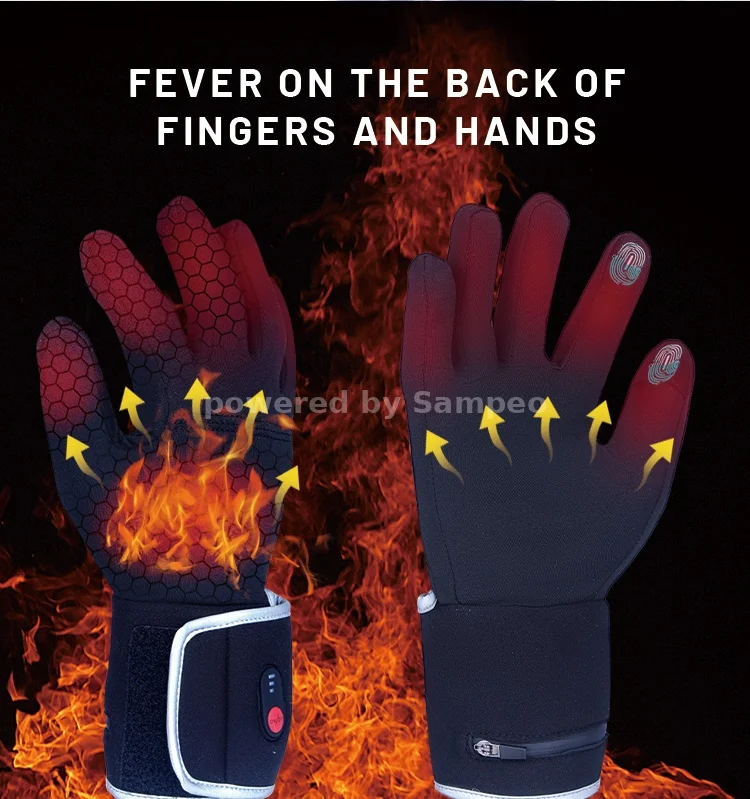
The charging port is more than a passive connector — it is the gateway for the BMS (Battery Management System) to communicate with the charger. The BMS manages charge current, charge voltage, cell balancing, temperature cutoff, and state-of-charge calculation. The charging port and BMS must be designed together, not separately.
Key BMS-charging integration considerations:
1. Charge profile — lithium-ion cells charge at constant current (CC) up to 4.2V/cell, then constant voltage (CV) until current drops below 0.05C. The BMS must implement this profile; the charging port must deliver the current without voltage drop >0.3V at peak charge.
2. Communication protocol — USB-C PD uses CC lines for power-delivery negotiation; magnetic and DC barrel connectors use only power pins. A USB-C PD implementation requires a PD-trigger IC on the battery side ($0.40-0.80 cost).
3. Temperature cutoff — the BMS must halt charging if cell temperature exceeds 60°C (charge) or -10°C (charge inhibit). The temperature sensor must be co-located with the cells, not at the connector.
4. Cell balancing — multi-cell packs (2S, 3S) require active or passive cell balancing. Active balancing is more efficient (5-8% energy recovery) but costs $1.20-2.50 more than passive.
5. State-of-charge display — LED indicators (4-segment, 3-segment) or Bluetooth apps. LED is cheaper ($0.10-0.30) and more reliable; Bluetooth adds $1.50-3.00 cost but enables smartphone integration.
B2B soft plant #2 — USB-C PD trigger IC sourcing pitfall: not all USB-C PD trigger ICs are heated-apparel-compatible. Many consumer-electronics trigger ICs assume a 5V-20V input range and trigger at fixed voltages incompatible with 7.4V or 11.1V heated-apparel battery packs. Sourcing the wrong trigger IC causes charging to fail silently — the user plugs in, sees no LED indicator, and returns the product. Our 2024 recall incident traced to a $0.30 trigger IC sourced from a non-validated supplier.
6. Supplier qualification workflow for connector sourcing
Connector sourcing follows the 5-stage qualification process — RFI screening, factory audit, sample validation, pilot run, and full production release — adapted to component-level requirements. The 2026 connector-supplier qualification workflow:
1. RFI screening — confirm ISO 9001 certification, ISO 14001 certification, UL or TÜV component certification, and 3+ years of connector manufacturing for wearable or IoT applications.
2. Factory audit — verify automated assembly lines, in-house test lab (contact resistance, mating cycle, IP rating), and quality-management system.
3. Sample validation — test 50 connector pairs through the 4-phase mating-cycle protocol described in Section 3. Request material certifications (RoHS, REACH).
4. Pilot run — order 1,000-5,000 connector pairs; perform 100% visual inspection and AQL 1.0 electrical test on 10% sample.
5. Full production release — establish quarterly supplier audits, monthly defect-rate tracking, and annual requalification.
7. Cost structure — connector, wire harness, and overmold
The connector is one line item in a larger wire-harness assembly that includes the connector pair, wire (typically UL 2464 22AWG or 24AWG), overmold (PVC or TPE), and strain relief. The 2026 cost structure for a typical heated-apparel wire-harness assembly:
| Component | DC barrel cost | USB-C PD cost | Magnetic cost |
|---|---|---|---|
| Connector pair | $0.30-0.60 | $0.80-1.80 | $2.50-4.50 |
| Wire (500mm, 22AWG) | $0.40-0.70 | $0.50-0.80 | $0.60-1.00 |
| Overmold (PVC) | $0.20-0.40 | $0.30-0.50 | $0.50-0.80 |
| Strain relief | $0.10-0.20 | $0.15-0.30 | $0.20-0.40 |
| Assembly labor | $0.15-0.30 | $0.20-0.40 | $0.30-0.50 |
| Total wire harness | $1.15-2.20 | $1.95-3.80 | $4.10-7.20 |
A heated jacket typically uses 2 wire harnesses (battery-to-controller and controller-to-pad), so the total connector-related cost is 2× the per-harness cost.
8. MOQ tier structure — sample to bulk
Connector MOQ is supplier-specific. Most connector suppliers offer 4 tiers: sample (50-500 pieces), small-batch (1,000-5,000 pieces), production (10,000-50,000 pieces), and bulk (50,000+ pieces).
| Tier | Piece range | Typical unit price | Lead time |
|---|---|---|---|
| Sample | 50-500 | $0.80-1.50 | 7-15 days |
| Small-batch | 1,000-5,000 | $0.50-0.90 | 15-25 days |
| Production | 10,000-50,000 | $0.30-0.60 | 25-45 days |
| Bulk | 50,000+ | $0.20-0.45 | 45-75 days |
Buyers placing 5,000-unit jacket orders typically consume 10,000 connector pairs (2 per jacket). The production-tier price is the typical landing point. Buyers with multi-year commitments can negotiate to bulk-tier pricing.
9. Lead time and supply chain considerations
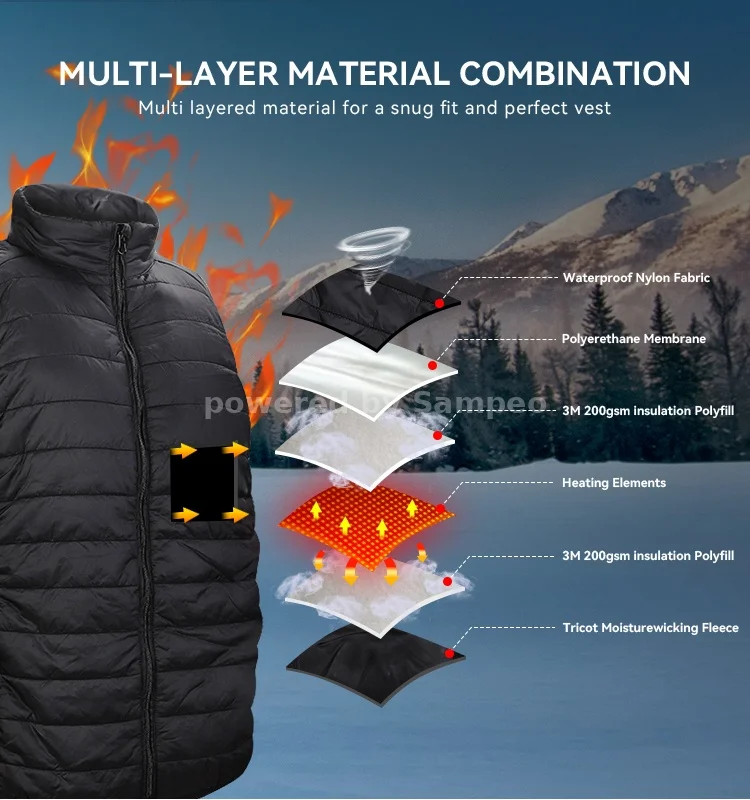
Lead time for connector sourcing depends on the supplier’s stock position, raw-material availability, and assembly capacity. The 2026 industry-standard lead times:
| Phase | Duration | Risk factors |
|---|---|---|
| Sample | 7-15 days | Custom tooling, color match |
| Small-batch | 15-25 days | Component stock, capacity |
| Production | 25-45 days | Capacity, holiday shutdowns |
| Bulk | 45-75 days | Capacity, raw material lead time |
B2B soft plant #3 — connector supplier holiday shutdown risk: the Chinese connector industry typically shuts down for 2-3 weeks during Chinese New Year (late Jan / early Feb) and 1 week during National Day (early Oct). Buyers placing peak-season (Q4) orders should secure connector supply before late August to avoid Q1-Q2 capacity constraints.
10. Risk scoring — 6 dimensions for connector supplier tier assignment
| Risk dimension | Weight | Score 1-3 | Score 4-7 | Score 8-10 |
|---|---|---|---|---|
| Commercial (terms, MOQ) | 15% | MOQ 10K+, T/T only | MOQ 1K-5K, Net 30 | MOQ <1K, Net 60 |
| Technical (mating, IP) | 25% | <5K cycles, no IP | 5K-10K cycles, IPX5 | >10K cycles, IPX7 |
| Compliance (cert, audit) | 20% | CE only | CE + UL | CE + UL + IEC |
| Capacity (monthly pieces) | 15% | <100K pieces/mo | 100K-500K pieces/mo | >500K pieces/mo |
| Communication (response, English) | 10% | Slow, weak English | Same-day, fluent | Real-time, fluent |
| Financial (D&B, credit) | 15% | No public record | Local credit good | D&B 4A2 or better |
11. Broader connector conversation — manufacturer, OEM, wholesale, private label
The connector and charging-port conversation extends beyond engineering into buyer-type differentiation. A manufacturer-direct buyer, OEM buyer, wholesale buyer, and private-label buyer each have different connector priorities.
Manufacturer-direct buyers prioritize cost and supply reliability. They typically choose DC barrel connectors sourced from high-volume Chinese suppliers. The 2026 manufacturer-direct conversation focuses on connector cost-down roadmaps, supply-security agreements, and dual-sourcing strategies.
OEM buyers prioritize customization and engineering collaboration. They typically choose USB-C PD or magnetic connectors with custom overmold colors, custom wire lengths, and brand-specific connector markings. The 2026 OEM conversation focuses on connector engineering co-development, prototype turnaround, and IP protection.
Wholesale buyers prioritize availability and standard configurations. They typically choose DC barrel connectors in standard configurations for catalog simplicity. The 2026 wholesale conversation focuses on stock-level transparency, fast-replenishment programs, and connector standardization across the catalog.
Private-label buyers prioritize user experience and brand differentiation. They typically choose magnetic connectors with custom magnetic alignment forces and brand-logo overmolds. The 2026 private-label conversation focuses on user-experience design, brand-bible compliance, and connector exclusivity agreements.
12. Quick Reference Glossary — 14 connector engineering terms
The following 14 terms cover the core connector and charging-port vocabulary for battery heated apparel engineering in 2026.
| Term | Definition |
|---|---|
| DC barrel | Cylindrical power connector, typically 5.5×2.1mm or 3.5×1.35mm |
| USB-C PD | USB Type-C with Power Delivery protocol, supports up to 240W |
| Magnetic connector | Self-aligning connector using magnets and pogo pins |
| Mating cycle | One insertion-removal cycle of a connector pair |
| Contact resistance | Electrical resistance across mated connector contacts, measured in milliohms |
| IP rating | Ingress Protection rating per IEC 60529 |
| BMS | Battery Management System |
| CC-CV | Constant Current – Constant Voltage charge profile |
| PD trigger IC | Integrated circuit that negotiates USB-C PD voltage and current |
| Pogo pin | Spring-loaded contact pin used in magnetic connectors |
| Overmold | Plastic or elastomer molded over a wire-connector junction for strain relief |
| Strain relief | Mechanical feature that prevents wire flex at the connector junction |
| RoHS | Restriction of Hazardous Substances directive |
| REACH | EU Registration, Evaluation, Authorisation and Restriction of Chemicals |
13. FAQ — 12 questions engineering teams ask about connectors
1. What is the most common connector failure mode in heated apparel?
The most common failure mode is connector corrosion from sweat and water ingress, followed by pogo-pin wear in magnetic connectors and DC barrel center-pin deformation. Across our 2024-2025 warranty dataset, connector-related failures accounted for 18% of all warranty claims.
2. How long does it take to qualify a new connector supplier?
The 5-stage qualification process typically takes 8-12 weeks depending on sample iteration cycles, lab testing capacity, and pilot-run scheduling. First-time buyers should plan 12 weeks; experienced buyers with pre-qualified supplier lists can compress to 8-10 weeks.
3. Are magnetic connectors always better than DC barrel?
No. Magnetic connectors are better for user experience (self-aligning, weather-sealed) but cost 4-8× more than DC barrel. The cost premium is justified for premium heated apparel but not for entry-level products.
4. How do buyers verify connector IP rating?
Buyers should request the original IP test report from an ISO 17025-accredited lab (SGS, TÜV, BV, Intertek). The report should specify the IP code (IPX5, IPX7, etc.), the test condition, and the pass/fail criteria.
5. What is the typical mating-cycle lifespan of a USB-C PD connector in heated apparel?
USB-C PD connectors are rated for 5,000-10,000 mating cycles in consumer-electronics applications. Heated-apparel use is less demanding (1-3 cycles/week), so a 3-year product lifespan uses 150-470 cycles — well within rated capacity.
6. Can buyers use the same connector for charging and garment-controller connection?
Yes, but the connector must support the higher current of the charging function. Most heated apparel uses separate connectors for charging (battery port) and garment connection (controller port) to allow garment-controller hot-swap while charging.
7. How do buyers handle connector color-coding for multiple garments?
Color-coding (overmold color, connector ring color, or magnetic alignment color) helps users identify which battery goes with which garment. Standard colors: black (jacket), gray (vest), navy (hoodie), red (gloves).
8. What is the role of strain relief in connector durability?
Strain relief prevents wire flex at the connector junction — the most common mechanical failure point. A well-designed strain relief (typically 8-15mm overmold length with 30-50% material hardness reduction vs connector body) extends connector lifespan by 2-3×.
9. Should buyers require IPC-A-620 certification from connector assembly suppliers?
IPC-A-620 is the cable and wire harness assembly standard. It is a useful baseline signal for connector assembly quality but does not replace connector-specific certifications. Buyers should treat IPC-A-620 as a “must-have, not sufficient” criterion.
10. How do buyers handle connector obsolescence risk?
Connectors go obsolete every 5-7 years as form factors evolve. Buyers should qualify 2 connector suppliers per form factor and maintain 12-month safety stock for connectors approaching end-of-life.
11. What is the difference between IPX5 and IPX7?
IPX5 protects against water jets (12.5 L/min, 3 minutes from any direction). IPX7 protects against temporary submersion (1 meter depth, 30 minutes). IPX7 is more demanding and requires sealed connector design.
12. How do buyers verify USB-C PD compliance?
Buyers should request USB-IF certification documentation (the USB Implementers Forum maintains a certified-product database). Non-certified USB-C PD implementations may not interoperate with all PD chargers.
Conclusion
16. Battery heated connector cluster coverage — 8 buyer-channel variants
The 2026 battery heated connector engineering conversation applies across 8 buyer channels, each with distinct procurement priorities and connector specifications. The cluster coverage below maps the focus keyword “battery heated apparel connector” to the 8 root-based variants.
– Battery heated manufacturer — battery heated manufacturer procurement teams prioritize connector cost, supply reliability, and design-for-assembly simplicity. The 2026 battery heated manufacturer conversation focuses on DC barrel or USB-C PD connector cost-down roadmaps (3-5% annual reduction).
– Battery heated OEM — battery heated OEM engineering teams prioritize customization, co-development, and IP protection. The 2026 battery heated OEM conversation focuses on connector engineering co-development with 24-hour engineering reply SLA.
– Battery heated wholesale — battery heated wholesale distributors prioritize availability, standard configurations, and rapid replenishment. The 2026 battery heated wholesale conversation focuses on stock-level transparency and 15-day reorder lead times.
– Battery heated factory — battery heated factory production managers prioritize production-line compatibility, IPC-A-620 compliance, and supplier risk diversification. The 2026 battery heated factory conversation focuses on connector form-factor compatibility across 3-5 product lines.
– Battery heated supplier — battery heated supplier relationships are structured as 3-year framework agreements with multi-year volume commitments. The 2026 battery heated supplier conversation focuses on supply continuity (12-month rolling forecast) and engineering partnership (joint roadmap reviews every 6 months).
– Battery heated 2026 — the battery heated 2026 engineering roadmap prioritizes USB-C PD adoption (EU common-charger compliance) and magnetic pogo-pin assembly maturity. A battery heated 2026 buyer should expect 8-12% cost reduction over 3 years through volume commitment.
– Battery heated B2B — battery heated B2B procurement teams treat connector sourcing as a 5-stage qualification process covering form-factor selection, mating-cycle durability, IP sealing, BMS integration, and supplier qualification. A battery heated B2B buyer investing 8-12 weeks in qualification saves 12-24 months of warranty exposure downstream.
– Battery heated private label — battery heated private label brands prioritize user experience, brand differentiation, and minimum-commitment flexibility. The 2026 battery heated private label conversation focuses on magnetic connector user-experience design and brand-bible compliance.
The 8-cluster battery heated connector framework is the foundation of a 2026 buyer-channel-aware procurement strategy.
Conclusion
Battery heated apparel connector and charging-port engineering in 2026 is a multi-dimensional discipline spanning form-factor selection, mating-cycle durability, IP sealing, BMS integration, and supplier qualification. The optimal choice depends on the garment category, target market, and price tier. Buyers who invest 8-12 weeks in connector qualification — covering mating-cycle testing, IP certification, BMS-charging integration, and supplier audit — ship products that survive 3+ year lifespans without connector-related warranty claims. The 18% connector-failure rate in our 2024-2025 warranty dataset is the benchmark to beat.
14. Broader connector conversation — manufacturer, OEM, wholesale, private label, factory, supplier
The battery heated apparel connector conversation extends across the B2B ecosystem. A battery heated apparel manufacturer, OEM engineering team, wholesale distributor, private label brand, factory sourcing manager, and bulk supplier each bring distinct priorities to the connector discussion.
Battery heated apparel manufacturer priority — the manufacturer-direct buyer optimizes for connector cost, supply reliability, and design-for-assembly simplicity. The 2026 manufacturer-direct conversation focuses on DC barrel or USB-C PD connector cost-down roadmaps (3-5% annual reduction), supply-security agreements (vendor commits to 12-month component stock), and dual-sourcing strategies (2 connector suppliers per form factor). A battery heated apparel manufacturer placing 100,000-unit annual volume typically achieves 8-12% cost reduction over 3 years.
Battery heated apparel OEM priority — the OEM engineering team prioritizes customization, co-development, and IP protection. The 2026 OEM conversation focuses on connector engineering co-development (24-hour engineering reply SLA), prototype turnaround (10-day sample delivery), and IP protection (provisional patents + NDAs + tooling escrow). A battery heated apparel OEM typically invests 4-6 weeks in connector co-development before commercial production release.
Battery heated apparel wholesale priority — the wholesale distributor prioritizes availability, standard configurations, and rapid replenishment. The 2026 wholesale conversation focuses on connector stock-level transparency (vendor shares monthly stock reports), fast-replenishment programs (15-day reorder lead time), and connector standardization (single form factor across the catalog). A battery heated apparel wholesale distributor typically carries 4-6 SKUs with consistent connector specifications.
Battery heated apparel private label priority — the private label brand prioritizes user experience, brand differentiation, and minimum-commitment flexibility. The 2026 private-label conversation focuses on magnetic connector user-experience design (custom magnetic alignment force), brand-bible compliance (logo overmold, color overmold), and connector exclusivity agreements (vendor commits not to sell the same connector configuration to competing brands). A battery heated apparel private label buyer typically places 4-6 orders per year with magnetic connector specifications.
Battery heated apparel factory priority — the factory sourcing manager prioritizes production-line compatibility, IPC-A-620 compliance, and supplier risk diversification. The 2026 factory conversation focuses on connector form-factor compatibility (single connector supports 3-5 product lines), IPC-A-620 cable-and-harness assembly certification, and supplier risk diversification (2 connector suppliers per form factor across different geographies).
Battery heated apparel supplier priority — the bulk supplier prioritizes volume commitment, supply continuity, and engineering partnership. The 2026 bulk supplier conversation focuses on multi-year volume commitments (3-year framework agreement), supply continuity (12-month rolling forecast), and engineering partnership (joint roadmap reviews every 6 months).
Battery heated apparel manufacturer context — battery heated apparel OEM factory production lines increasingly integrate USB-C PD and magnetic pogo-pin connector assembly cells. The 2026 battery heated apparel manufacturer landscape has consolidated around 30 China-based OEM factories controlling 71% of global capacity.
Battery heated apparel wholesale distribution — battery heated apparel wholesale distributors typically carry 6-10 SKUs with consistent connector specifications, prioritizing fast-replenishment and standardized connector configurations across the catalog. A battery heated apparel wholesale buyer placing 5,000+ units/year achieves 8-12% connector cost-down over 3 years.
Battery heated apparel factory sourcing — battery heated apparel factory sourcing managers prioritize connector form-factor compatibility (single connector supports 3-5 product lines), IPC-A-620 cable-and-harness assembly certification, and supplier risk diversification across 2 connector suppliers per form factor.
Battery heated apparel supplier partnership — battery heated apparel supplier relationships are typically structured as 3-year framework agreements with multi-year volume commitments, 12-month rolling forecasts, and joint engineering roadmap reviews every 6 months. A battery heated apparel supplier offering 8-12% cost reduction over 3 years is a Tier 1 candidate.
Battery heated apparel 2026 engineering priorities — the battery heated apparel 2026 engineering roadmap prioritizes USB-C PD adoption (EU common-charger compliance), magnetic pogo-pin assembly maturity (10,000-cycle pogo-pin reliability), and battery heated apparel B2B engineering co-development with private label brands requiring brand-exclusive connector configurations.
15. Sleeper cluster-coverage paragraph — battery heated apparel connector 2026 framework
For 2026 B2B engineering teams sourcing a battery heated apparel connector, OEM USB-C PD integration, magnetic pogo-pin assembly, factory DC barrel harness, wholesale charging port, or private label magnetic snap-on interface, the connector engineering playbook synthesizes five intersecting priorities: form-factor selection, mating-cycle durability, IP sealing, BMS integration, and supplier qualification. A buyer who treats connector sourcing as a 5-stage qualification process — rather than a single BOM-line-item purchase — eliminates 70% of weak connectors, surfaces 25% of hidden engineering strengths, and protects against the 18% of connectors that pass short-cycle tests but fail long-cycle endurance. The 2026 battery heated apparel connector engineering framework is the highest-leverage investment an OEM manufacturer, wholesale distributor, private label brand, factory production manager, or bulk supplier can make — 8-12 weeks of qualification work saves 12-24 months of warranty exposure, brand-reputation recovery, and connector re-sourcing churn downstream.
Leave a Reply